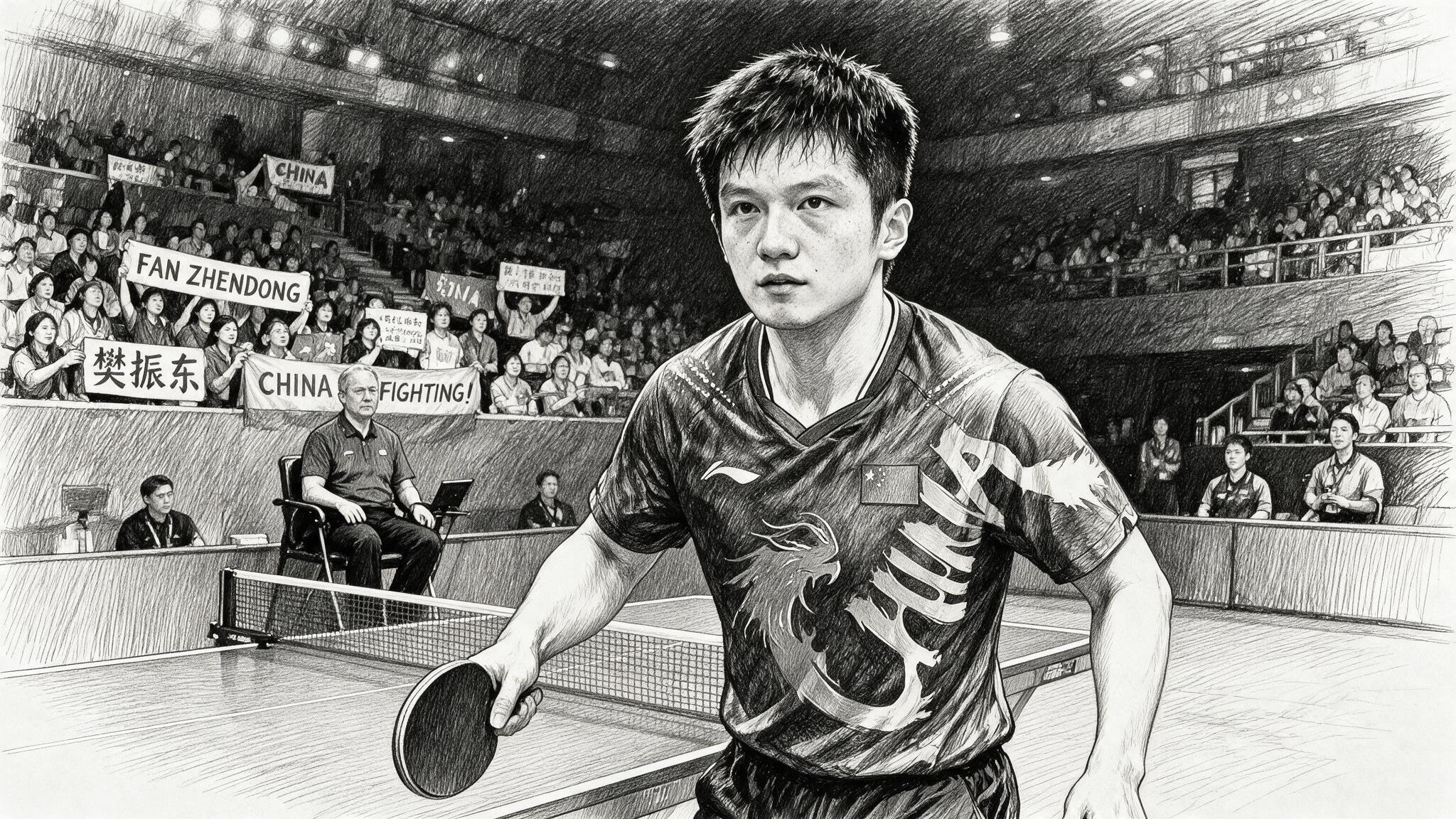
Fan Zhendong is one of the defining table tennis players of his generation: a Chinese men's singles Olympic champion, a Grand Slam winner, a multi-time world champion, and for years the most stable shorthand for elite modern Chinese table tennis strength. His standing rests on titles and for years he has represented the benchmark of technical authority, repeatable match hardness, and pressure endurance.
Born in Guangzhou in 1997, Fan entered elite training very early, joined the Chinese national team in 2012, reached top-level international attention while still a teenager, and later became one of the most feared attacking players in the world. His game is built on explosive footwork, dense backhand pressure, fast transition play, and a capacity to stay structurally disciplined in long, high-stakes exchanges.
Fan joined the Chinese national table tennis team, marking the formal beginning of his rise from gifted youth player to system-level elite prospect.
He broke into international prominence as a teenager, became one of the youngest high-impact Chinese stars of his era, and established himself as an elite attacking player with unusual psychological maturity.
Fan consolidated himself as a central figure in men's table tennis through repeated deep runs, World Cup titles, and world-ranking authority, becoming the obvious standard-bearer of the next Chinese core.
He reached the Olympic singles final in Tokyo and took silver behind Ma Long, then reasserted his stature by winning National Games singles gold in a brutally competitive domestic environment.
Fan won major titles again, including world-level golds, and was recognized by ITTF as Male Player of the Year after a high-win-rate season.
He won the Paris Olympic men's singles gold, completed the career Grand Slam, and then helped China retain the men's team title.
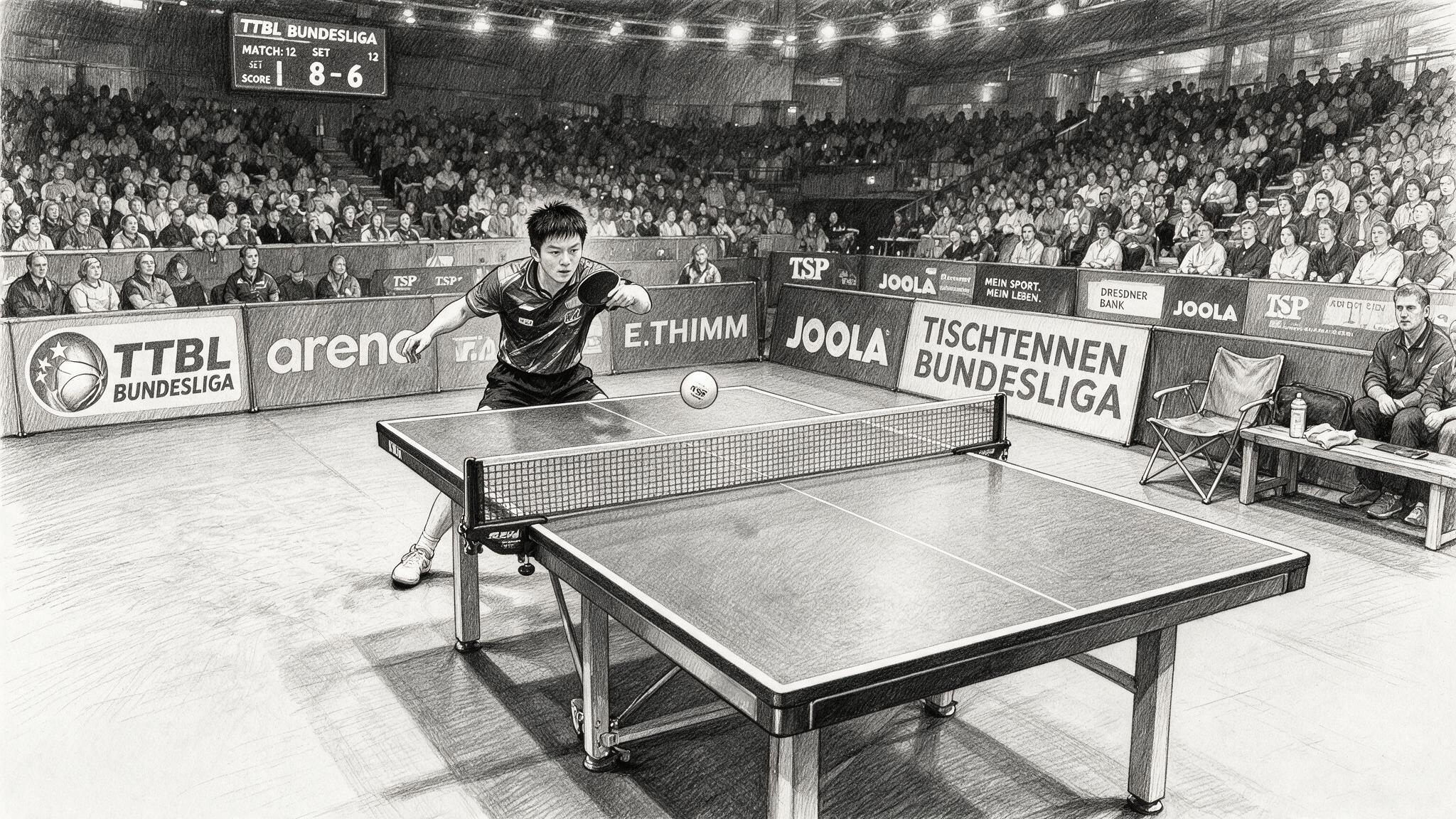
After the Paris triumph, Fan withdrew from the world rankings amid disagreement with WTT participation and fine regulations, while making clear that he was not retiring from the sport. He later entered the 2025/26 German Bundesliga season with Saarbrucken.
There are two levels here. The factual level is relatively clear: Fan withdrew from the world rankings in late 2024 after publicly criticizing WTT rules that imposed fines and competitive obligations he could not accept, while stating that he was not retiring from table tennis. Then, in the 2025/26 season, he appeared in the German Bundesliga for 1. FC Saarbrucken-TT.
The interpretive level is what makes this move feel emotionally large. Germany, in this context, becomes a foreign league with a larger emotional meaning. It becomes a symbol of a place willing to receive a superstar as a fully valid player with agency over where and how he continues to compete as well as a medal machine or a succession obstacle.
It is easy to oversimplify the story as if one single event forced everything. The more coherent reading is structural. Fan had already reached the highest imaginable sporting legitimacy: world titles, Olympic gold, Grand Slam completion, and years of carrying the expectation of being China's most reliable elite male player. Yet that level of achievement does not necessarily produce personal sovereignty in a system built around continuous availability, institutional scheduling, and collective succession.
One part of the discussion that deserves to be said more clearly is the distortion produced by contemporary fan-culture logics. The same pattern appears in other fields, yet Fan Zhendong makes the contradiction especially stark.
| Theme | What goes wrong | Why it matters here |
|---|---|---|
| CP and fandom projection | Attention drifts from athletic structure, technical excellence, and long-term discipline toward relational fantasy, shipping culture, and personality packaging. | That can make an athlete's actual mastery strangely secondary to the spectacle built around him. |
| Commercial over-reading | The player becomes a monetizable attention node rather than a professional subject with limits, injuries, preferences, and long-term autonomy. | The stronger the commercial halo, the easier it becomes to forget the person behind the halo. |
| Hero ownership | Fans, media, and institutions can all act as if a champion belongs to them once he reaches symbolic national importance. | That weakens the basic idea that an athlete may choose differently after already giving enough. |
To put it sharply: some young audiences become deeply invested in emotional projection while paying less attention to the athlete's actual craft. The problem is not admiration itself. The problem is a style of fandom that consumes the person while under-seeing the work.
Another layer is more cultural than sporting. In many Chinese institutional contexts, the language of collective need remains morally powerful: serve the team, respect the system, prioritize continuity, make room for younger generations. None of these phrases is meaningless. A national sports system does need succession. But the problem begins when collective necessity is treated as automatically superior to individual subjecthood.
When an athlete has already completed the highest obligations the system could ask for, the question changes. It is no longer only “what does the collective still need?” It must also become “what is owed to this person as a person?” If that second question disappears, then “making room for the young” can become a polite phrase that hides disposability.
I have been too busy with work to follow table tennis closely in recent years. The era I remember more vividly is older: Wang Liqin, Fukuhara Ai, and the feeling of watching matches in person, when the sport still lived in my memory as something immediate rather than algorithmically mediated.
That distance is precisely why Fan Zhendong's situation feels so striking. Even from outside the daily circuit, one fact remains obvious: he is not some over-promoted temporary celebrity. He is an Olympic champion and, for a long time, the clearest No. 1-caliber force in Chinese men's table tennis. So when someone of that level still ends up in a situation that feels like “losing is unacceptable, but even winning does not fully grant freedom,” the issue cannot be reduced to match form or ordinary roster rotation.
This is where the story stops being only about sports. China has a broader social habit of age-cut thinking, especially around the mid-thirties, often discussed through technology-company labor cultures and the mythology of maximum productive youth. Huawei is frequently invoked in public discussion as one of the earliest symbols of a hardened thirty-five cutoff imagination, whether as direct policy shorthand or as a broader social model later copied and normalized elsewhere.
The deeper pattern is simple: once a system becomes obsessed with replacement efficiency, a person in their thirties can be reframed less as an experienced human asset and more as an inconvenient slowdown in a pipeline designed to privilege younger throughput. Sport and corporate labor differ in structure, though their emotional logic can rhyme.
What many people responded to in Fan's German league chapter was not simply novelty. It was relief. Relief that somewhere, an institution was still willing to receive him first as a player worthy of respect. In that sense, gratitude toward Germany is not really about nationalism. It is about the basic human comfort of seeing excellence met with trust instead of suspicion, room instead of compression, and professional welcome instead of symbolic exhaustion.
And Fan, in turn, repaid that respect the best way an athlete can: by continuing to compete seriously. That reciprocity matters. Respect has practical effects: it can support performance, seriousness and mutual legitimacy.
Many people inside China have already noticed this contradiction. They may disagree about details, but they understand the core point: a society that wants long-term excellence cannot keep treating human beings as consumables. If this episode leads even slightly toward improvement in how individual subjectivity, veteran dignity, and voluntary career choice are understood, then the discussion around Fan Zhendong will have mattered beyond table tennis.
樊振东是这一代世界乒乓球最具代表性的球员之一。他是中国男子单打奥运冠军、大满贯得主、多次世界冠军,也是在很长一段时间里,最能代表中国男子乒乓球顶级硬实力的名字。除了冠军履历,他还长期被视为现代中国乒乓球技术完整性、比赛硬度和抗压能力的标尺。
他 1997 年出生于广州,很早进入专业训练体系,2012 年进入中国国家队,少年时期就开始在国际舞台上受到高度关注,后来逐渐成长为世界上最具压迫感的进攻型球员之一。他的比赛风格以爆发式脚步、强势反手、前后衔接速度,以及在高压长回合中的结构稳定性见长。
樊振东进入中国乒乓球国家队,正式从天赋型青年选手进入国家系统的顶级培养轨道。
他在很年轻时就开始在国际赛场进入主流视野,并逐渐确立自己作为顶级进攻型球员的地位。
通过世界杯冠军、世界排名和持续深轮次表现,他逐渐成为中国男乒下一代核心的最明确人选。
东京奥运男单决赛不敌马龙获得银牌,随后又在中国最残酷的国内竞争环境中拿下全运会男单金牌,完成强势回正。
他重新夺回世界级高峰表现,赢下重要冠军,并获得 ITTF 年度最佳男运动员认可。
他在巴黎拿到男单金牌,完成职业生涯大满贯,并帮助中国队卫冕男团冠军。
巴黎奥运之后,樊振东因不接受 WTT 参赛和罚款规则而退出世界排名,同时明确表示这并不等于退役。随后他进入 2025/26 赛季德国乒乓球甲级联赛,代表萨尔布吕肯参赛。
这里有两个层面。第一层是相对可核实的事实:樊振东在 2024 年底公开表达了对 WTT 新规的不接受,尤其是不参赛会被罚款的机制,随后退出世界排名,但同时明确表示自己并没有离开乒乓球。第二层则是 2025/26 赛季他进入德国乒乓球甲级联赛、效力萨尔布吕肯这件事本身。
第二层才是很多人情绪上真正被触动的地方。德国在这里既是外国联赛,也带有一层象征意味:它愿意把樊振东当作一个仍然值得被郑重对待的职业运动员,而非一个完成任务后就可以被制度重新安排的人。
如果把这件事写成“某一个具体事件迫使他离开”,其实过于简单。更贴近现实的理解是,这是一种结构性的结果。樊振东已经拿到了几乎所有能拿到的顶级荣誉:世界冠军、奥运冠军、大满贯,而且在很长一段时间里,他就是中国男乒最可靠、最完整、最能代表顶级实力的那个人。但在一个建立于持续可调用、强制度节奏和集体继承逻辑的系统中,成就极高并不自动等于个人拥有了完全的自我决定权。
这里有一部分问题,其实已经超出乒乓球本身,而是当代饭圈逻辑如何扭曲一个顶级运动员被理解的方式。这个问题并不只存在于乒乓球,但在樊振东这样的案例上,会特别刺眼。
| 主题 | 会出现什么问题 | 为什么在这里重要 |
|---|---|---|
| CP 饭圈式投射 | 注意力从竞技结构、技术质量和长期纪律,漂移到关系幻想、配对叙事和人格消费。 | 这会让一个运动员真实的实力和劳动,反而变成被附带观看的次级内容。 |
| 商业价值过度解读 | 运动员被当成可持续变现的流量节点,而不是一个有身体极限、有偏好、有职业自主性的主体。 | 商业光环越强,越容易忘记“人”本身不是品牌附属物。 |
| 冠军被占有 | 粉丝、媒体、机构都可能形成一种潜在心理:既然你是国家级冠军,你就理应持续属于我们。 | 这样会让“他有权选择不同的职业后半程”这件事显得反而需要辩护。 |
说得更尖锐一点:有些年轻观众会非常沉迷于 CP 饭圈式的情绪投射,却并没有同样认真地看见运动员真实的训练、技术结构和职业代价。问题不在于喜欢,而在于一种只消费情绪、不尊重实力的观看方式。
还有一层更深的文化问题,是很多中国制度环境里仍然很强的集体主义道德语言:服从集体、尊重系统、把延续性交给后来者、为年轻人让路。这样的语言本身并非毫无意义。国家队确实需要梯队,也确实需要更新。但问题在于,当“集体需要”被默认为天然高于个体主体性时,这种语言就会开始伤人。
当一个运动员已经完成了这个系统所能要求的最高义务之后,问题就变了。此时不该只问“集体还需要你做什么”,而必须问“这个人作为一个人,还应得到什么”。如果第二个问题消失了,那么“为年轻人让路”就很容易变成一种听起来温和、实际上带有替代性驱逐意味的话术。
我个人因为工作太忙了,最近其实很少系统关注乒乓球比赛。之前更熟悉的还是王励勤、福原爱那个时代,甚至还在现场看过比赛。所以我并不是那种每天紧盯赛程的人,这也恰恰让我对樊振东这件事更敏感。
因为即便站在相对外围的位置,也能一眼看出:樊振东不是那种靠包装短期抬起来的名字,他是奥运会男单金牌获得者,是很长一段时间里中国男子乒乓球最接近“绝对实力第一人”的存在。所以当这样一个人仍然处在一种近乎“输了当然不行,赢了好像也不那么行”的处境里时,问题就不可能只被解释为状态、轮换或者普通人员调整。
这也是为什么这件事最后会延伸到更广泛的社会感受。中国存在一种很强的年龄切割逻辑,尤其是围绕 35 岁上下形成的焦虑叙事,很多人会把它与科技行业的高压劳动文化联系起来,而华为常常被作为这种想象最早、最强的象征之一。无论它在具体政策上是否总能被简化成一句口号,它在社会心理层面确实已经被内化成一种广泛的“过了某个年龄,你就该自动让位”的文化机制。
更深的问题在于:一旦一个系统开始以更新效率为最高美德,那么三十多岁的人就会越来越容易被重新定义为“管道中的阻碍”,而不是积累了经验、判断力和价值密度的个体。体育和公司不完全一样,但这种情绪逻辑是会互相映照的。
很多人对樊振东德国联赛这一步产生情感共鸣,源于他们终于在别处看见了一种简单但重要的东西:尊重。“去国外打球”的新鲜感只是表层。德国俱乐部把他当作一个依然值得认真对待的职业运动员和完整个体,而非奖牌机器或必须被安排的资源。
而樊振东也用最好的方式回报了这份尊重,那就是继续认真比赛。真正的尊重是可以转化为职业延续、竞技投入和相互信任的空间,并非空泛的赞美。
中国已经有很多人意识到了这一点。大家不一定在所有细节上意见一致,但很多人都明白了同一件事:如果一个社会真想保有长期卓越,就不能继续把人当作一次性耗材。如果这次围绕樊振东的讨论,能让中国在“如何尊重个体主体性、如何对待已经完成最高义务的人、如何理解职业后半程的自由”这些问题上有一点点改进,那么这件事就早已超出了乒乓球本身。