Use cases for DBM / CREEM
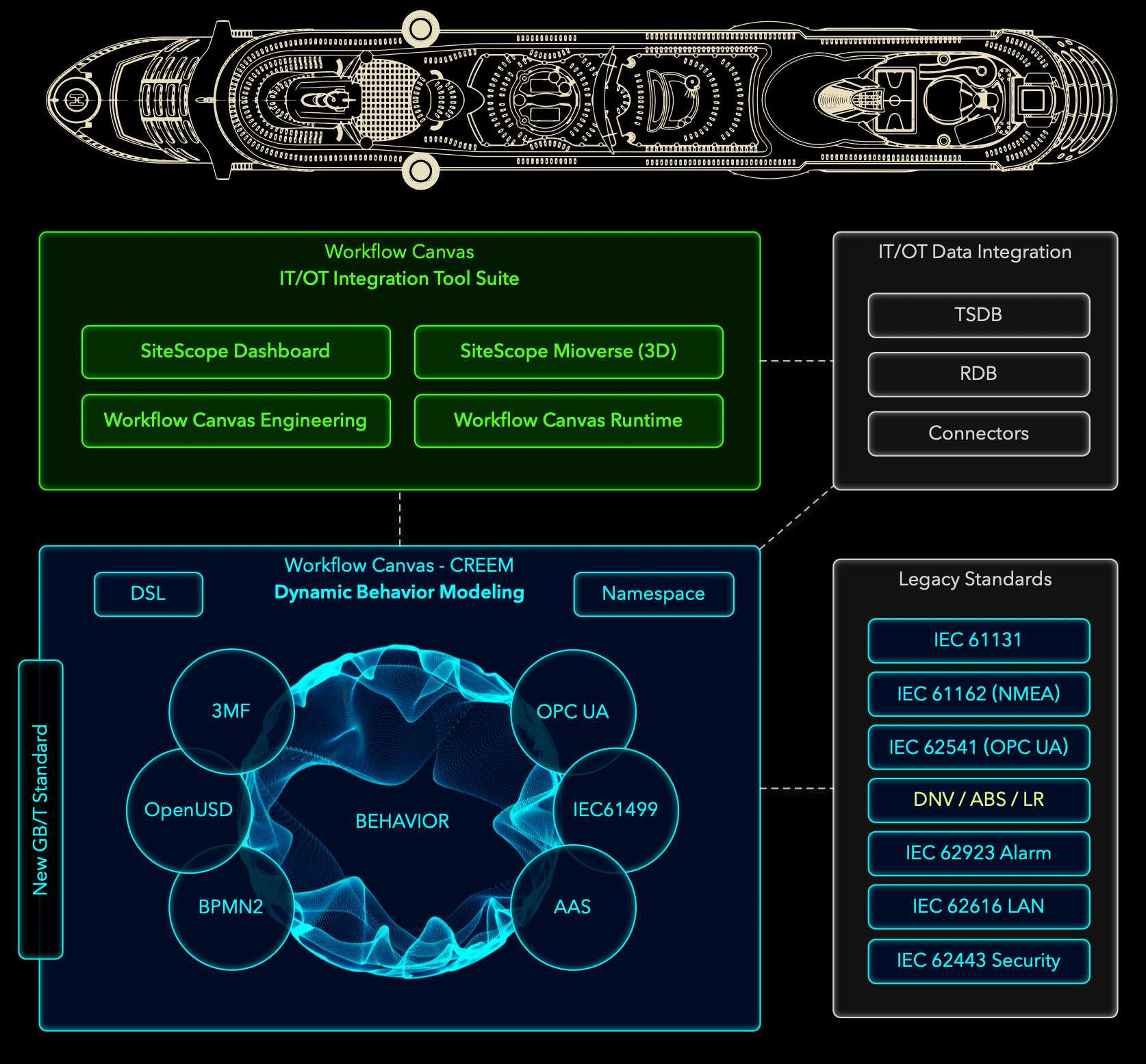
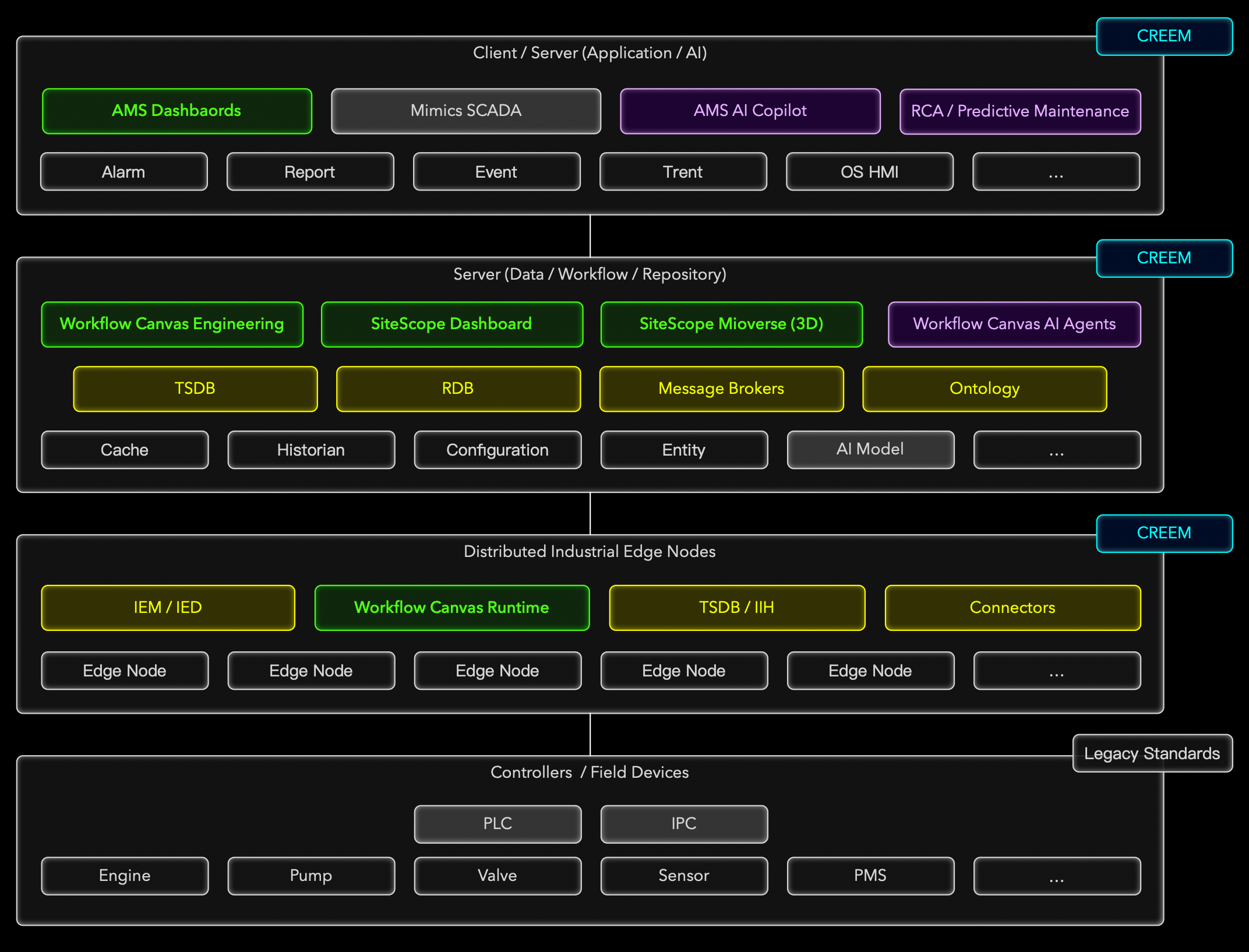
DBM/CREEM connects AI services and enterprise applications to OT through typed resources, callable capabilities, workflows, and trace records.
A project usually starts with namespace and asset contracts. Engineers then bind runtime context, test workflow behavior, and retain the resulting event history for diagnosis and later tuning.
Typical project conditions
- Multiple plants or lines use different equipment generations, protocols, and system owners.
- High-mix production requires frequent recipe, tooling, and routing changes.
- High-volume operations need synchronized virtual commissioning and production trace records.
| DBM artifact | Industrial responsibility | Runtime evidence |
|---|---|---|
| Resource Description (RD) | Identifies equipment, software services, people, materials, and their ownership or location context. | Resolved resource URI, type version, connector binding, and availability state. |
| Function Block (FB) | Defines a callable capability with typed ports, parameters, preconditions, completion criteria, and faults. | Invocation ID, bound inputs, output values, duration, result code, and exception path. |
| Workflow (WF) | Coordinates sequence, parallel work, retries, timeout, compensation, escalation, and operator decisions. | Workflow instance, active node, transition reason, retry count, and final disposition. |
| Data Table (DT) | Carries shared recipe, order, quality, environment, and policy context across behavior nodes. | Value source, unit, timestamp, quality code, version, and change history. |
| Behavior Tree / State Machine | Expresses execution policy and equipment lifecycle without mixing it with device protocol details. | Tick or transition trace, guard evaluation, state entry and exit, and recovery decision. |