Germany Map, Rail, Cities, and Siemens Notes德国地图、铁路、城市与西门子行程笔记
Munich / Nuremberg / SiemensRail + Airport + Travel Memo铁路 + 机场 + 出行备忘Garching / Erlangen / HQ routes加兴 / 埃尔朗根 / 总部路线
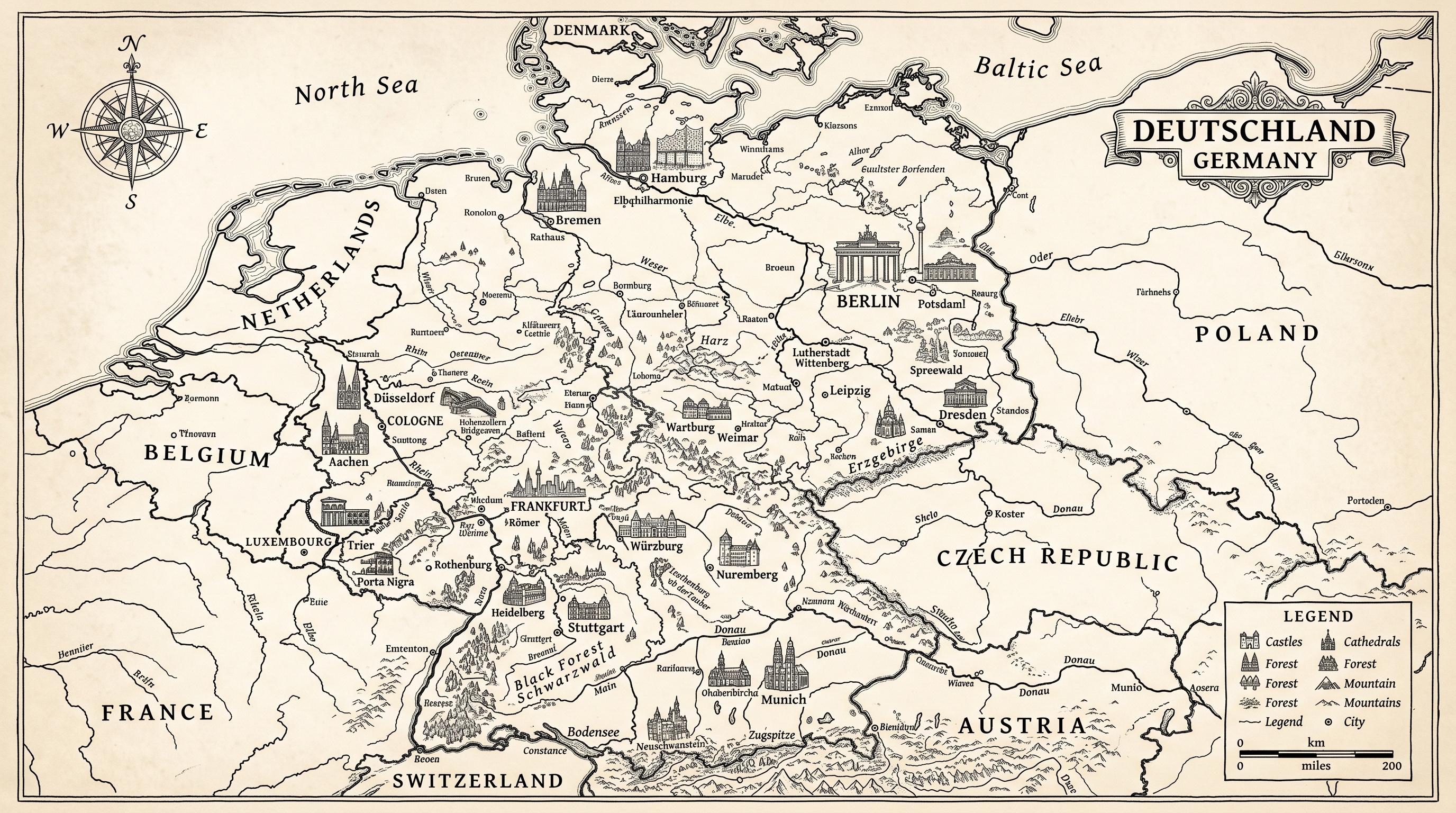
Germany is easiest to read as a rail-first country with several strong city clusters rather than one single center. Berlin is political and cultural; Munich is Bavarian, industrial, museum-heavy, and connected to the Alps; Frankfurt is the aviation and finance hub; Cologne/Dusseldorf anchor the Rhine-Ruhr region; Hamburg is northern and maritime; Nuremberg is a compact Franconian history and industry base; Stuttgart links cars, engineering, and hills.
Brandenburg Gate, Reichstag, Museum Island, East Side Gallery. Best for modern history and culture.
Marienplatz, Residenz, Pinakotheken, English Garden, BMW Welt, Allianz Arena, day trips to Neuschwanstein or Salzburg.
Imperial Castle, old town walls, Hauptmarkt, Germanisches Nationalmuseum, Documentation Center, DB Museum.
Airport hub, Main river, Stadel Museum, skyline, fast rail interchange.
Cathedral, Rhine bridges, Roman-Germanic Museum, easy access to Dusseldorf/Bonn.
Speicherstadt, Elbphilharmonie, harbor, Miniatur Wunderland, northern rail gateway.
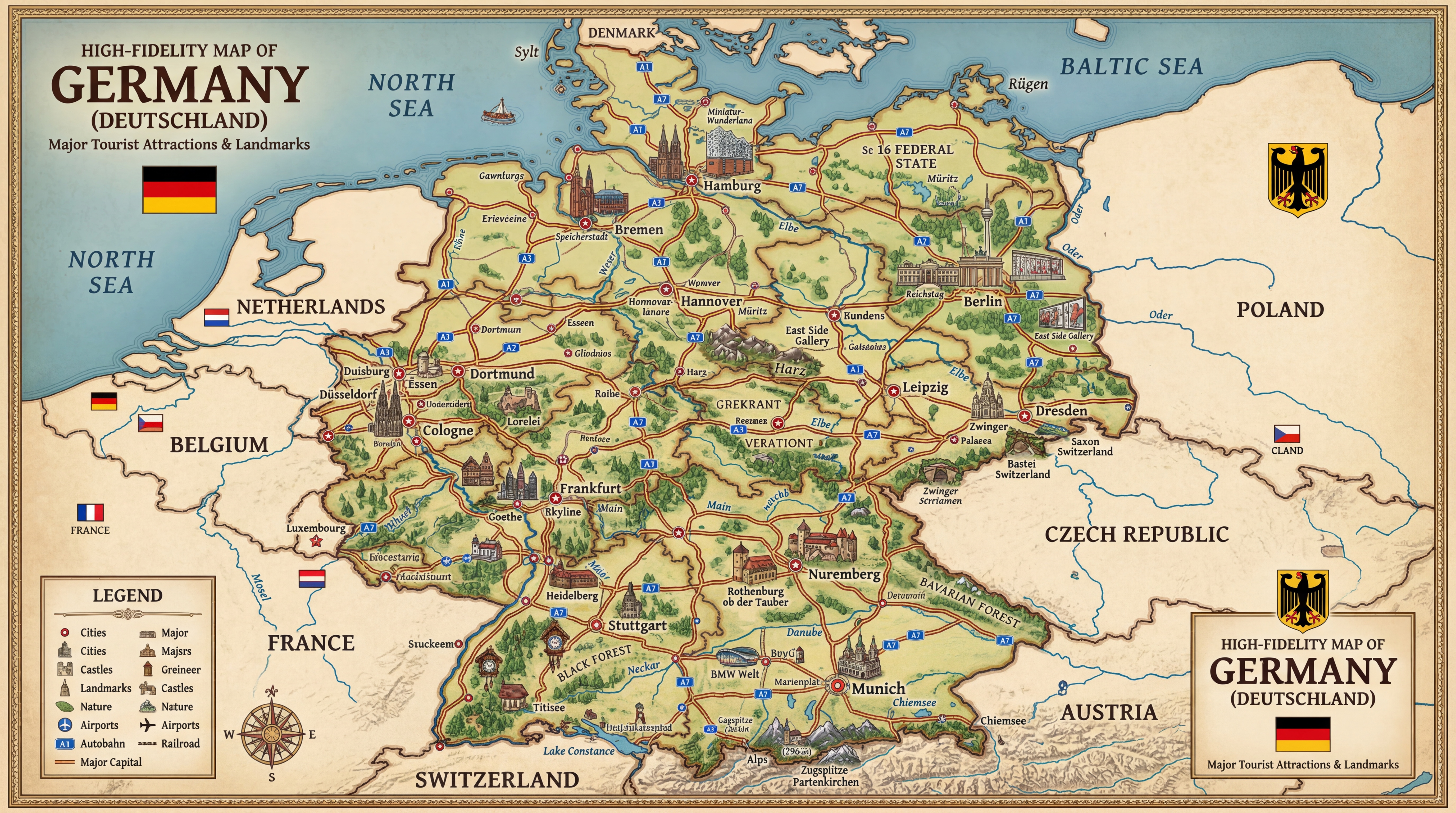
This overview reads Germany by regions: northern ports, Rhine cathedrals, central finance and culture, eastern history, Bavarian royal landscapes, and alpine edges. It is useful for deciding whether a trip should be city-heavy, museum-heavy, castle-heavy, or rail-window scenic.
Central Berlin. Political memory, Prussian collections, Cold War traces, and walkable history around Mitte.
Beside Cologne Hbf. Germany's most immediate rail-arrival landmark and a strong Rhine itinerary anchor.
Near Fussen. Classic castle day trip from Munich, best handled with early train/bus timing and weather buffer.
Frauenkirche, Zwinger, Semperoper, and Elbe terraces. Good Berlin-Prague corridor stop.
Above the old town. Compact medieval city logic with museums, walls, and strong rail access.
University city, forest railways, thermal towns, and a slower landscape contrast to major industrial cities.
| Mode | Use | Booking / ticket note | Travel warning |
|---|---|---|---|
| ICE | Long-distance high-speed links: Munich-Frankfurt, Berlin-Munich, Cologne-Frankfurt. | Book with DB Navigator. Sparpreis/Super Sparpreis can be cheap but train-bound. | Delays happen. Leave buffers for flights and meetings. |
| IC/EC | Intercity and cross-border routes; sometimes slower but useful. | Seat reservation often separate and worth buying on busy routes. | Check platform changes and train section splitting. |
| RE/RB | Regional trains for short trips and state tickets. | Bayern Ticket is useful for Bavaria regional trains, not ICE/IC. | Can be crowded on weekends and event days. |
| S-Bahn/U-Bahn/Tram | Urban movement inside Munich, Nuremberg, Berlin, Frankfurt. | Validate paper tickets where required; app tickets usually time-stamped. | Fare zones matter, especially airports. |
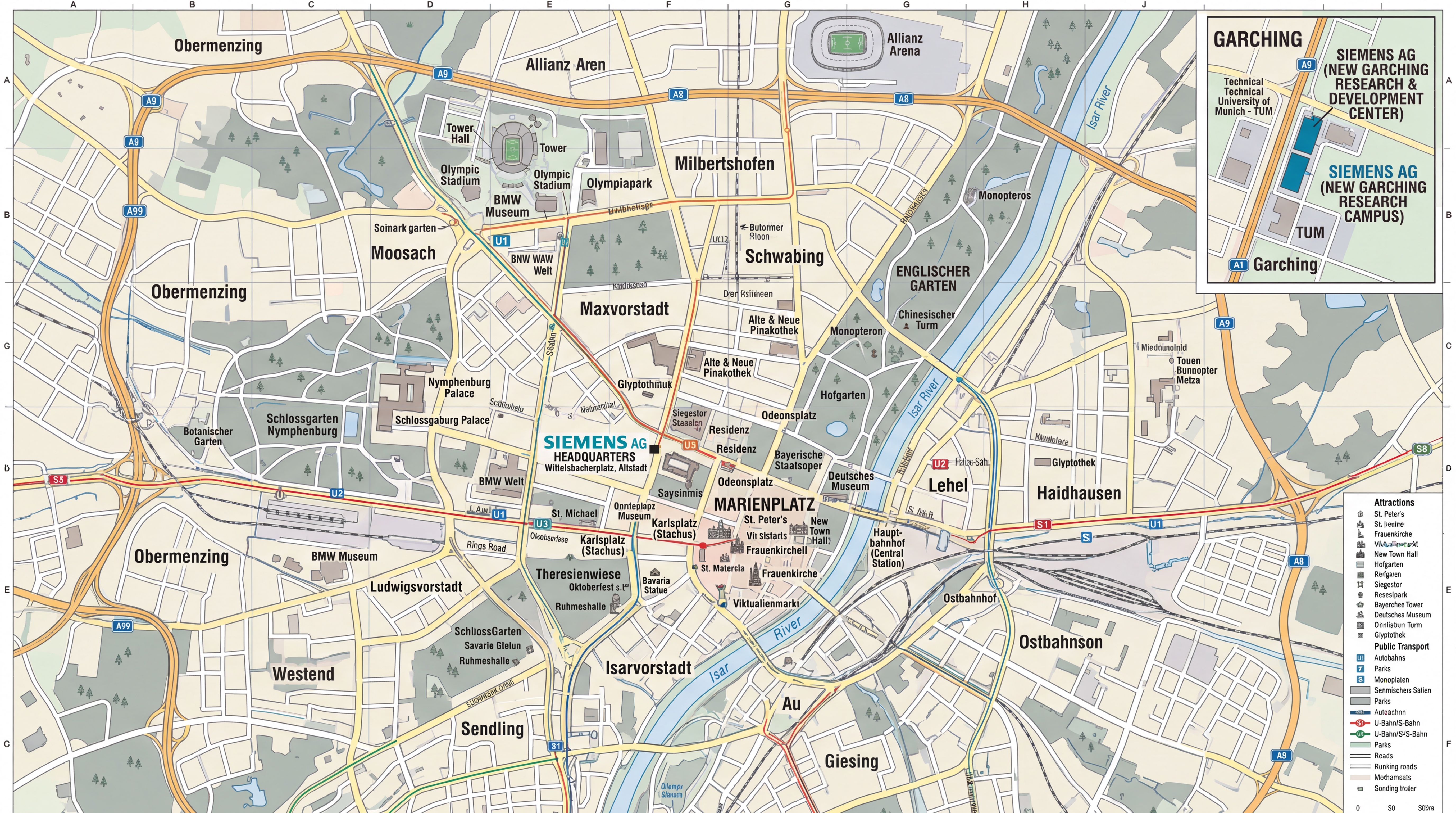
Marienplatz, Neues Rathaus, Viktualienmarkt, Frauenkirche, Residenz, Odeonsplatz, English Garden.
Alte Pinakothek, Neue Pinakothek, Pinakothek der Moderne, Deutsches Museum, BMW Museum.
MUC airport to Hauptbahnhof: S1 or S8, roughly 40-45 minutes. Lufthansa Express Bus is another option.
Munich Hbf is under heavy redevelopment in phases. Allow extra walking time and watch temporary signs.
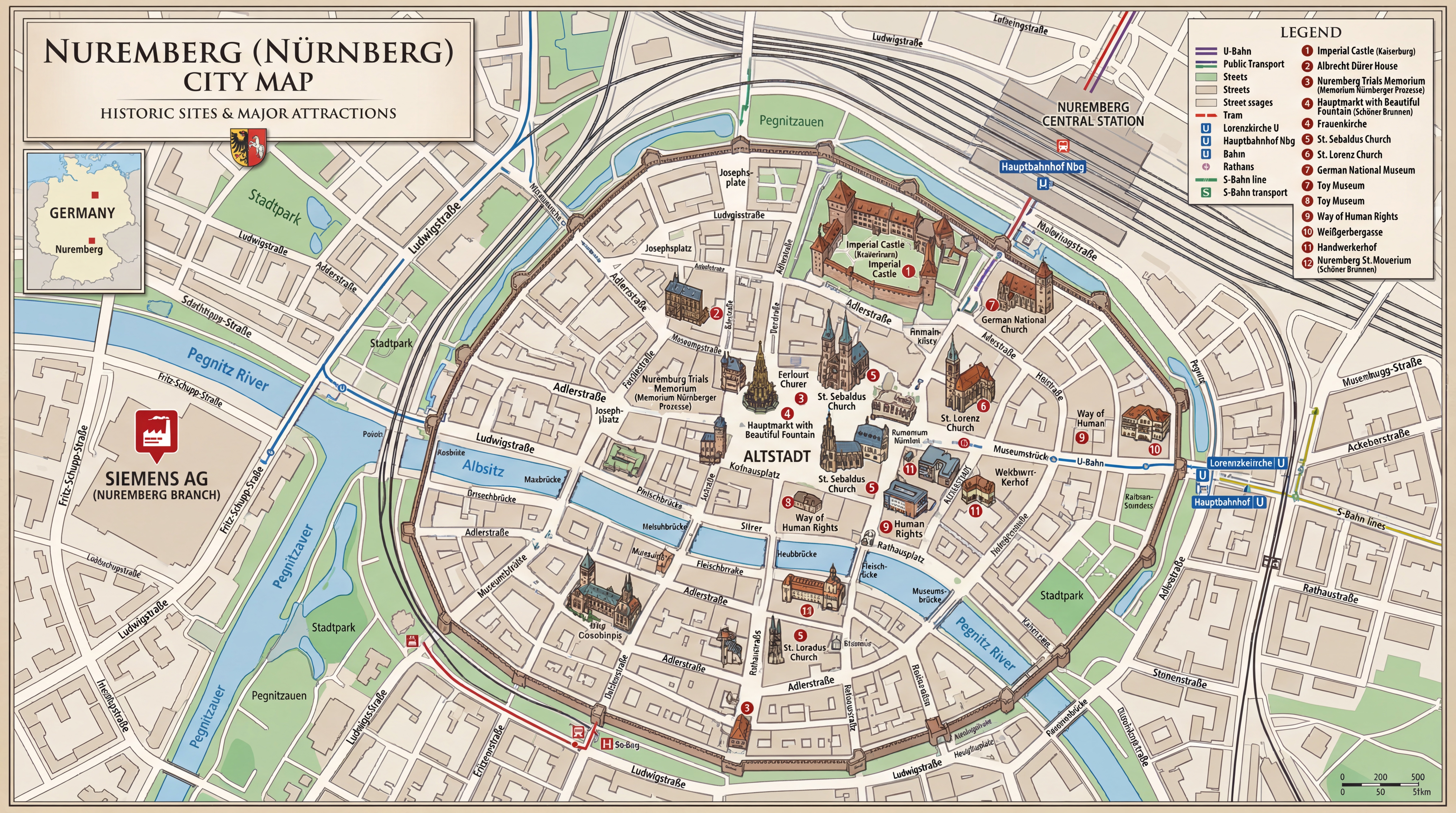
Kaiserburg, Hauptmarkt, Frauenkirche, St. Lorenz, city walls, Albrecht Durer House.
Germanisches Nationalmuseum, DB Museum, Documentation Center Nazi Party Rally Grounds.
Nuremberg Airport to Hauptbahnhof: U2 direct, roughly 12-15 minutes.
ICE can be about 1 hour 5 minutes; regional options are slower but may fit Bayern Ticket days.
| Location | Role | Nearby transit | From airport / Hbf | Note |
|---|---|---|---|---|
| Siemensstadt Square, Berlin | Large future Siemens urban/innovation district in Berlin Siemensstadt. | Berlin U/S-Bahn network; project area around Siemensstadt / Spandau side. | From BER: regional/S-Bahn into Berlin, then westbound local transit. | Strategic urban redevelopment, not a quick tourist stop. |
| Werner-von-Siemens-Strasse, Munich / Neuperlach area | Major Munich Siemens office presence and historical corporate footprint. | U5 Neuperlach Sud / local buses depending building. | From MUC: S8/S1 to city, transfer U-Bahn; from Hbf use U5 direction Neuperlach. | Confirm exact visitor entrance before travel. |
| Siemens Campus Erlangen | Large Siemens research, engineering, and administrative campus near Nuremberg region. | Erlangen Hbf plus bus; regional rail from Nuremberg. | From Nuremberg Hbf: RE/S-Bahn to Erlangen, then bus/taxi. | Often more relevant for Siemens Energy/Healthineers/industrial visits. |
| Garching new Munich HQ area | Siemens is developing a new headquarters presence in Garching north of Munich, close to the university/research ecosystem. | U6 Garching-Forschungszentrum / Garching area, then local walk/bus depending site. | From Munich Hbf: U-Bahn to Marienplatz/Odeonsplatz then U6 north; from MUC airport taxi is often simpler than cross-city rail. | Check current campus opening phase, visitor address, and badge/security procedure. |
| Nuremberg / Erlangen industrial region | Franconian Siemens operating base: automation, mobility, energy, healthcare links across the region. | Nuremberg Hbf, Erlangen Hbf, U-Bahn/S-Bahn/bus. | NUE airport U2 to Hbf, then regional rail/bus. | For meetings, book hotel near Hbf if moving between cities. |
Do not assume a city ticket covers airport zones. Munich airport is outside the central zone. Nuremberg airport is easy but still needs correct fare.
Germany is card-friendly but not card-only. Keep some cash for small bakeries, lockers, toilets, kiosks, and old-school restaurants.
Most shops close on Sunday. Train stations and airports are exceptions. Buy water, snacks, SIM/eSIM support, and toiletries earlier.
For flights, leave large rail buffers or sleep in the departure city. For Siemens meetings, arrive the night before if cross-country rail is involved.
Old stations can involve stairs, temporary platforms, or long walks. Pack lighter than you think.
English works in business contexts, but German place names, platform notices, and ticket rules still matter. Screenshot key routes.
理解德国旅行,最有效的方式通常是把它看作一个“铁路优先”的多核心城市网络,并非寻找一个单一中心。柏林偏向政治记忆与文化层积;慕尼黑兼具巴伐利亚气质、工业背景、博物馆资源与阿尔卑斯门户属性;法兰克福承担航空与金融枢纽角色;科隆与杜塞尔多夫支撑莱茵-鲁尔区域;汉堡代表北方港口城市逻辑;纽伦堡则是紧凑而清晰的法兰肯历史与工业据点;斯图加特则连接汽车产业、工程传统与丘陵城市地形。
勃兰登堡门、国会大厦、博物馆岛、东边画廊。更适合安排现代史、政治记忆与城市文化线路。
玛利亚广场、王宫、三大美术馆、英国花园、BMW Welt、安联球场,也适合作为新天鹅堡或萨尔茨堡一日游的出发点。
皇帝堡、老城墙、主广场、日耳曼国家博物馆、纳粹党代会文献中心、DB 铁路博物馆,城市结构紧凑,步行效率高。
机场枢纽、美因河、施泰德博物馆、天际线与高铁换乘网络,是典型的“功能型大城”。
科隆大教堂、莱茵河桥、罗马-日耳曼博物馆,对接杜塞尔多夫与波恩也很方便。
仓库城、易北爱乐厅、港口、微缩景观世界,兼具港口气质与北德铁路门户功能。
这张总览更适合按区域来阅读德国:北方港口、莱茵河教堂带、中部金融与文化枢纽、东部历史现场、巴伐利亚王室景观,以及阿尔卑斯边缘地带。它除了列出景点,也帮助判断一次行程该偏向城市漫游、博物馆、城堡线路,还是偏向铁路窗景与自然风光。
位于柏林 Mitte,是政治记忆、普鲁士收藏、冷战痕迹与可步行现代史核心最密集的区域。
紧邻 Cologne Hbf,是德国最典型的“下车即进入景点核心区”的地标,也很适合作为莱茵线路的锚点。
靠近 Fussen。从慕尼黑出发的一日游非常经典,但最好提早出发,并为天气变化与接驳车排队预留缓冲。
圣母教堂、茨温格宫、森帕歌剧院与易北河露台组成高密度老城景观,适合作为柏林至布拉格路线中的停留点。
俯瞰整片老城,中世纪城市逻辑完整,博物馆、城墙与铁路可达性之间的平衡也很好。
大学城、森林铁路、温泉小镇与慢速风景构成另一种德国经验,是大型工业城市之外的重要南德对照。
| 模式 | 用途 | 购票说明 | 注意事项 |
|---|---|---|---|
| ICE | 长途高速线路,如慕尼黑-法兰克福、柏林-慕尼黑、科隆-法兰克福。 | 建议使用 DB Navigator 购票。Sparpreis / Super Sparpreis 价格更低,但通常绑定具体车次。 | 德国铁路并非不会晚点,赶飞机或重要会议时务必预留充足缓冲。 |
| IC/EC | 城际与跨境线路,有时速度略慢,但在某些区段更实用。 | 座位预订往往需要额外购买,热门线路通常值得加上。 | 注意站台临时变更,以及列车中途分段运行的情况。 |
| RE/RB | 区域铁路与州票出行的主要选择。 | 拜仁票适合巴伐利亚区域列车,但不适用于 ICE / IC。 | 周末、节假日和大型活动日容易明显拥挤。 |
| S/U/Tram | 慕尼黑、纽伦堡、柏林、法兰克福等城市内部移动。 | 纸质车票在部分场景需要打票;App 票通常会自动记录启用时间。 | 涉及机场出行时,尤其要确认票价区是否覆盖到机场。 |
玛利亚广场、新市政厅、谷物市场、圣母教堂、王宫、音乐厅广场、英国花园。
老绘画陈列馆、新绘画陈列馆、现代艺术陈列馆、德意志博物馆、BMW 博物馆。
慕尼黑机场到中央车站:S1 或 S8,约 40-45 分钟。Lufthansa Express Bus 也是选择。
慕尼黑 Hbf 长期分阶段施工/改造,换乘和出站要多留步行时间,看临时指示。
皇帝堡、主广场、圣母教堂、圣洛伦茨教堂、城墙、丢勒故居。
日耳曼国家博物馆、DB 铁路博物馆、纳粹党代会文献中心。
纽伦堡机场到中央车站:U2 直达,约 12-15 分钟。
ICE 约 1 小时 5 分;区域车更慢,但拜仁票日程可能更划算。
| 地点 | 角色 | 附近交通 | 从机场/中央车站 | 备注 |
|---|---|---|---|---|
| 柏林 Siemensstadt Square | 西门子在柏林 Siemensstadt 的大型未来城市/创新区。 | 柏林 U/S-Bahn 网络,位于 Siemensstadt/Spandau 方向。 | 从 BER 先进入柏林市区,再转西向本地交通。 | 战略城市更新项目,不是轻松顺路景点。 |
| 慕尼黑 Neuperlach / Werner-von-Siemens-Strasse 区域 | 慕尼黑重要西门子办公存在和历史企业足迹。 | U5 Neuperlach Sud 及公交,视具体楼宇而定。 | 从 MUC 坐 S8/S1 进城再转 U-Bahn;从 Hbf 可坐 U5 往 Neuperlach。 | 出发前确认准确访客入口。 |
| Erlangen Siemens Campus | 纽伦堡区域附近的大型研发、工程、行政园区。 | Erlangen Hbf 加公交;从纽伦堡区域铁路可达。 | 从 Nuremberg Hbf 坐 RE/S-Bahn 到 Erlangen,再公交/出租。 | 对 Siemens Energy/Healthineers/工业访问常更相关。 |
| 慕尼黑北部 Garching 新总部区域 | 西门子正在 Garching 建设/发展新的慕尼黑总部存在,靠近大学和研究生态。 | U6 Garching-Forschungszentrum / Garching 区域,再步行或公交。 | 从 Munich Hbf 先到 Marienplatz/Odeonsplatz 转 U6 向北;从 MUC 机场打车往往比跨城轨道更简单。 | 确认当前园区开放阶段、访客地址和 badge/security 流程。 |
| 纽伦堡 / 埃尔朗根工业区域 | 法兰肯区域的西门子运营基础,连接自动化、交通、能源、医疗等。 | Nuremberg Hbf、Erlangen Hbf、U/S-Bahn 和公交。 | NUE 机场 U2 到 Hbf,再区域铁路/公交。 | 如果跨城市见面,住中央车站附近最省心。 |
不要默认市区票天然覆盖机场区域。慕尼黑机场位于中心区之外;纽伦堡机场虽然更简单,也仍然需要确认票种是否正确。
德国整体上可以刷卡,但并不是彻底的无现金环境。小面包店、储物柜、公共厕所、小店和偏传统的餐馆,仍建议随身准备一些现金。
多数商店在周日关闭,火车站和机场是少数例外。饮用水、零食、eSIM 支持和洗漱用品,最好提前准备好。
如果行程涉及赶飞机,最好预留明显富余的铁路缓冲,或者前一晚直接住到出发城市。若是去西门子开会并涉及跨州火车,通常更建议前夜抵达。
老车站常会出现楼梯、临时站台或超出预期的步行距离,行李比想象中更轻,体验往往会好很多。
商务场景里英语通常够用,但站名、站台通知和票务规则仍高度依赖德语表达。主要路线和站名最好提前截图保存。