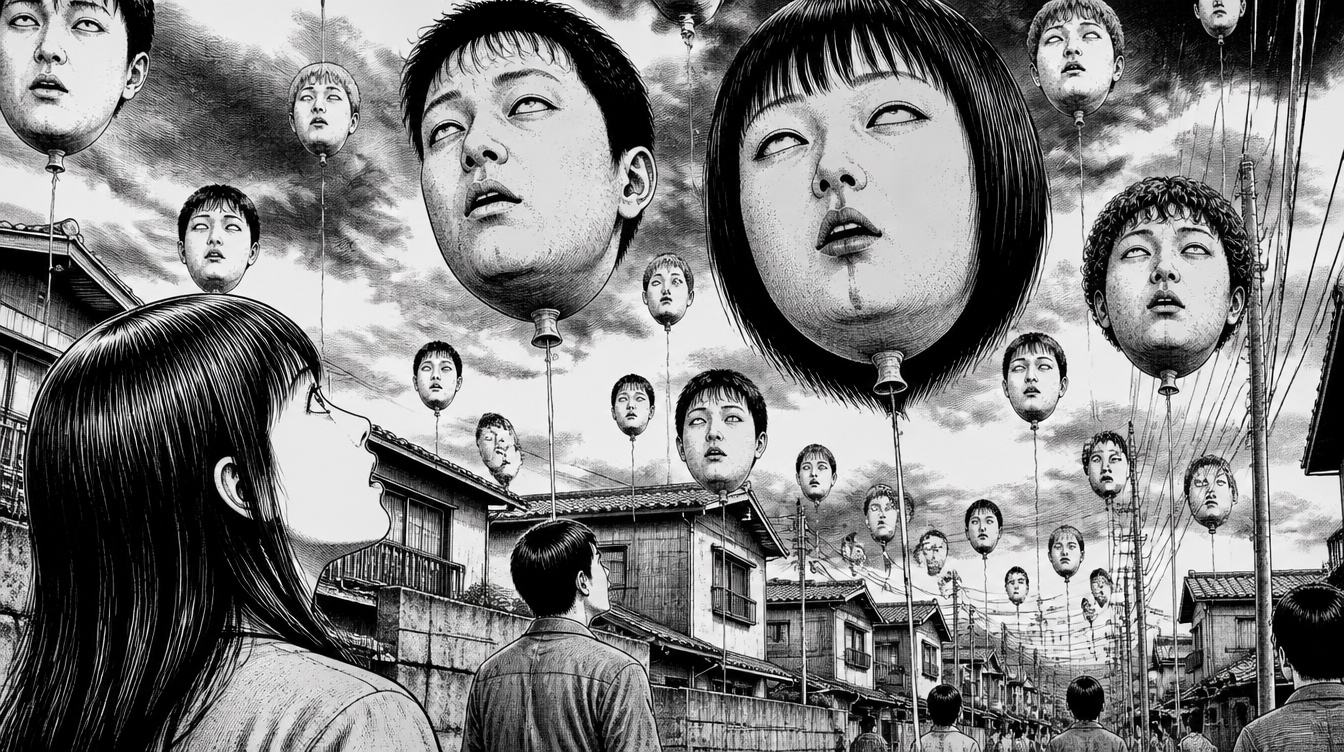
Junji Ito visual collage
Horror Manga / Obsession / Visual Literature恐怖漫画 / 执念 / 图像文学

Junji Ito and His Horror Manga伊藤润二和他的恐怖漫画

Junji Ito is a horror artist whose pages remain disturbing after the surprise has passed. The first shock often comes from the image itself, but what stays is structure: repetition, obsession, bodily drift, small-town stillness, a joke held one beat too long, and an ordinary world that carries on under impossible conditions. His monsters matter because the people and places around them learn to live with the unlivable.伊藤润二的漫画,往往在惊吓过去后才真正显出后劲。第一层冲击来自画面,但留在心里的更像是一套结构:反复出现的意象、执念、身体一点点失控、小镇死寂般的静止、一个多停半拍的荒诞笑话,还有看似普通的世界在不可能的条件下照常运转。怪物之所以可怕,不只因为它的形状,也因为周围的人和地方竟慢慢学会与无法承受的事共处。

Author Introduction作者简介

Born in Gifu in 1963, Ito grew up reading horror manga and later worked as a dental technician before moving into professional comics. That technical background mattered: his line work is clean, anatomical, patient, and often cruelly exact. Over time he built a body of work spanning body horror, cosmic horror, grotesque comedy, psychological dread, and apocalyptic fantasy, with Tomie, Uzumaki, Gyo, and Remina standing as four especially useful entry points.伊藤润二 1963 年出生于岐阜县,少年时期便沉迷恐怖漫画,成年后先做过一段时间牙科技师,之后才正式踏入职业漫画创作。这段经历并非无关紧要的插曲,反而相当关键:他的线条始终干净、耐心,近乎解剖学般精确,因此即便画面残酷,笔触也格外冷静。随着创作不断推进,他逐渐搭建起一个横跨身体恐怖、宇宙恐怖、怪诞喜剧、心理惊悚与末世幻想的庞大世界,而《富江》《漩涡》《鱼》《地狱星》正是通往这个世界的四扇绝佳入口。
Tomie富江Uzumaki漩涡GyoRemina地狱星Body Horror身体恐怖Cosmic Horror宇宙恐怖

Why His Horror Lasts为什么他的恐怖挥之不去

Many horror artists are remembered for one creature or one striking premise. Ito is remembered for a method. He takes one impossible idea, treats it with patience rather than haste, and keeps following its consequences until the entire environment bends around it. That is why his stories can feel at once absurd and deeply persuasive.

很多恐怖作者最终被人记住,靠的是某一个怪物、某一个设定、某一幕画面;伊藤润二被记住的,却更像是一整套方法。他会抓住一个不可能的念头,不急着让它一次性爆发,而是耐心地一路往下推,直到整个环境都围着这个念头变形。也正因为如此,他的故事才会显得既荒诞,又异常有说服力。

What Makes Junji Ito Distinct伊藤润二最特别的地方

Ito draws body horror with unusual force, but his real skill is pacing an idea until it becomes inescapable. Hair, snails, spirals, smell, whispers, beauty, gossip, desire, shame, celebrity, and architecture can all carry dread. The absurd and the frightening are allowed to contaminate one another.

伊藤润二当然擅长画身体异变,但更见功力的是他如何让一个念头逐步失控。头发、蜗牛、螺旋、气味、低语、美貌、流言、欲望、羞耻、名望和建筑,在他笔下都能承载恐惧。他不急着把荒诞和可怕分开,反倒让它们彼此渗透。

The reader laughs for half a second, then realizes the joke has already become a trap.读者往往先短促地笑出声,紧接着才惊觉,那点荒诞其实早已把人困在里面。

Career Line创作脉络

The move from dental technician to professional cartoonist is memorable, yet the artistic sequence says more. Tomie established repetition and violent desire; Uzumaki made a pattern govern an entire town; Gyo set disgust and war residue in motion; Remina widened the frame to cosmic panic and crowds seeking someone to blame.

从牙科技师转入职业漫画创作的经历很容易被提起,作品之间的递进却更值得看。《富江》写下反复归来的欲望与暴力,《漩涡》让一种图案统治整座小镇,《鱼》把厌恶与战争残留推着向前走,《地狱星》则把视野扩大到宇宙灾难和急于找人承担责任的人群。

Major Works at a Glance主要作品一览

Tomie富江Immortality, beauty, seduction, and endless return.不死、美貌、诱惑,以及无穷无尽的回归。
Uzumaki漩涡A whole town colonized by one pattern.一整座小镇,被一种图案悄悄占据。
GyoMetal-legged fish, war stench, and disgust set loose.长着机械腿的鱼、挥之不去的战争恶臭,以及被彻底释放的厌恶感。
Remina地狱星Cosmic apocalypse fused with celebrity scapegoating.宇宙尽头的浩劫,与名人式的替罪羊机制纠缠在了一起。

Timeline时间线

A compact line through the milestones helps explain why Ito's work feels both coherent and surprisingly diverse: the themes stay related, but the scale keeps widening.把几个关键节点连起来看,会更容易理解伊藤润二为什么既统一又多变:主题始终彼此相关,但尺度和形态一直在扩张。

1963-1984Gifu childhood, horror reading, technical training岐阜童年、恐怖阅读与技术训练

Born in Gifu in 1963, Ito grew up reading horror manga and later trained as a dental technician. That training helped shape the precision, patience, and anatomical clarity of his line.

1963 年生于岐阜,自幼阅读恐怖漫画,后来接受牙科技师训练。这段技术背景后来深刻影响了他的绘画方式,让他的线条始终带着精确、耐心与近乎解剖式的清晰感。

1987-1989Tomie opens the door《富江》打开入口

Ito submitted the story that became Tomie and entered the manga world through Kazuo Umezu Prize recognition. Tomie would go on to become his first major signature work.

伊藤润二投稿了后来发展成《富江》的作品,并凭借楳图一雄奖的相关认可正式进入漫画界。《富江》随后也顺理成章地成长为他第一部真正意义上的代表作。

1998-2002Uzumaki and Gyo define the canon《漩涡》与《鱼》奠定经典地位

Serialized from 1998 to 1999, Uzumaki turned a simple spiral into environmental fate. Soon after, Gyo pushed horror toward smell, decay, war residue, and mechanical grotesque movement.

《漩涡》于 1998 至 1999 年连载,把一个简单的螺旋图案,发展成了环境级别的宿命。紧接其后的《鱼》,又把恐怖进一步推向气味、腐烂、战争遗留物与机械式的怪异运动。

2004-2015Remina, anthologies, and scale expansion《地狱星》、短篇集与尺度扩张

Remina widened Ito's horror toward cosmic catastrophe and mob panic, while his anthologies and reissues made readers see that he could move from intimate grotesque comedy to full apocalyptic spectacle without losing his voice.

《地狱星》把伊藤润二的恐怖进一步拉向宇宙灾厄与群体疯狂;而大量短篇集、重刊本与再版,则让读者逐渐确认:无论是私密的怪诞喜剧,还是彻底的末世奇观,他都能保持自己独有的声音。

2019-2024Global prestige and renewed adaptation wave全球声望与新一轮改编热

From 2019 onward, Ito received multiple Eisner Awards, earned the Inkpot Award in 2023, and saw a renewed adaptation wave that kept expanding his audience. By this point, he was no longer just a cult favorite, but a canonical horror author with worldwide reach.

自 2019 年起,伊藤润二接连斩获多项艾斯纳奖(Eisner Award),并于 2023 年获颁墨水瓶奖(Inkpot Award),同时迎来新一轮改编热潮,读者圈层持续扩大。到了这个阶段,他已不再只是“邪典名家”,而是被全球读者共同认可的经典恐怖作者。

Tomie富江

The immortal girl, male obsession, and the violence of endless recurrence不死少女、男性执念,以及无穷回返中的暴力

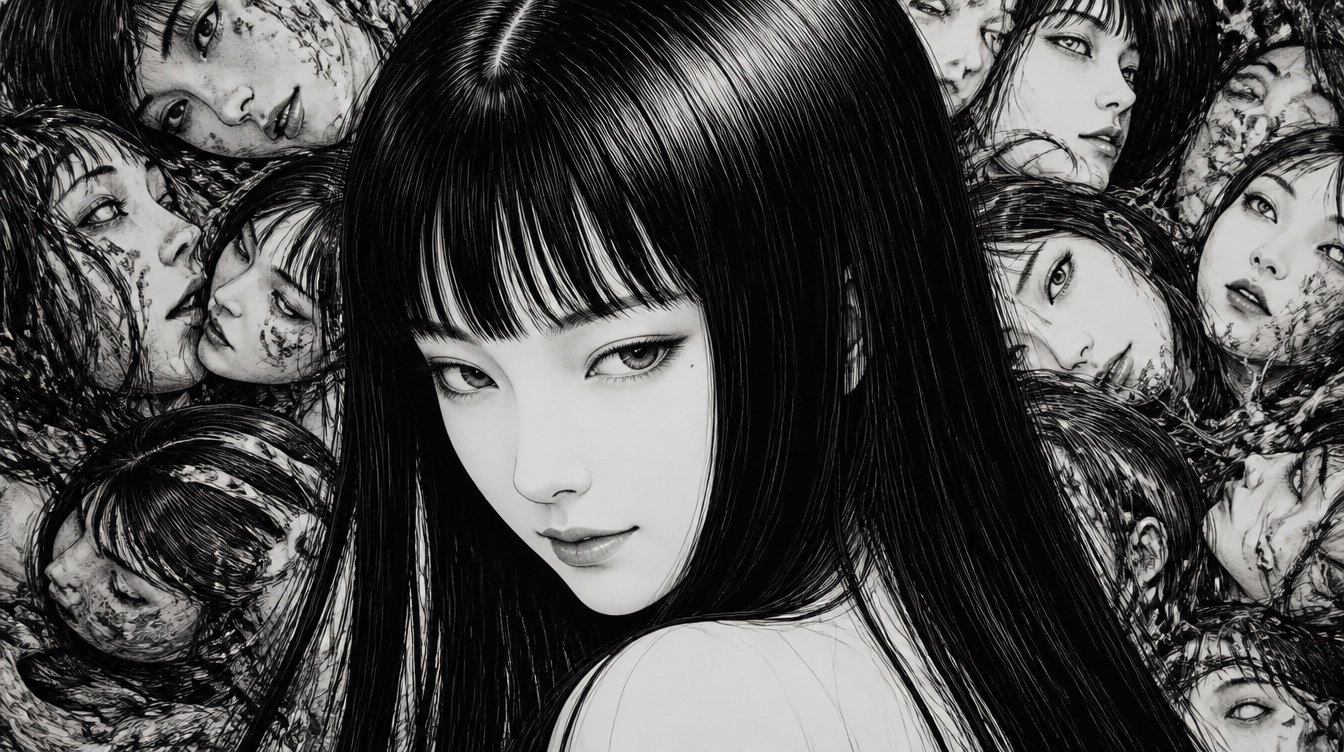
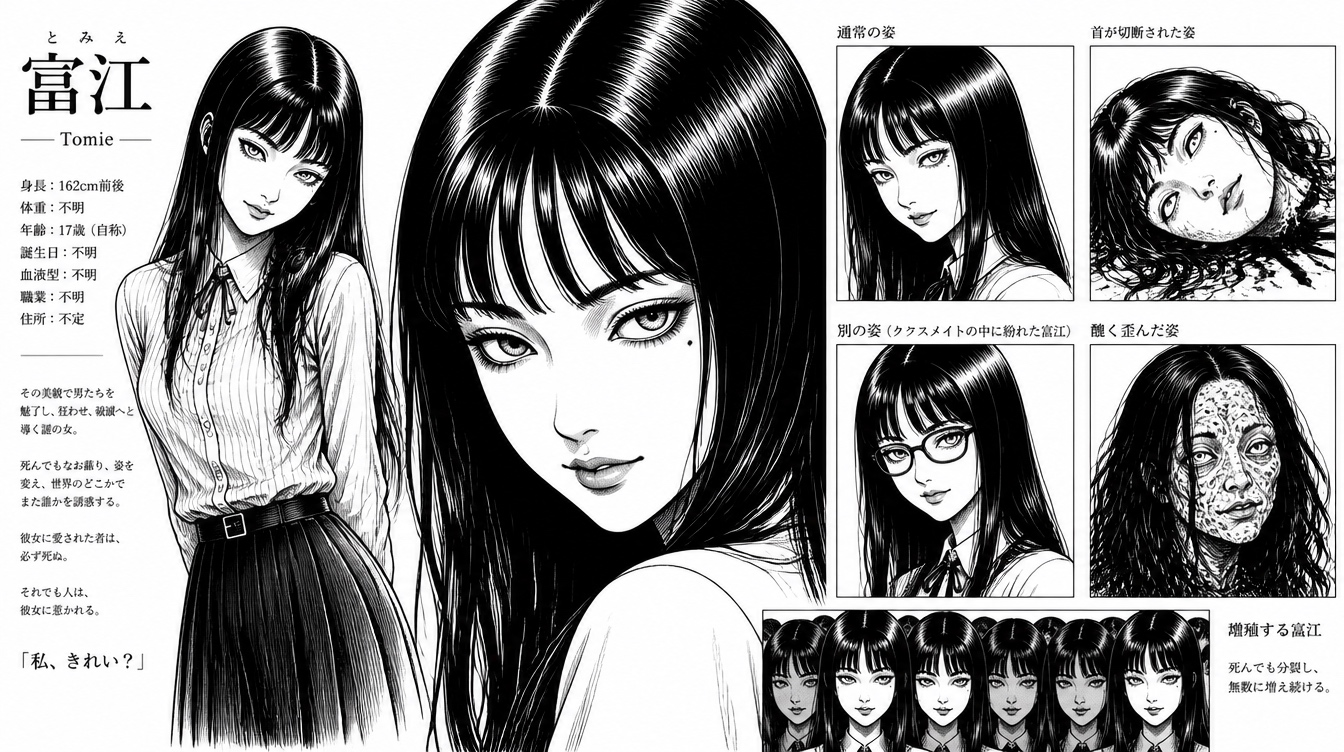
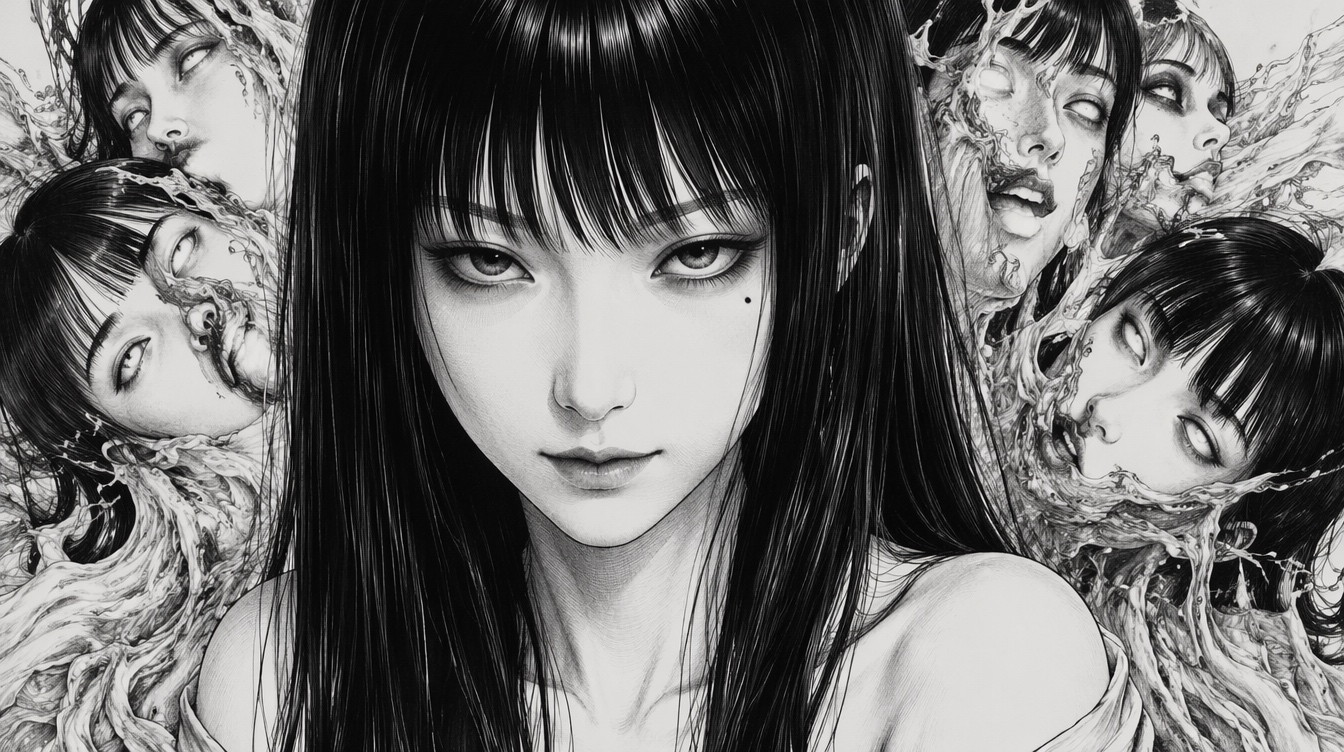
Tomie is where Junji Ito first proved that horror could be both elegant and merciless. Tomie Kawakami is beautiful, magnetic, cruel, and functionally unkillable. She seduces, incites jealousy, is dismembered, regenerates, multiplies, and returns. Each repetition changes the surrounding people a little more, until love becomes violence and the wish to possess beauty becomes indistinguishable from the urge to destroy it.

《富江》是伊藤润二第一部真正证明恐怖也能同时优雅又残忍的作品。川上富江美丽、摄人心魄、刻薄,而且几乎不可能被真正杀死。她引诱、挑起嫉妒、被肢解、再生、复制、归来。每一次重复回返,周围的人都会再多失控一分,直到爱意径直变成暴力,占有美的欲望也与摧毁美的冲动彻底纠缠在一起。

Tomie draws her power from the social theater of desire and misogyny that the series repeatedly exposes, with immortality serving as its engine. Tomie is victim, villain, mirror, fantasy object, contamination, and accusation all at once. She is frightening because every attempt to erase her only guarantees another return.

《富江》真正厉害的地方,不只在于“不死”这个设定本身,而在于它不断揭开欲望与厌女心理如何合谋演出一整套社会戏剧。富江既是受害者,也是施害者;既是镜子,也是幻想对象;既像污染源,又像一句控诉。她之所以可怕,恰恰在于每一次试图抹去她,到头来都只是确保她以另一种形式归来。

Why It Matters为什么重要

  • Ito's first major breakthrough, born from the late-1980s Tomie material that established his name.奠定伊藤润二名声的早期关键作品,源头可追到 1980 年代末的《富江》素材。
  • A rare horror series where seduction, repetition, and dismemberment are fused into one engine.少见地把诱惑、重复与肢解熔铸进同一台发动机里的恐怖系列。
  • Its afterlife across film and anthology adaptations shows how durable the figure of Tomie has become.后来延伸出的电影与动画改编,也说明“富江”这个形象拥有非常持久的传播力。

Uzumaki漩涡

A pattern becomes fate, environment, architecture, and eternity一种图案逐渐变成命运、环境、建筑,乃至永恒
Uzumaki section banner

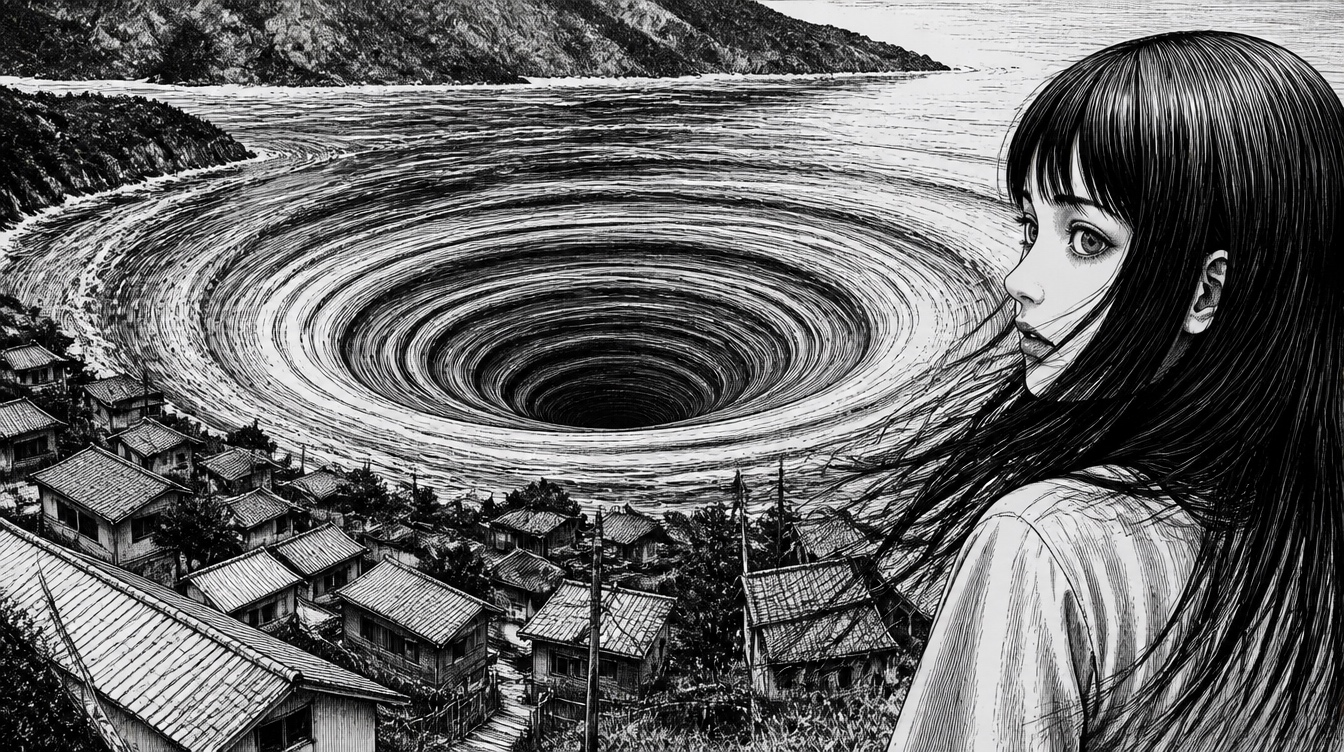
Uzumaki may be the most complete statement of Junji Ito's worldview. The setup is disarmingly simple: a coastal town is cursed by spirals. But from there, the spiral ceases to be decoration and becomes law. It appears in hair, smoke, bodies, weather, architecture, desire, panic, and time itself. By the end, the reader is no longer dealing with a motif. The motif has become geology.

《漩涡》大概是最完整体现伊藤润二世界观的一部作品,起点却异常简单:一座海边小镇,被“螺旋”诅咒了。但从那一刻起,螺旋不再只是图案,而逐渐升格为一种法则——它出现在头发、烟雾、身体、天气、建筑、欲望、恐慌,甚至时间本身之中。读到后来,读者面对的已不再是一个反复出现的意象,而是一整套地质层级的命运结构。

Uzumaki holds together because Ito keeps its many detours answerable to the same curse. Each local escalation becomes stranger, yet none feels imported from another story. The result is a town-sized environment of dread, built from the unnerving possibility that a form can become a law.

《漩涡》能始终成立,靠的是伊藤润二让那些看似岔开的事件都回到同一套诅咒里。局部情节越走越怪,却不会像从别的故事临时搬来。读到后来,整座小镇都成了恐惧环境,仿佛一个图案真的能够变成支配生活的法则。

Why Readers Return为什么总会重读

  • Serialized from 1998 to 1999; for many readers, it is the clearest place to see his long-form method at work.1998 至 1999 年连载,也是最适合观察他如何经营长篇结构的作品之一。
  • Transforms a single visual pattern into a total metaphysical system.把单一视觉图案扩张成完整的形而上学系统。
  • Its atmosphere keeps influencing later horror manga, films, games, and visual art.它的氛围与想象方式持续影响后来的漫画、电影、游戏和视觉艺术。

Gyo《鱼》

Metal legs, death stench, war residue, and a world made unbearable by disgust机械腿、死亡恶臭、战争残余,以及被厌恶彻底占满的世界
Gyo section banner

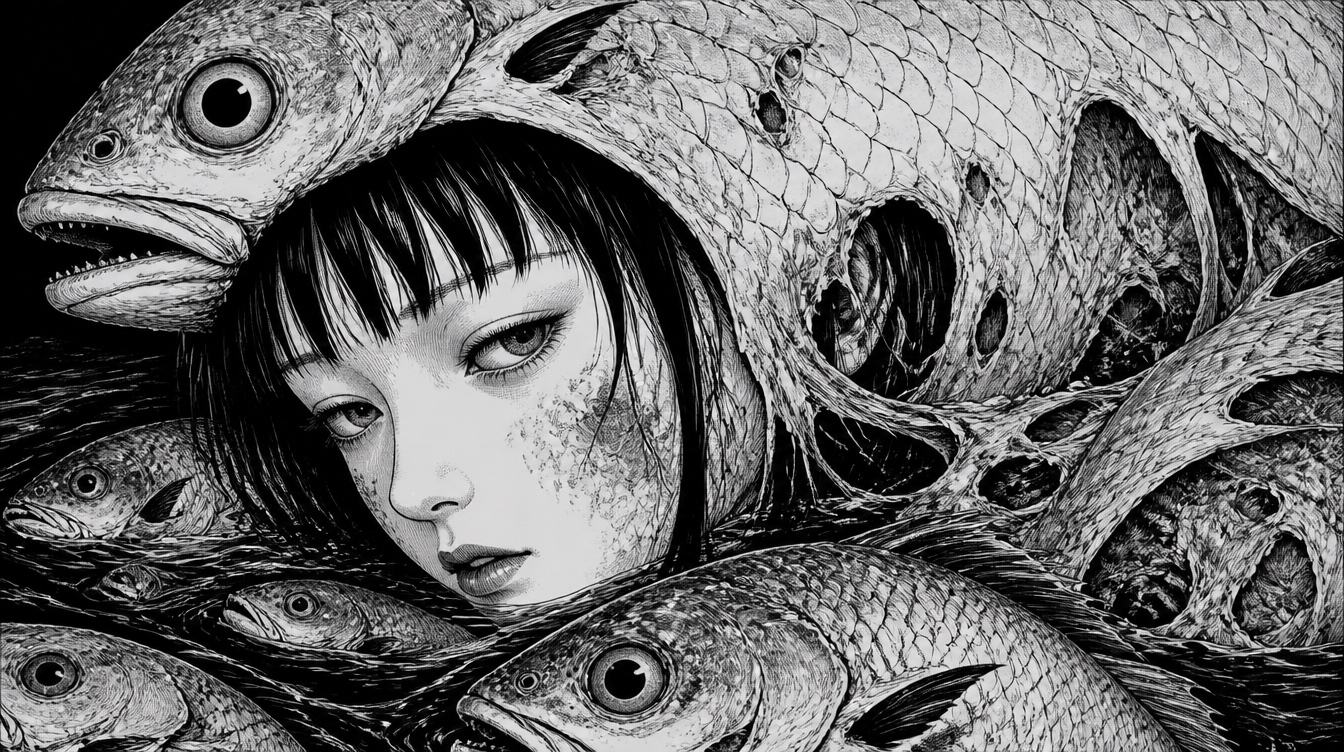
Gyo is one of Ito's most physically revolting works, but it is too inventive to be reduced to disgust alone. The premise is unforgettable: fish walk on metal legs and carry a death stench that spreads infection, decay, and panic. What begins as bizarre invasion quickly opens into something wider, involving wartime science, mechanical mutation, ruined bodies, and a city learning that air itself can become hostile.

《鱼》当然是伊藤润二最令人生理不适的作品之一,但它远不止“恶心”这么简单。它的设定几乎让人一眼就忘不掉:鱼长出机械腿,在陆地上爬行,还带来一种会扩散、感染、腐烂的“死亡恶臭”。故事一开始看似只是怪异入侵,随后却不断向更大的层面展开,牵扯出战争科学、机械变异、身体毁败,以及一整座城市不得不承认,连空气本身都可能变成敌人。

Gyo reaches beyond the page through smell. It makes the reader imagine an atmosphere nobody can leave, which is a more invasive prospect than an image alone. The story moves faster than Uzumaki, pursues grotesquerie more directly than Tomie, and carries an industrial sickness unlike most of Ito's work.

《鱼》更隐秘也更凌厉的一点在于,它的恐怖并不只依靠视觉,而是直接借“气味”攻陷想象力——读者会被迫去想象一种根本无处可逃的空气环境。这种感官策略,让《鱼》在伊藤润二的作品序列里占据了非常特别的位置:它比《漩涡》更具运动性,比《富江》更主动地朝怪诞腐坏推进,也比他大多数作品都多了一层工业病灶般的冷酷质感。

Placement in the Canon在作品谱系中的位置

  • Serialized in 2001-2002 and later adapted into an OVA.2001 至 2002 年连载,后被改编为 OVA 动画。
  • Combines body horror with machinery, war memory, and ecological unease.把身体恐怖、机械装置、战争记忆与生态不安结合在一起。
  • Also contains The Enigma of Amigara Fault, one of Ito's most famous bonus stories.单行本还收录《阿弥壳断层之怪》,这也是他最著名的附篇之一。

Hellstar Remina地狱星

Cosmic horror, public hysteria, and a girl turned into a planetary scapegoat宇宙恐怖、公众歇斯底里,以及被行星灾厄推成替罪羊的少女
Hellstar Remina section banner

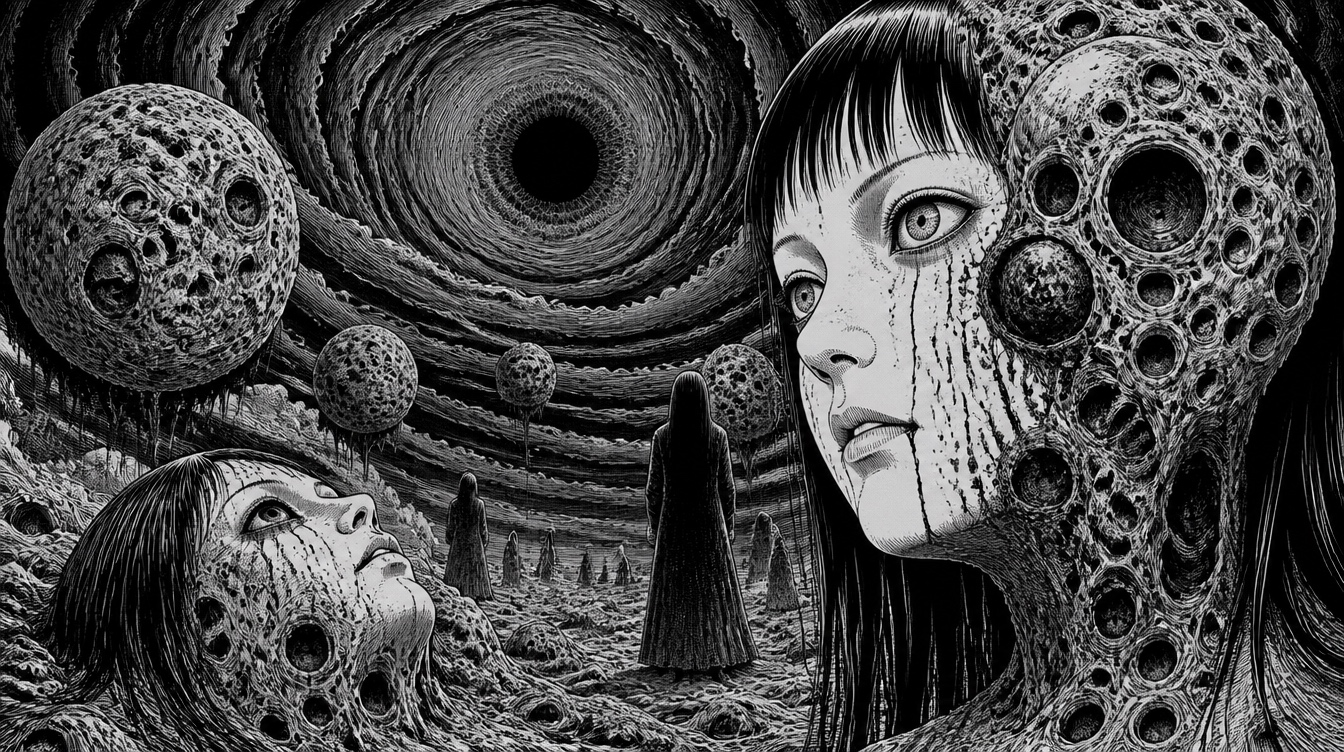
Remina begins like science fiction and then reveals itself as social horror. A rogue celestial body discovered by Professor Oguro is named after his daughter Remina. When the planet turns predatory and moves toward Earth, public awe becomes panic, and panic becomes persecution. The crowd decides the girl whose name the planet bears must somehow be guilty.

《地狱星》起初读来像一部科幻漫画,随后却越来越像一则社会恐怖寓言。小黑教授发现了一颗异常天体,并以女儿的名字为它命名。当这颗“地狱星”显露出十足的掠食本能、朝地球步步逼近时,公众的惊叹迅速转为恐慌,恐慌又进一步演变成迫害。人群最后竟然认定:既然这颗星以她命名,那这个女孩就必须为世界末日负责。

That shift is the real brilliance of Remina. Yes, the manga offers giant cosmic appetite, grotesque planetary imagery, and end-of-world scale. But underneath that spectacle is a much colder insight: in a crisis, people often want a face to punish more than a truth to understand. Ito takes cosmic horror and fuses it with mob psychology, celebrity machinery, and sacrificial violence.

《地狱星》最厉害的地方,正是这种转向。它当然提供了巨大行星、怪异吞噬与世界终结的视觉规模,但真正锋利的,是它对群体心理的判断:身处危机之中,人们往往更急于找到一张可以惩罚的脸,而不是弄清真相本身。于是伊藤润二把宇宙恐怖,与暴民心理、名望工业、献祭式暴力缝合在了一起。

Key Notes关键词

  • Serialized in 2004-2005 and later gathered in a single volume.2004 至 2005 年连载,后以单行本形式整理出版。
  • One of Ito's clearest bridges between cosmic horror and crowd violence.最能体现伊藤润二如何把宇宙恐怖与群众暴力接起来的作品之一。
  • Remina also helped bring him major English-language recognition in the 2020s.这部作品也成为他在 2020 年代英语世界进一步扩大影响力的重要入口之一。

No Longer Human人间失格

A literary adaptation where shame, self-loathing, and social collapse become visual horror一部把羞耻、自我厌弃与社会性崩塌翻译成视觉恐怖的文学改编
No Longer Human section banner

No Longer Human matters because it shows Junji Ito doing something slightly different from his most famous horror premises. Here the terror does not begin with an immortal girl, a spiral curse, or metal-legged fish. It begins inside consciousness itself: shame, performance, dependency, disgust, and the exhausting labor of pretending to be acceptable in front of other people.

《人间失格》之所以值得单独拿出来谈,是因为它展现了伊藤润二在做一件与自己最著名的恐怖设定略有不同的事。这里的恐怖不再从不死少女、螺旋诅咒或机械腿的鱼开始,而是直接从人的意识内部开始:羞耻、表演、依赖、厌弃,以及为了在人前显得“还算正常”而不断付出的疲惫劳作。

Adapting Osamu Dazai could easily have produced a respectable but inert literary manga. Ito avoids that trap. He keeps the despair psychological, but gives it a face, a posture, and a bodily texture. The result is not loud horror. It is a slow corrosion of the self, rendered with the same calm precision he brings to monstrosity elsewhere. That is precisely why the work feels so unsettling: the human figure remains recognizably human even while its inner structure is collapsing.

改编太宰治,本来很容易做成一部“体面却沉闷”的文学漫画;伊藤润二没有掉进这个陷阱。他保留了那种心理层面的绝望,同时又为绝望重新赋形,让它长出面孔、姿态与身体质感。这是一种极缓慢的自我腐蚀,却依旧带着伊藤润二一贯的冷静与精确,并非那种高声喧哗的恐怖。也正因为如此,这部作品才格外令人不安:人的外形依旧是人的外形,但支撑它的内部结构,已经开始一层层塌陷。

Read after Remina, the chill becomes even sharper. Remina throws the reader into cosmic catastrophe and mob panic; No Longer Human returns to a far quieter disaster, where humiliation, self-erasure, addiction, and social exhaustion slowly hollow a person out from within. The contrast makes Ito's range feel especially clear.

接在《地狱星》之后来读,这种寒意反而更加清晰。《地狱星》把人一下子抛进宇宙灾厄与群体疯狂之中,而《人间失格》则退回到一种安静得多、却更贴身的毁坏里:羞辱、自我抹除、沉溺,以及被人际关系一点点掏空的疲惫。两相对照,伊藤润二的创作跨度也就显得格外清楚。

What Stays With Me最留下来的东西

  • What lingers most is how little the story relies on monsters. The terror comes from watching a person keep failing to live inside his own face.最留下来的,恰恰是它几乎不依赖怪物——真正的恐怖,在于看着一个人如何一次又一次,无法安稳地住进自己的那张脸里。
  • Ito does not decorate despair here. He gives it posture, skin, fatigue, and a social setting, which makes the suffering feel embarrassingly close.伊藤润二在这里并没有替绝望做华丽包装,而是直接给了它姿态、皮肤、疲惫感与社会处境,于是那种痛苦才显得近得让人难堪。
  • That is why this adaptation feels important in his body of work: it shows that his horror can remain devastating even when almost nothing supernatural happens on the surface.也正因为如此,这部改编在他的作品序列里才格外重要:它证明即便表面上几乎没有超自然事件发生,伊藤润二的恐怖依旧能同样伤人。
The Hanging Balloons artwork

Further Doors Into Ito还可以从哪些门进去

Even after the major anchors above, there are still many other doors into Ito. The Hanging Balloons turns public image into collective death. The Enigma of Amigara Fault converts destiny into topology. Cat Diary shows that even comedy, in his hands, still trembles with weirdness. His range comes from finding new containers for the same unease, work after work.

即便前面几部重点作品已经展开,伊藤润二依然还有许多其他入口。《人头气球》把公共形象写成一套集体死亡机制,《阿弥壳断层之怪》把命运直接雕进地形之中,而《猫日记》则说明,即使是看似轻松的日常喜剧,到他手里也照样会带上一丝奇异的颤动。真正重要的,是他总能为同一种不安找到新的容器,并非他把某一招重复得多熟练。

Short-form terror短篇恐怖

The Hanging Balloons《人头气球》

Public faces detach from ordinary life and return as instruments of doom.熟悉的公众面孔脱离日常,再以索命的方式回到空中。

Geometric fate几何宿命

The Enigma of Amigara Fault《阿弥壳断层之怪》

Few stories capture the terror of being called by something that fits you too well.很少有故事能把“有某个洞刚好属于你”这种命运感写得这么可怕。

Comic self-parody喜剧式自我戏仿

Cat Diary: Yon & Mu《猫日记》

Even domestic comedy becomes uncanny when filtered through Ito's sensibility.即使是居家喜剧,一旦经过伊藤润二的感官,也会长出一点不安与怪味。