What Megalophobia Actually Means
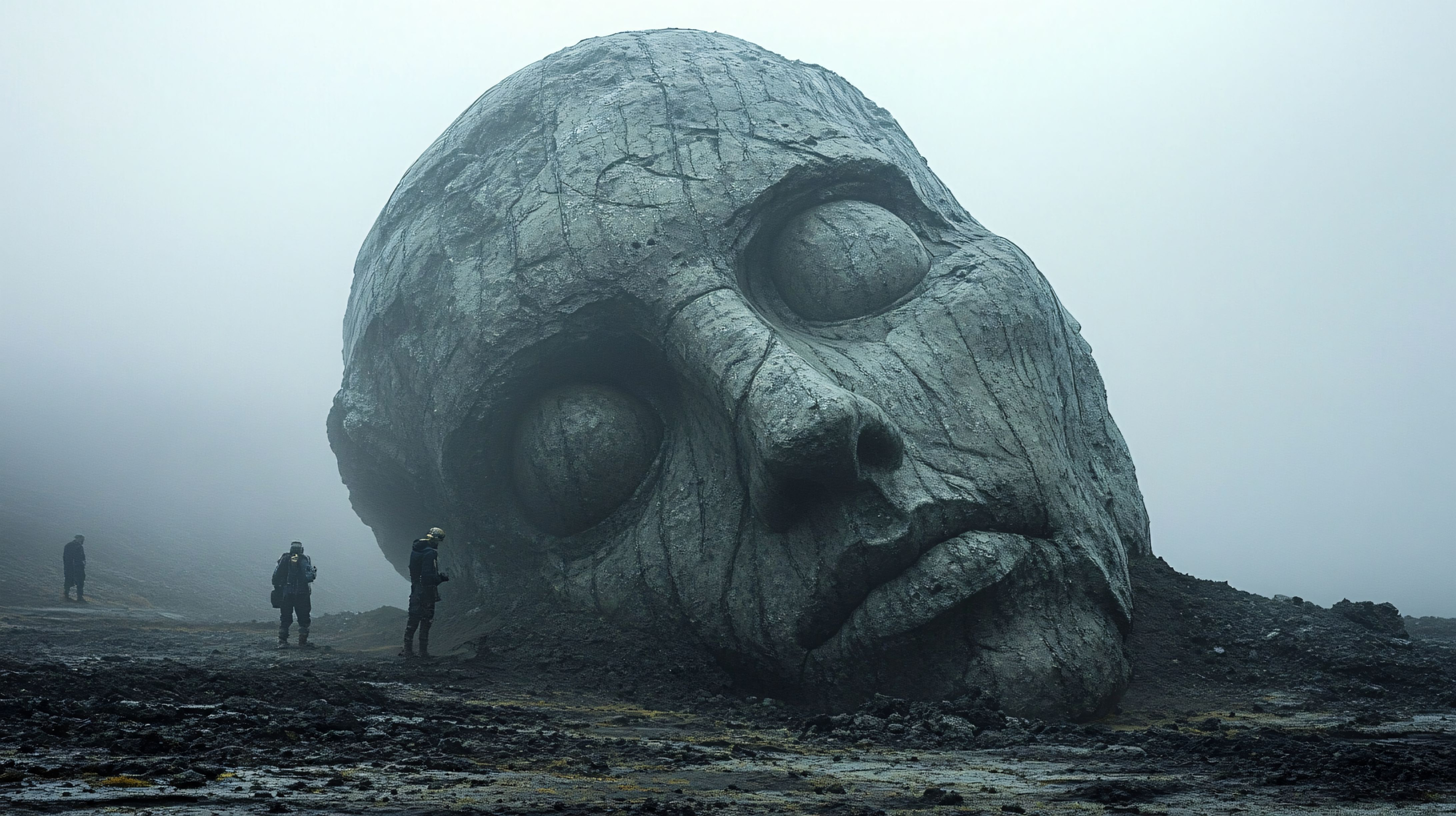
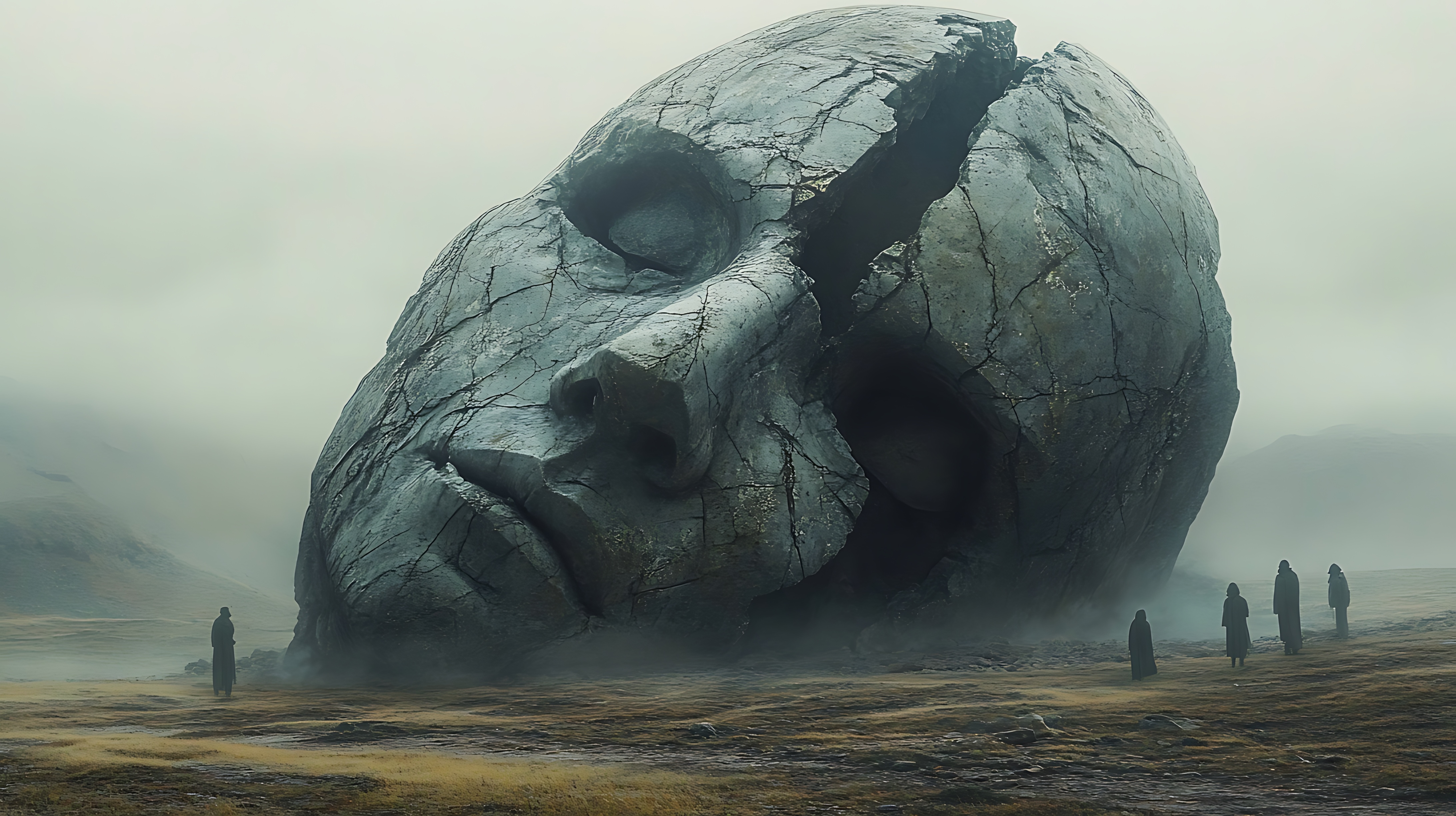
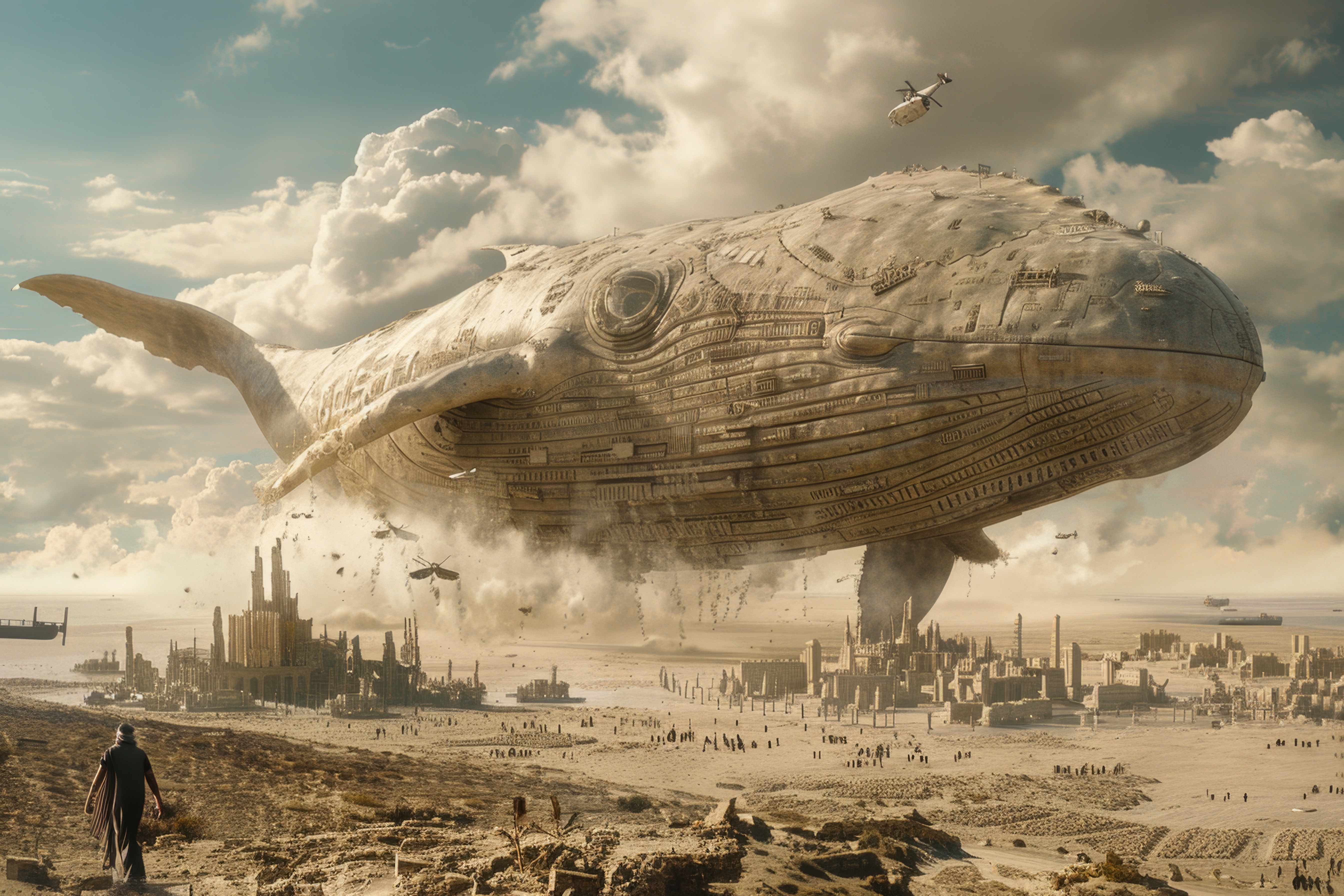
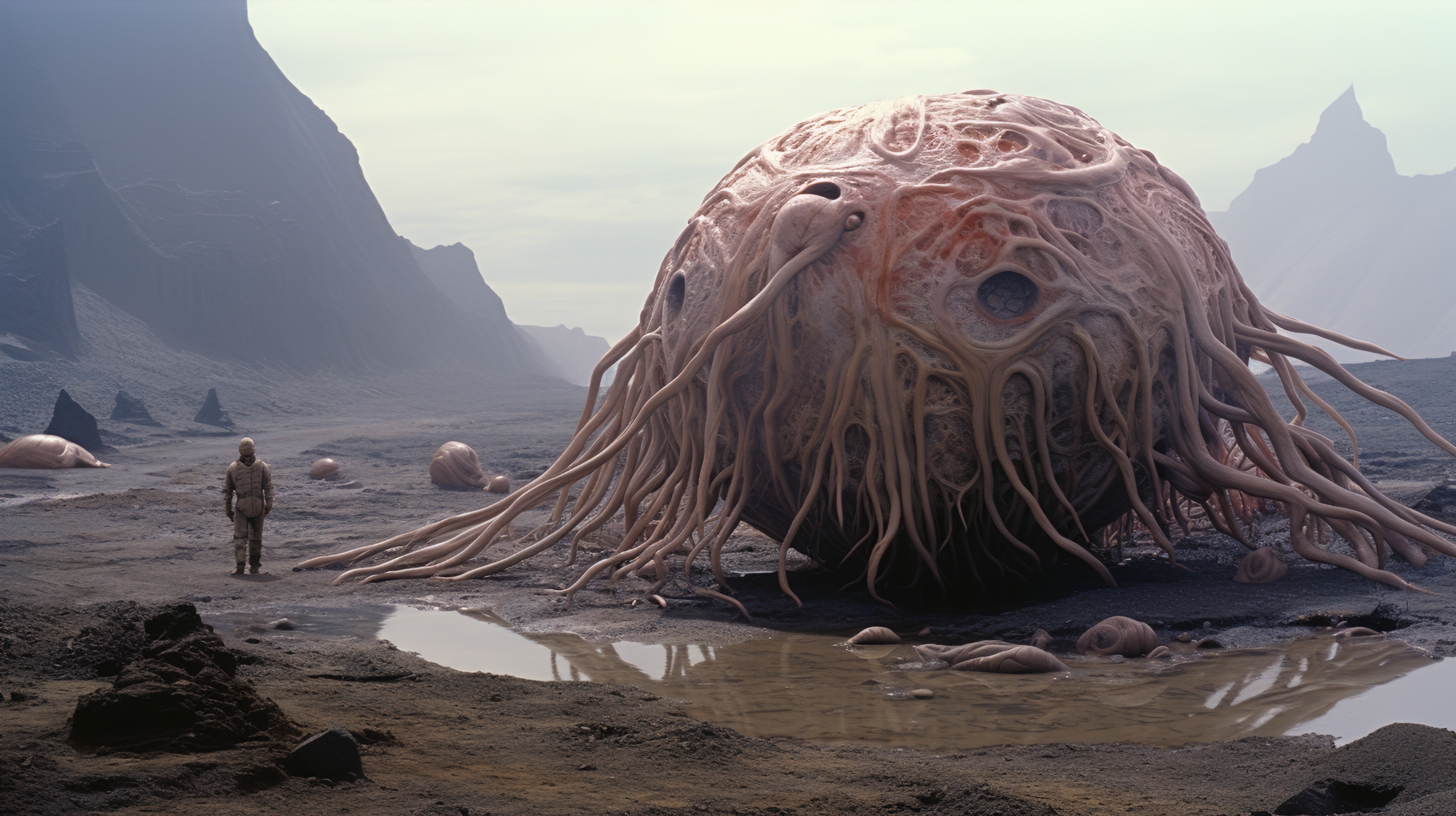
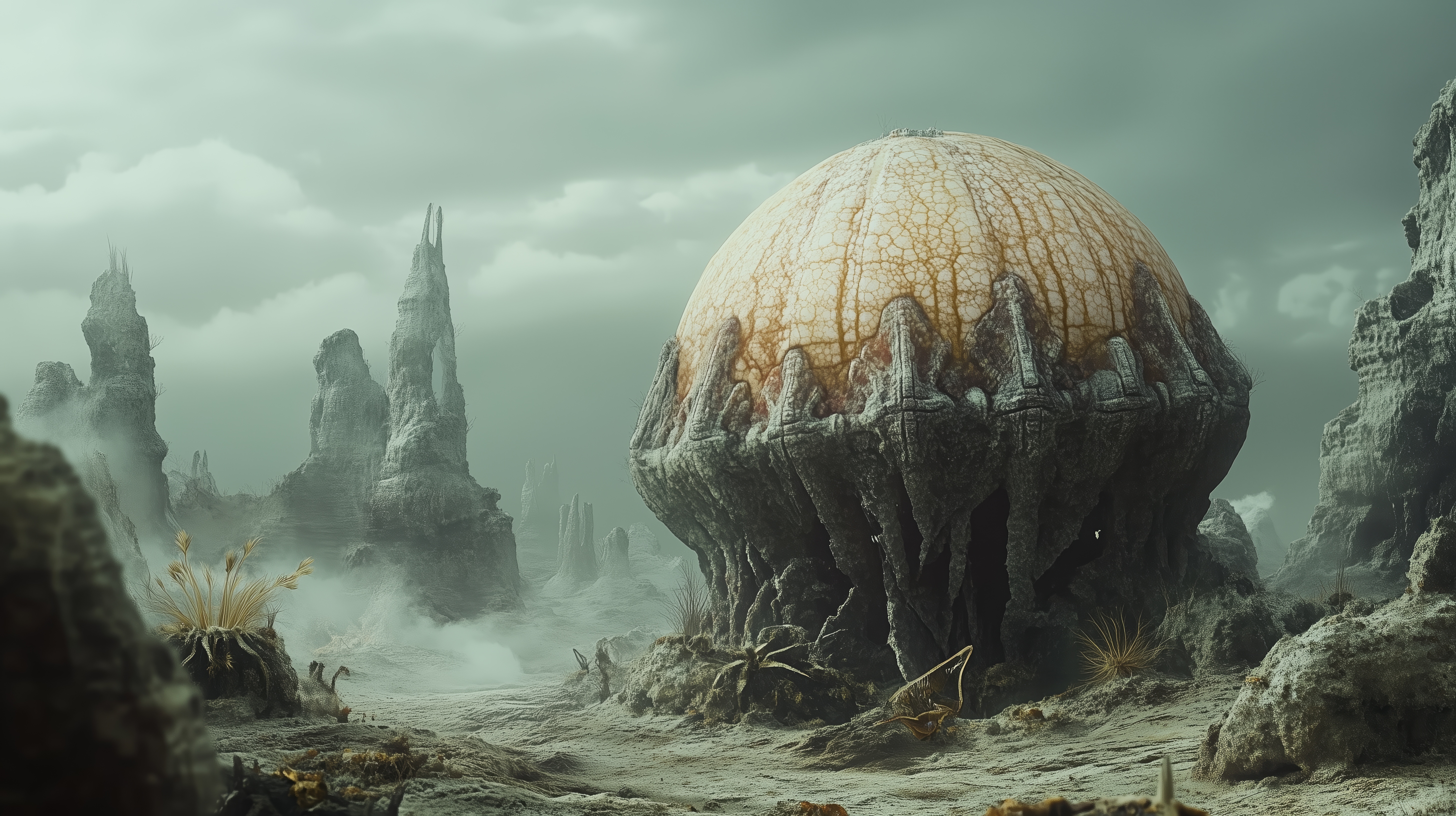
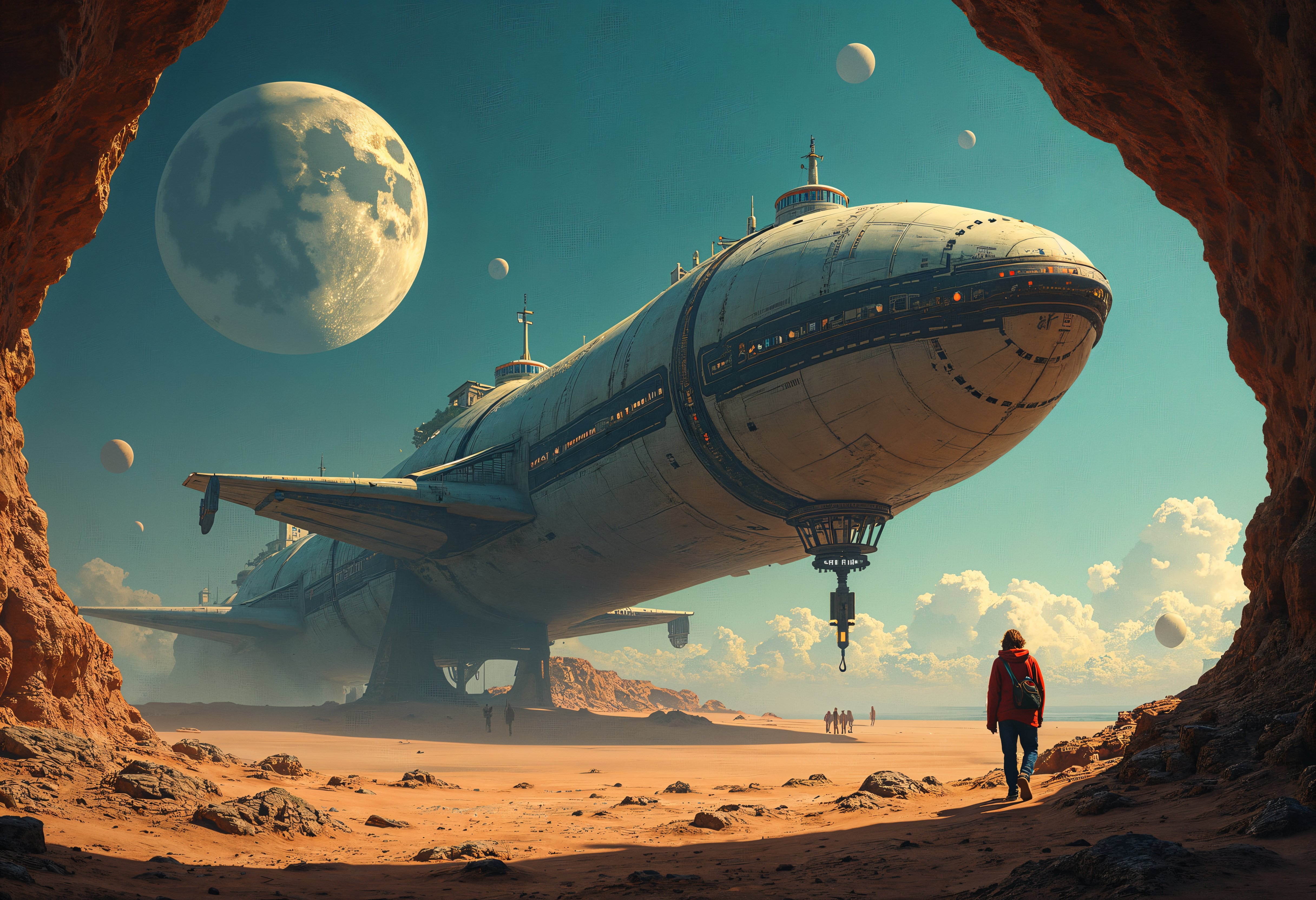
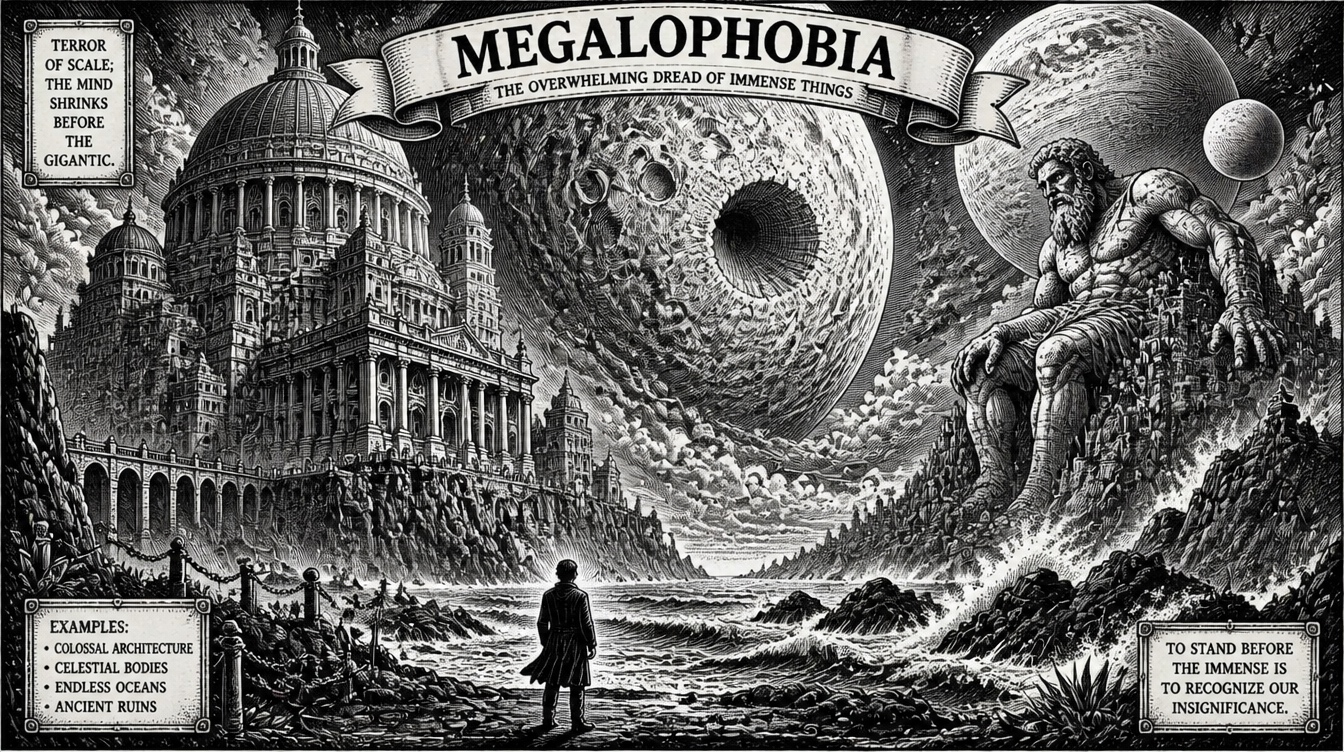
Megalophobia is usually described as fear of very large objects, but that definition is a little too flat. Plenty of things are large without being disturbing. The feeling starts when size stops reading as normal scale and begins to break the mind's sense of proportion. A ship no longer feels like a vehicle. A statue no longer feels decorative. A moon, skull, whale, tower, cave, or machine grows so far beyond the body that it stops behaving like an object you look at and starts behaving like something you stand under the influence of.
That does not automatically mean a clinical disorder. Many people only meet this feeling through images, films, games, or art, and what they experience is closer to scale dread than diagnosis. Even so, the body's response can be immediate: a tightened chest, a small drop in the stomach, reluctance to keep looking, or a faint dizzy feeling that comes from not knowing where to place yourself in relation to what you see. It often brushes up against thalassophobia, submechanophobia, acrophobia, cosmic unease, ruin anxiety, and the uncanny.
A simpler way to put it: megalophobia is often less about danger than about relation. The thing in front of you is simply too large to be pulled back into ordinary human measure.