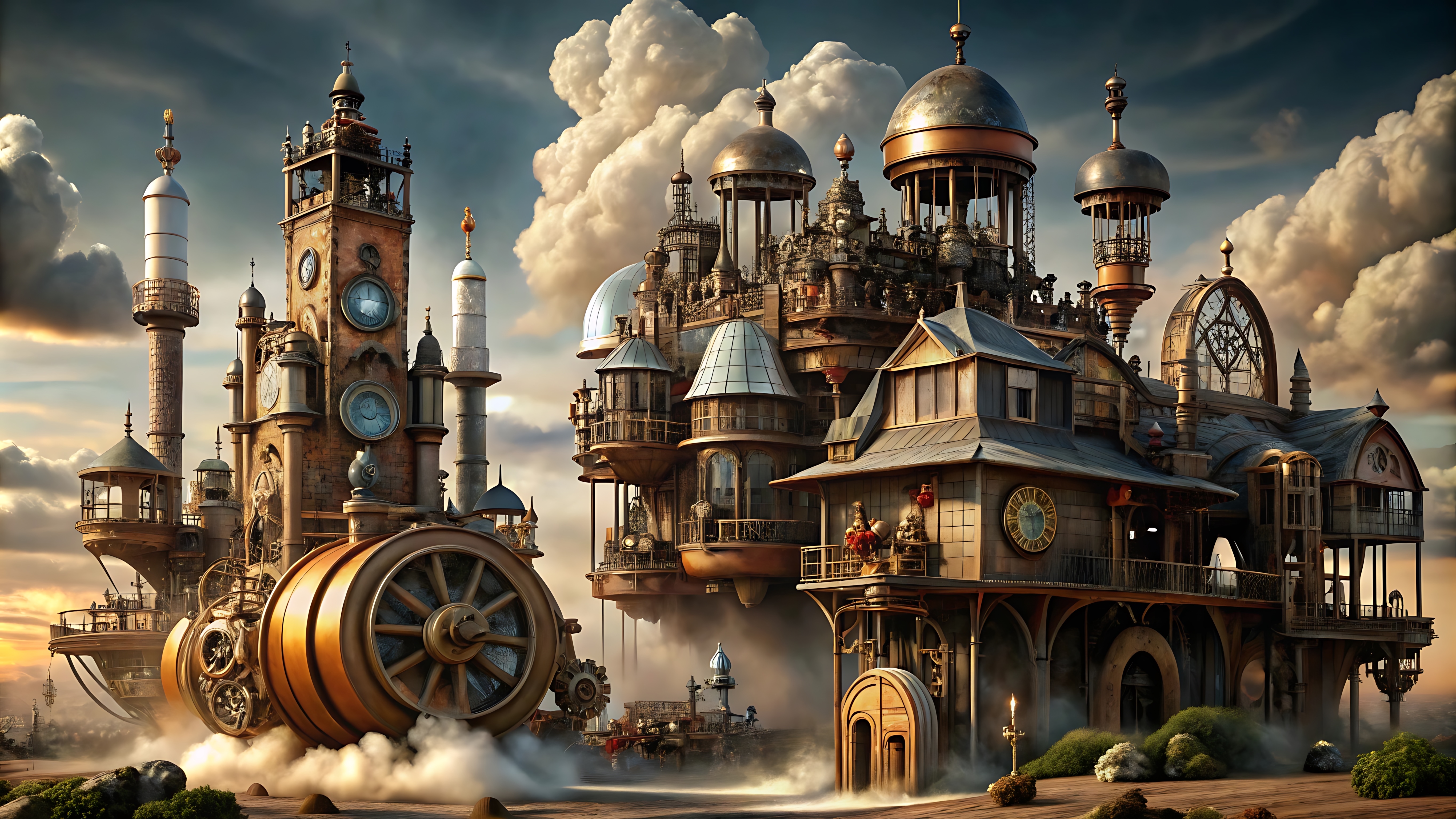
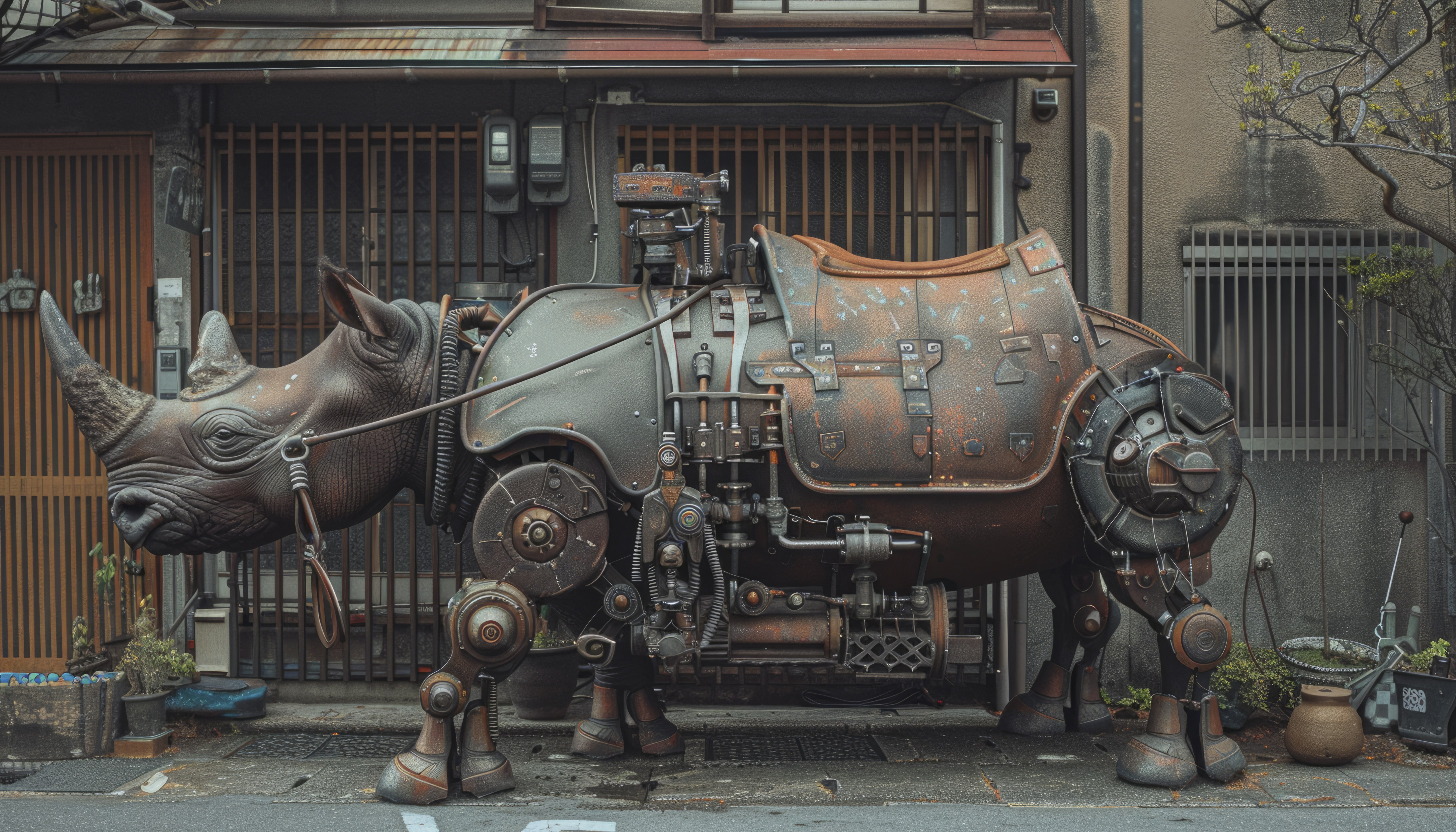
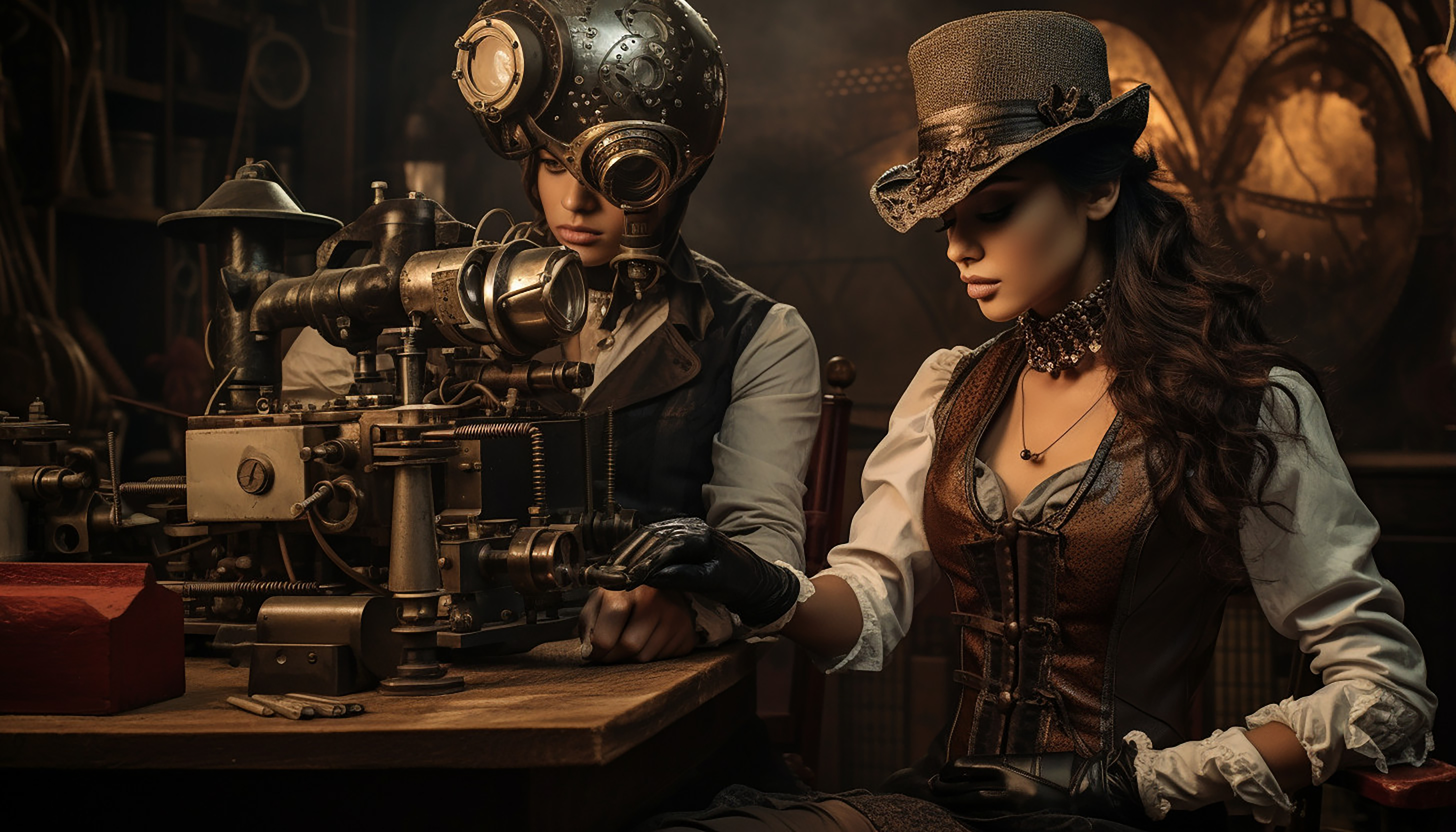
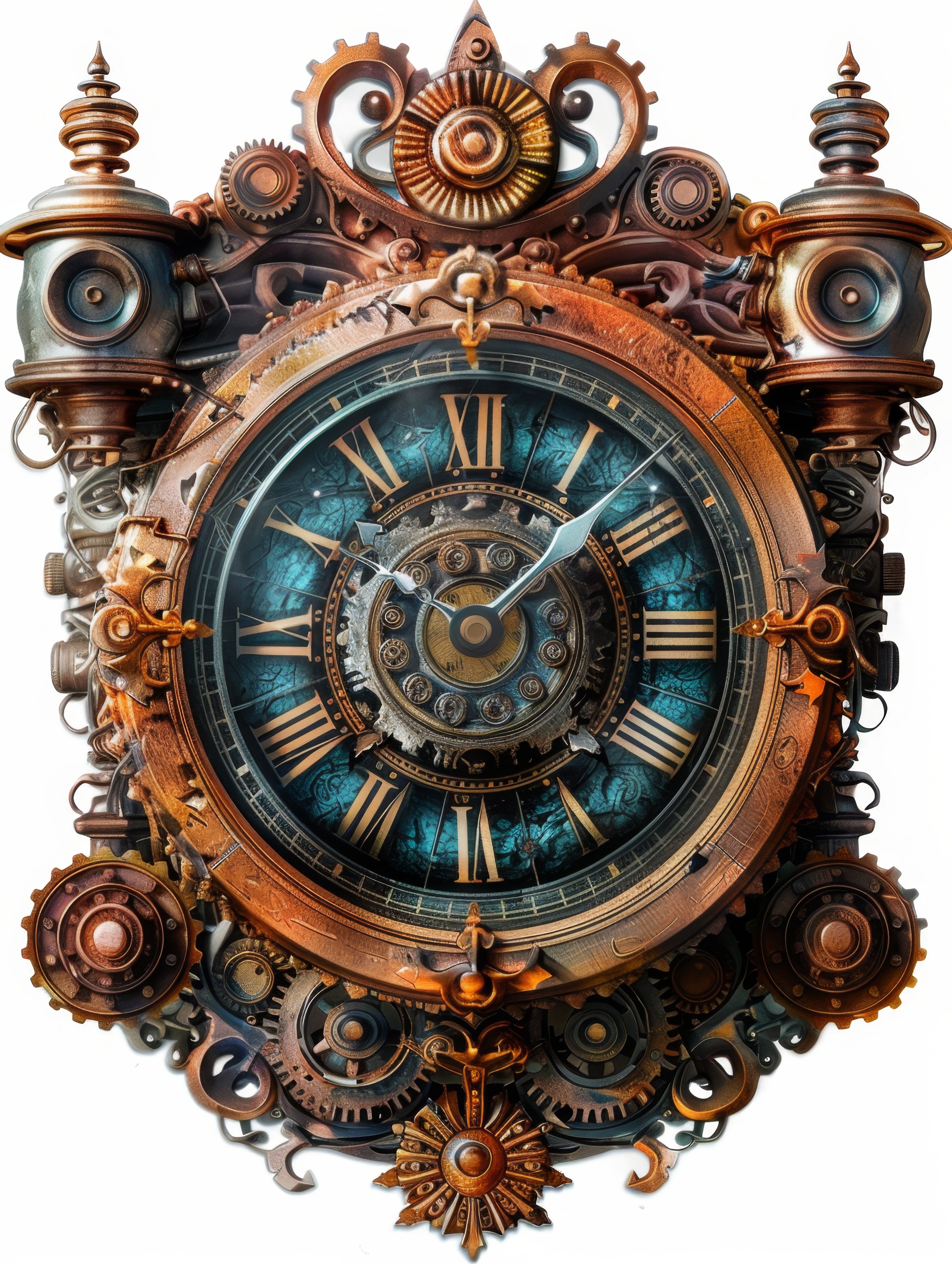
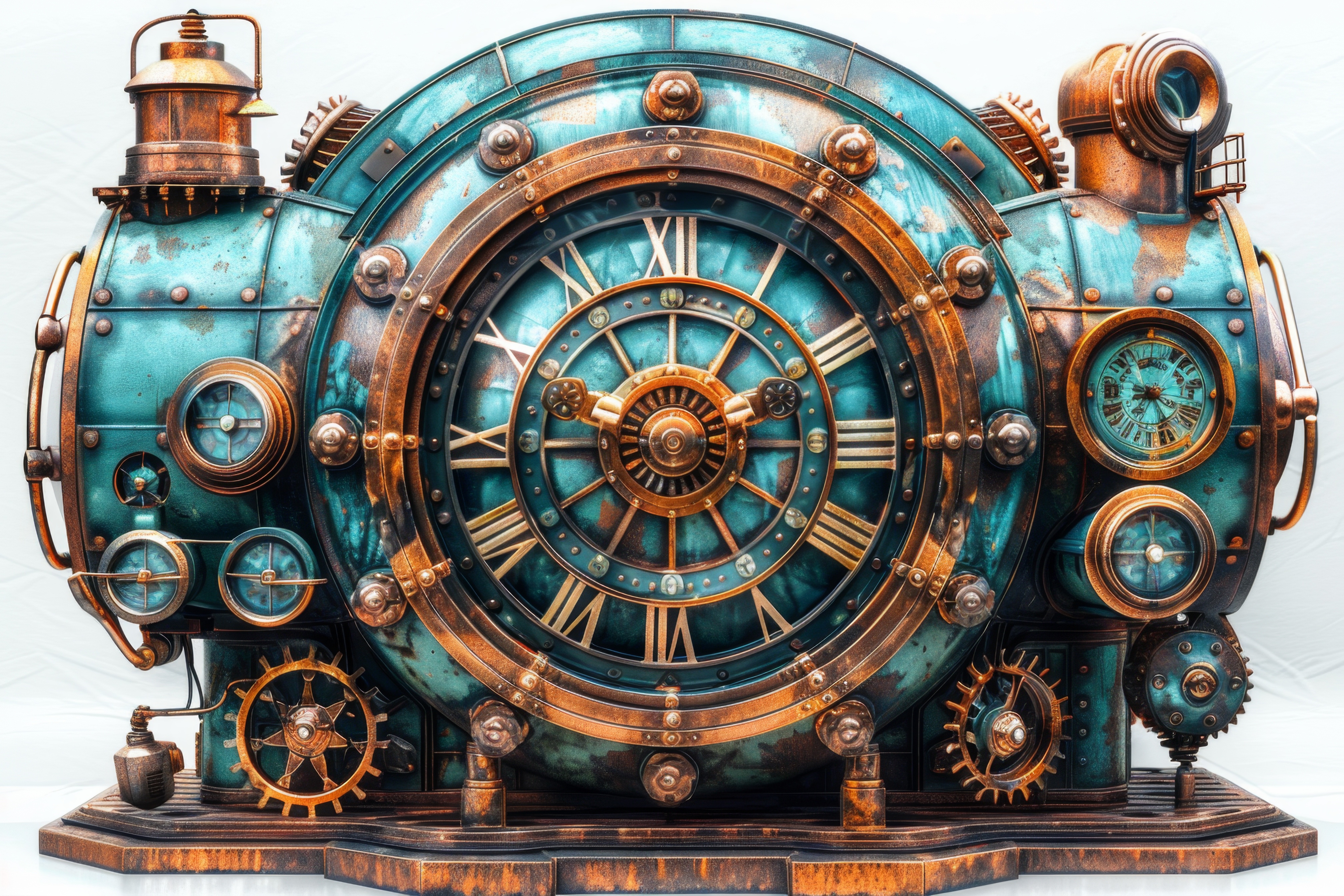
Steampunk art hero banner with retrofuturist machinery and Victorian fantasy mood
PoM Blog / Art / Retrofuturism / Victorian Imagination / English + 中文

Steampunk Art

Retrofuturism / machinery / atmosphere Airship / Clockwork / Costume / Worldbuilding Origins + styles + works + maker culture

What Steampunk Art Is

Steampunk art is a retrofuturist aesthetic that imagines advanced worlds built from nineteenth-century materials, technologies, and social fantasies. It asks what the future would look like if steam power, mechanical craft, brass instrumentation, Victorian urbanism, and analog engineering had remained the dominant visual language.

Steampunk works as a mood system, combining industrial machinery, imperial interiors, scientific romance, handmade ornament, exploration myth, costume theater, and speculative design into a believable alternate modernity.

Retrofuturism

Steampunk turns the past into a future that never happened, using historical materials to imagine impossible machines and worlds.

Material drama

Brass, copper, leather, dark wood, iron, glass, smoke, velvet, and patina make the world feel tactile rather than digitally flat.

Worldbuilding

Its strongest works join costume, architecture, transport, typography, props, and social atmosphere into one coherent setting.

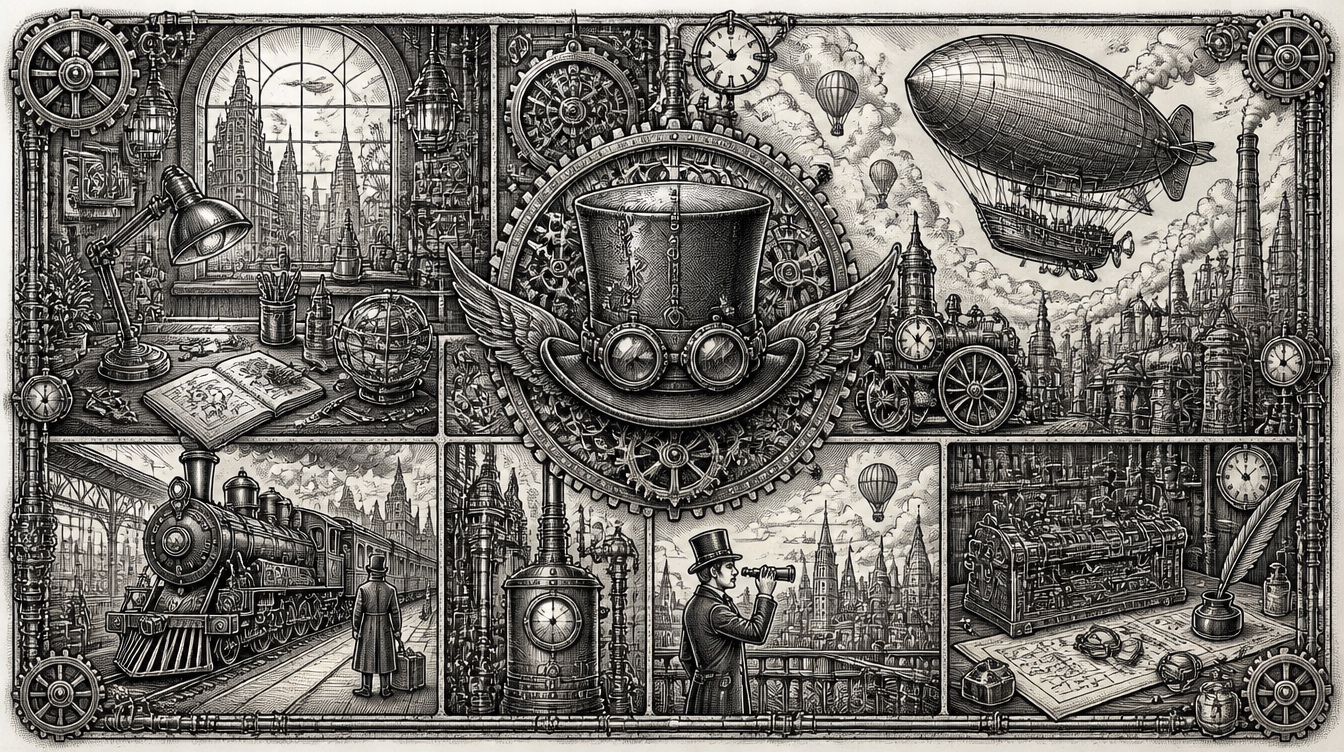
Steampunk Victorian world illustration

Origins and Historical Lineage

Industrial Revolution

Steam engines, railways, iron bridges, factories, scientific instruments, and public exhibitions supplied the base imagery that steampunk later transformed into fantasy.

Scientific romance

Jules Verne and H. G. Wells expanded the visual imagination of exploration craft, submarines, laboratories, air travel, time travel, and speculative invention.

Victorian and Edwardian design

Decorative interiors, clockwork precision, taxonomic curiosity, and cabinet-of-wonders collecting habits gave the style its density and narrative richness.

Late twentieth-century naming

The word steampunk was coined in the 1980s to describe fiction inspired by cyberpunk energy but redirected toward nineteenth-century machinery and alternate histories.

Maker and cosplay expansion

Steampunk moved beyond fiction into fashion, prop design, handcrafted gadgets, festivals, photography, illustration, and fan-built environments.

Contemporary digital afterlife

Today it lives in concept art, indie games, 3D illustration, AI image culture, themed interiors, and design references for atmospheric interfaces.

Visual Grammar

The style survives because it has a readable grammar. Viewers can usually identify steampunk in seconds even before they inspect the details.

Machines and Interfaces

Pressure gauges, rivets, boilers, piston assemblies, typewriters, exposed pipes, telescopes, chronometers, locomotives, and dashboard-like control panels create a world where mechanism is always visible.

Costume and Persona

Goggles, corsets, frock coats, pocket watches, leather straps, canes, gloves, aviator gear, top hats, and bespoke accessories turn clothing into narrative equipment.

Atmosphere and Space

Fog, soot, workshops, docks, observatories, gaslight, libraries, railway halls, and impossible city skylines produce a sense of adventurous melancholy.

Craft and Ornament

Unlike sleek futurism, steampunk prefers visible joints, engraving, filigree, hand-finishing, wood casing, etched brass, and the beauty of overbuilt objects.

Poster Faces and Character-Centered Worldbuilding

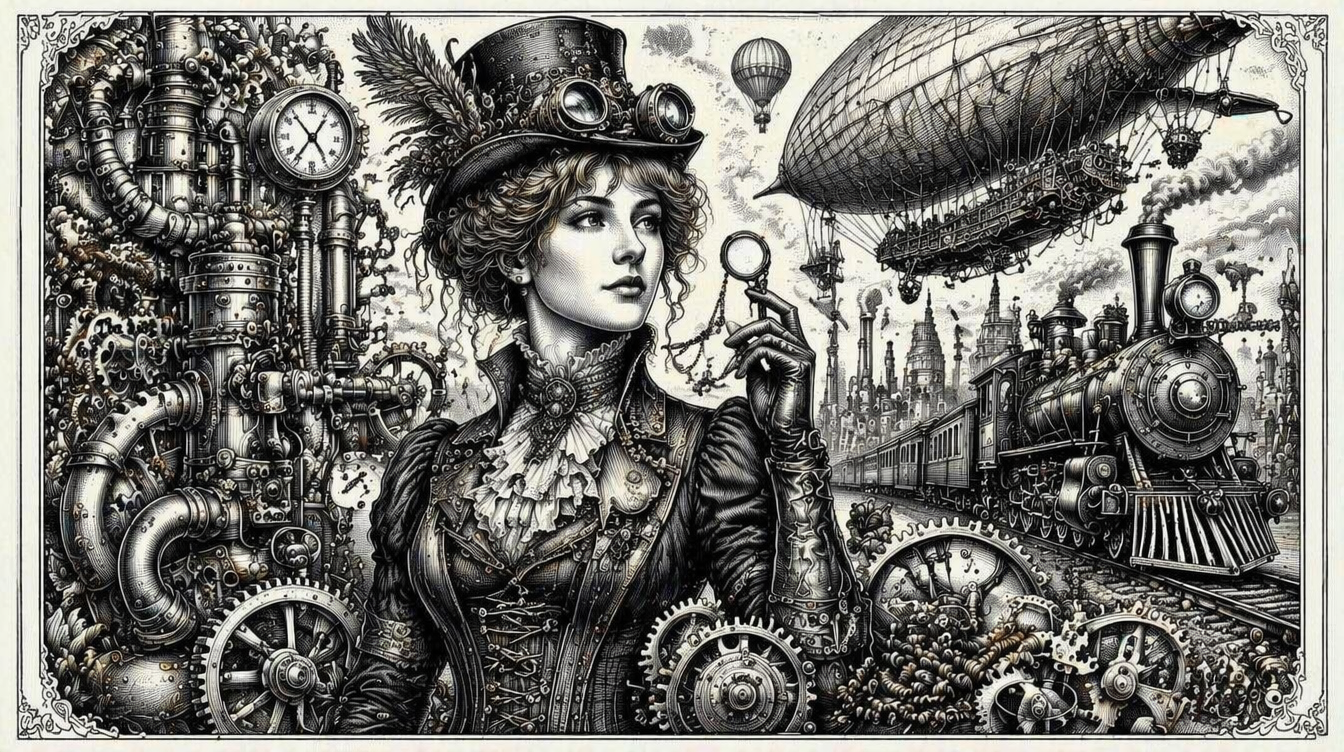
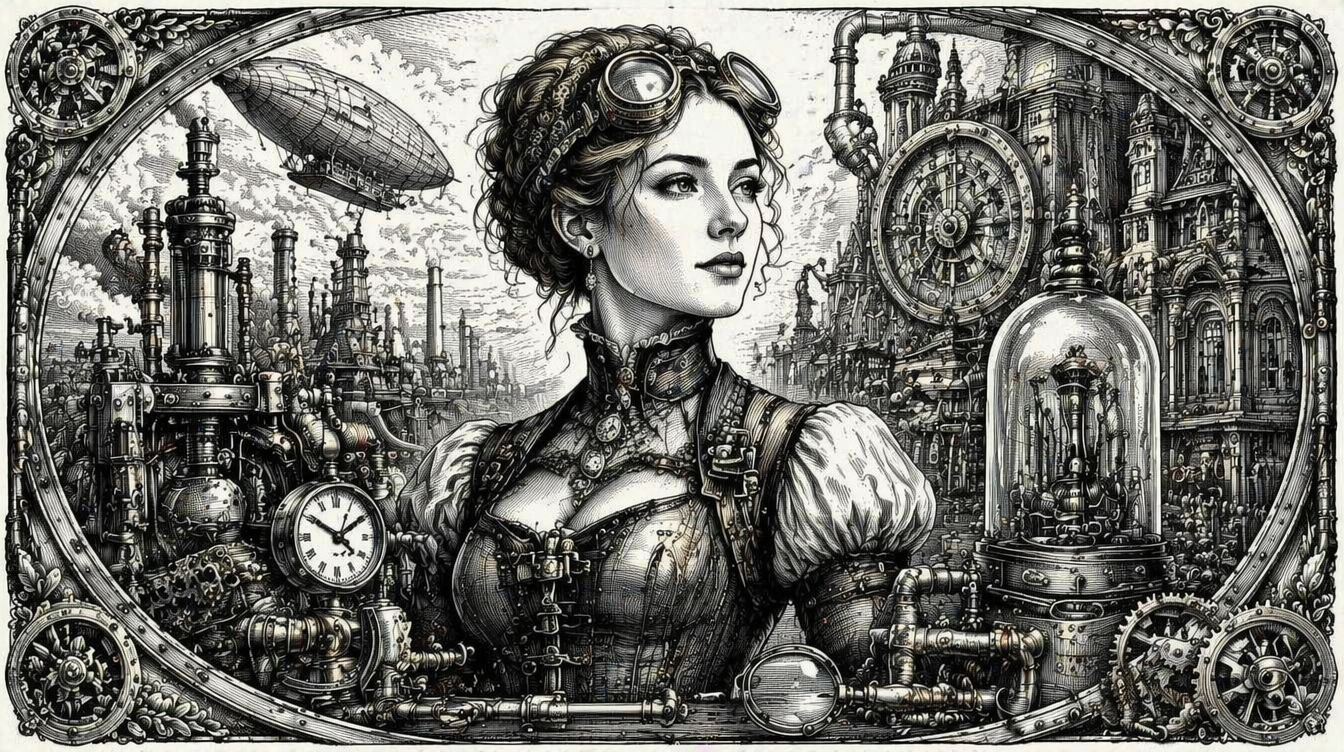
Some steampunk images work like theatrical posters: one face in the foreground, an airship or city behind, and a whole alternate society implied through costume, clocks, and framing devices.

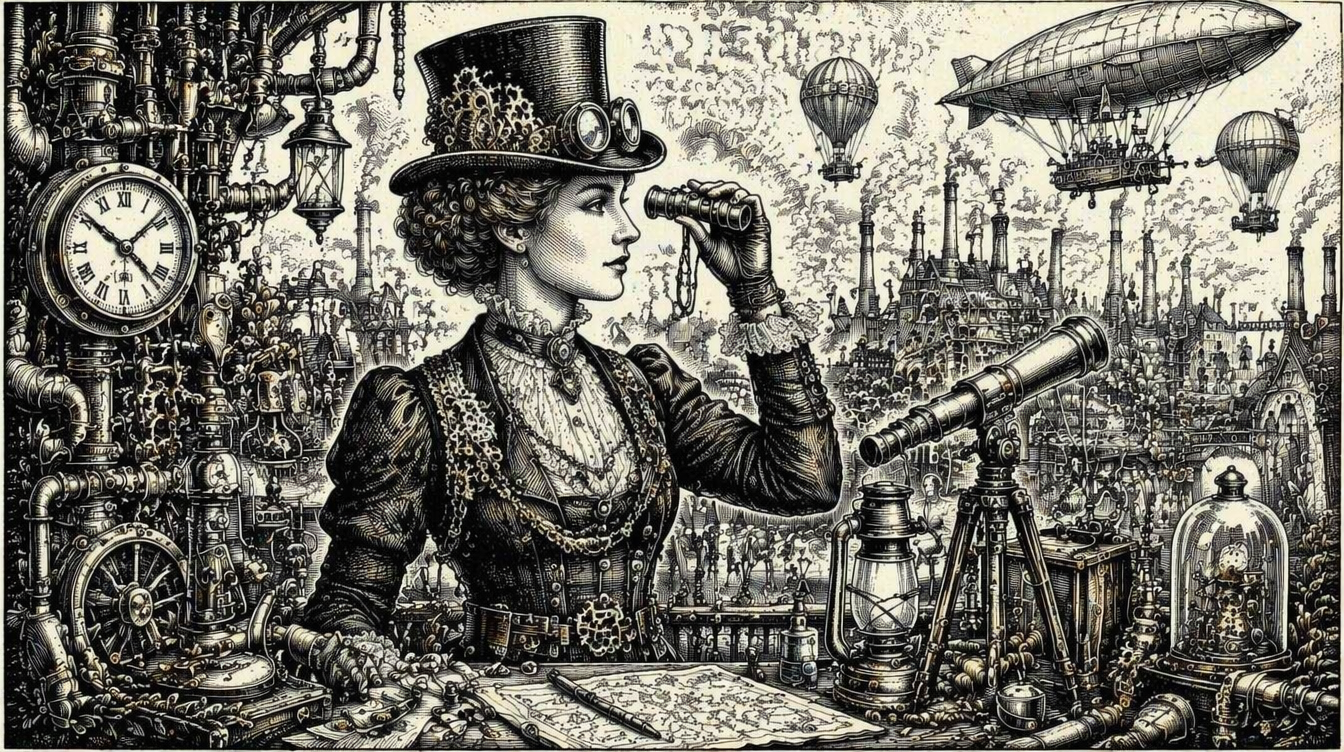
Steampunk heroine framed by clocks, pipes, and city spectacle

Heroine of the metropolis

The portrait centers poise rather than combat. Goggles, corset tailoring, and dense industrial framing turn the character into a social interface between city spectacle and individual identity.

Steampunk explorer with telescope and airship skyline

Explorer gaze

With telescope, top hat, and sky traffic, the image shifts steampunk from static ornament to navigational desire. It suggests that the world is explorable as well as decorative.

Travel, Overlook, and Harbor Worlds

Steampunk becomes fully believable when it provides routes: rail corridors, sky lanes, terraces above the city, docks full of hybrid vehicles, and social transitions between workshop and empire.

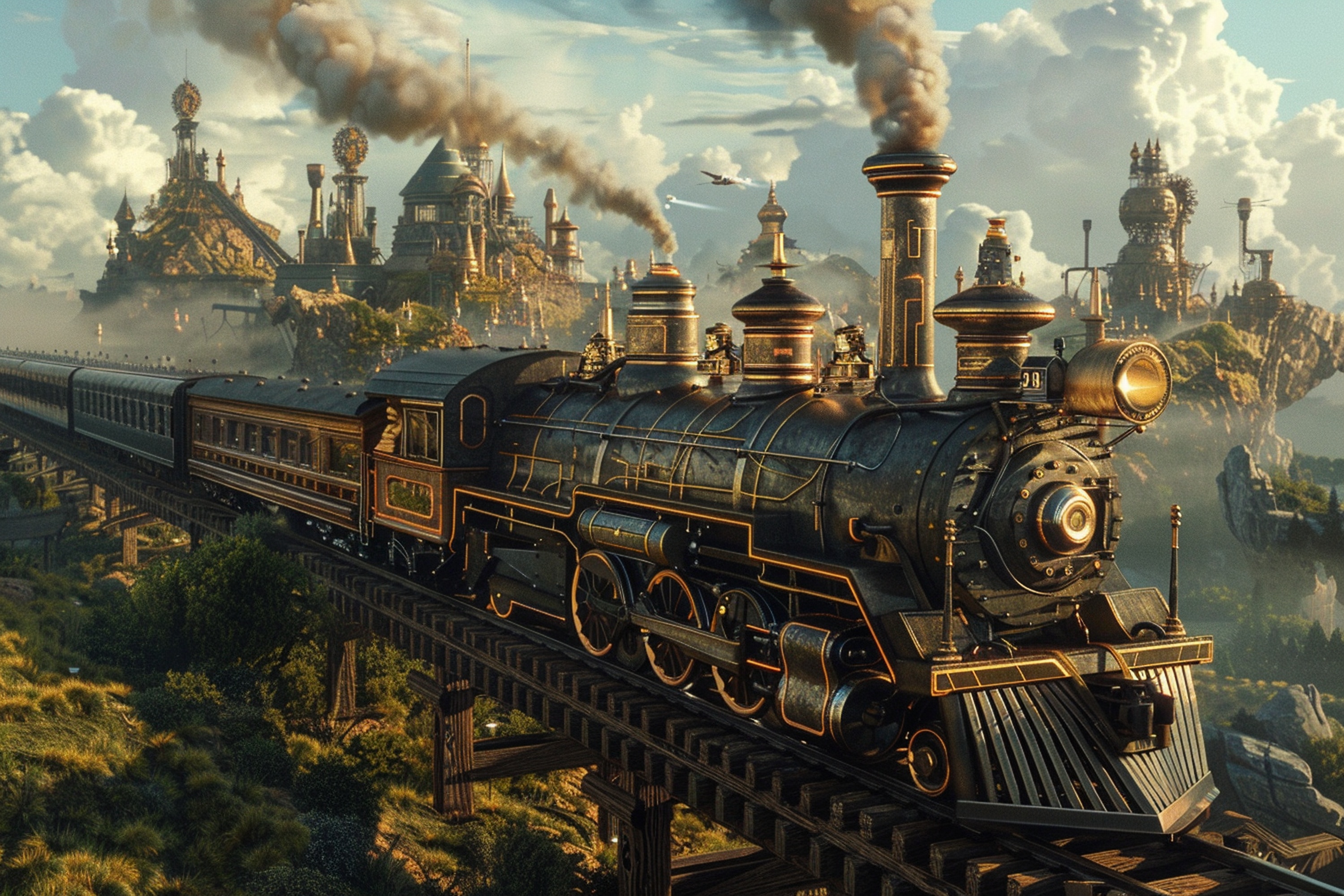
Steampunk train moving through a dramatic landscape

Industrial romance of travel

Train imagery brings velocity, class theater, and adventure into the genre. In steampunk, rail is also timetable modernity and the fantasy of entering a larger mechanical order.

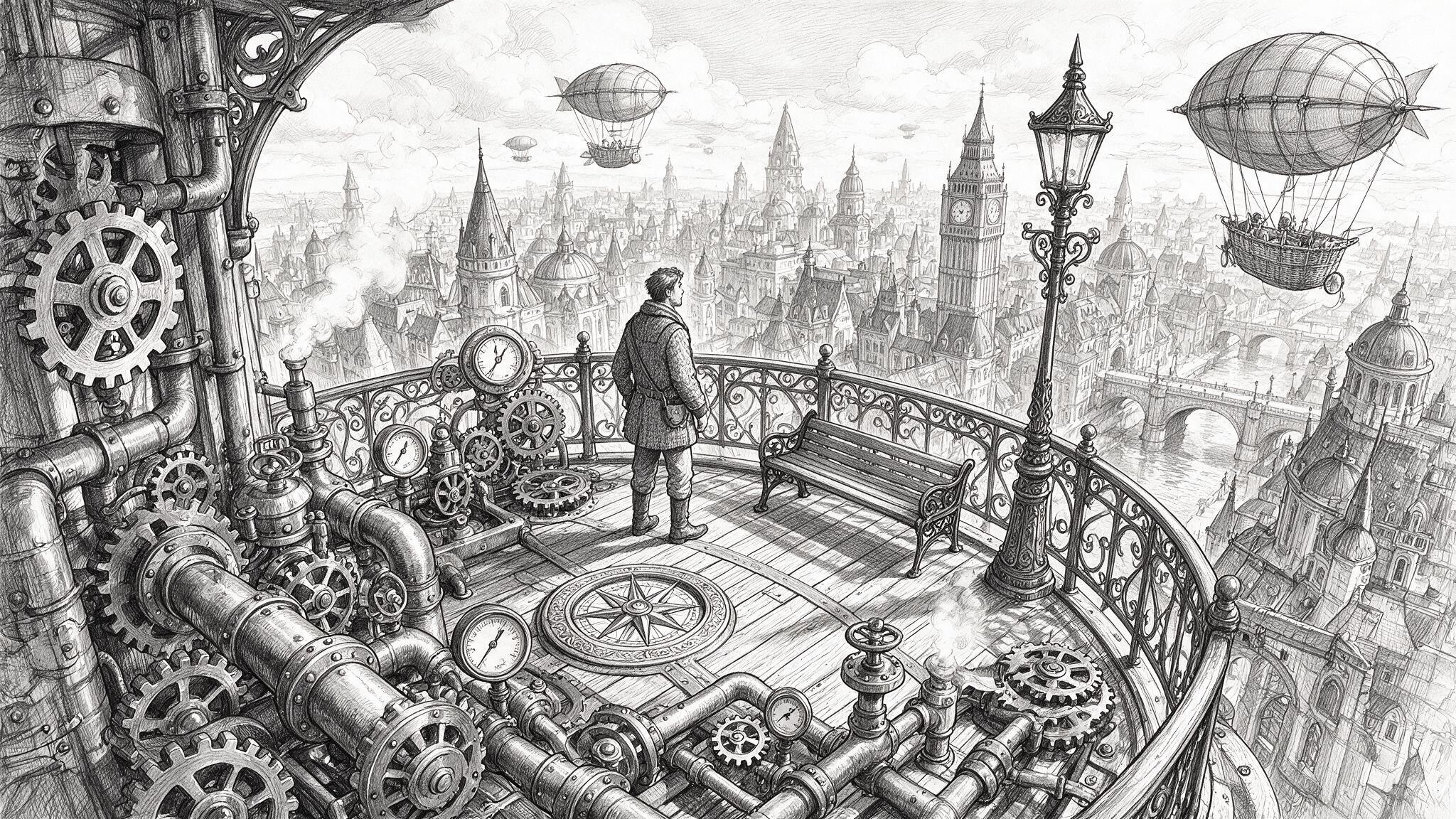
Steampunk balcony overlook above a clockwork city

Balcony over the machine-city

The elevated terrace makes observation itself part of the genre. Gear rails, smoke vents, and airship lanes imply that the city can be surveyed, managed, and dreamed from above.

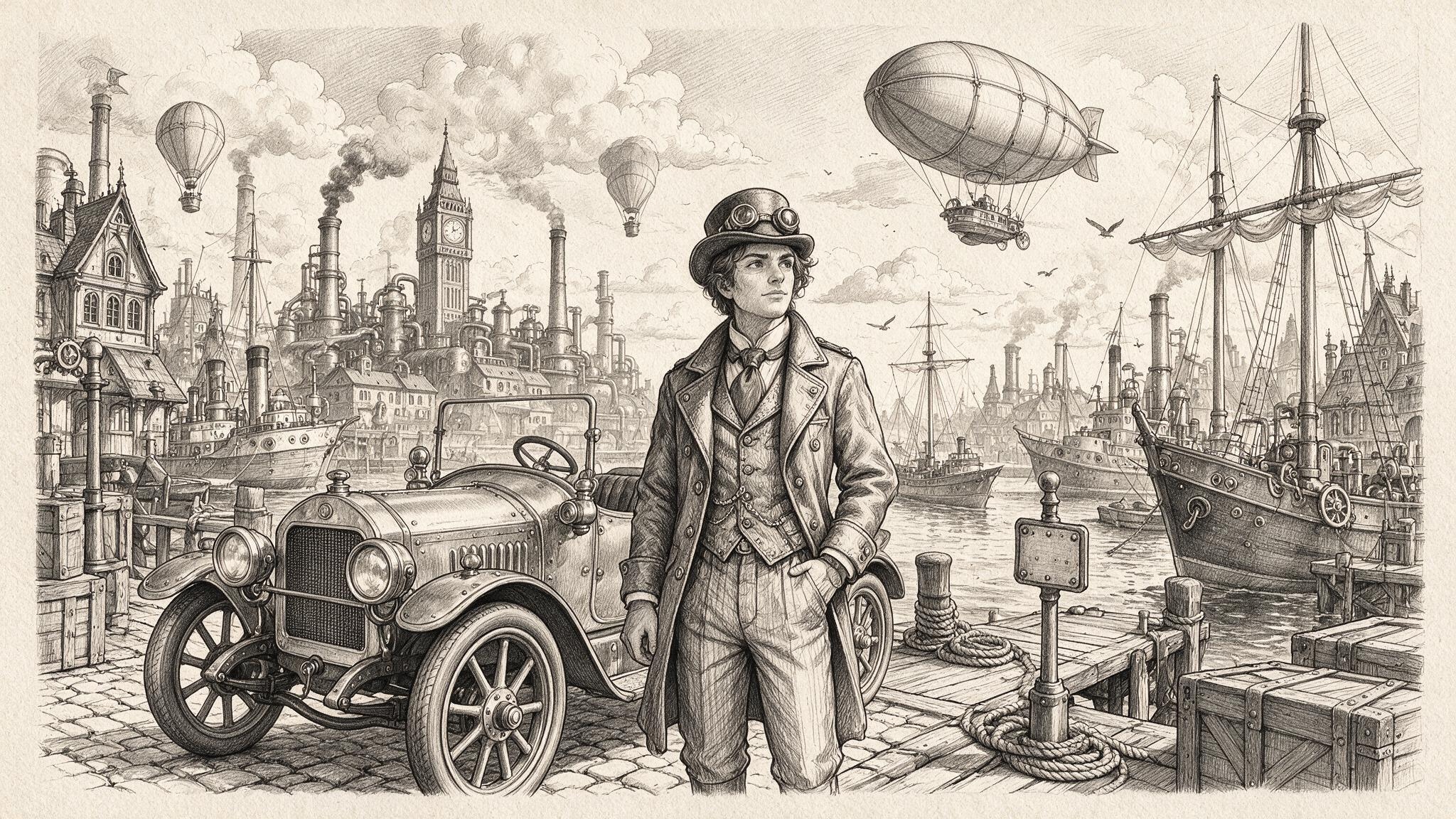
Steampunk harbor with vintage car, ships, and airship traffic

Harbor modernity

Car, dock, ship, and airship in one frame show that steampunk likes technological overlap. The pleasure comes from seeing eras coexist instead of being historically cleaned apart.

Workshops, Clocks, and the Intimate Scale of Technology

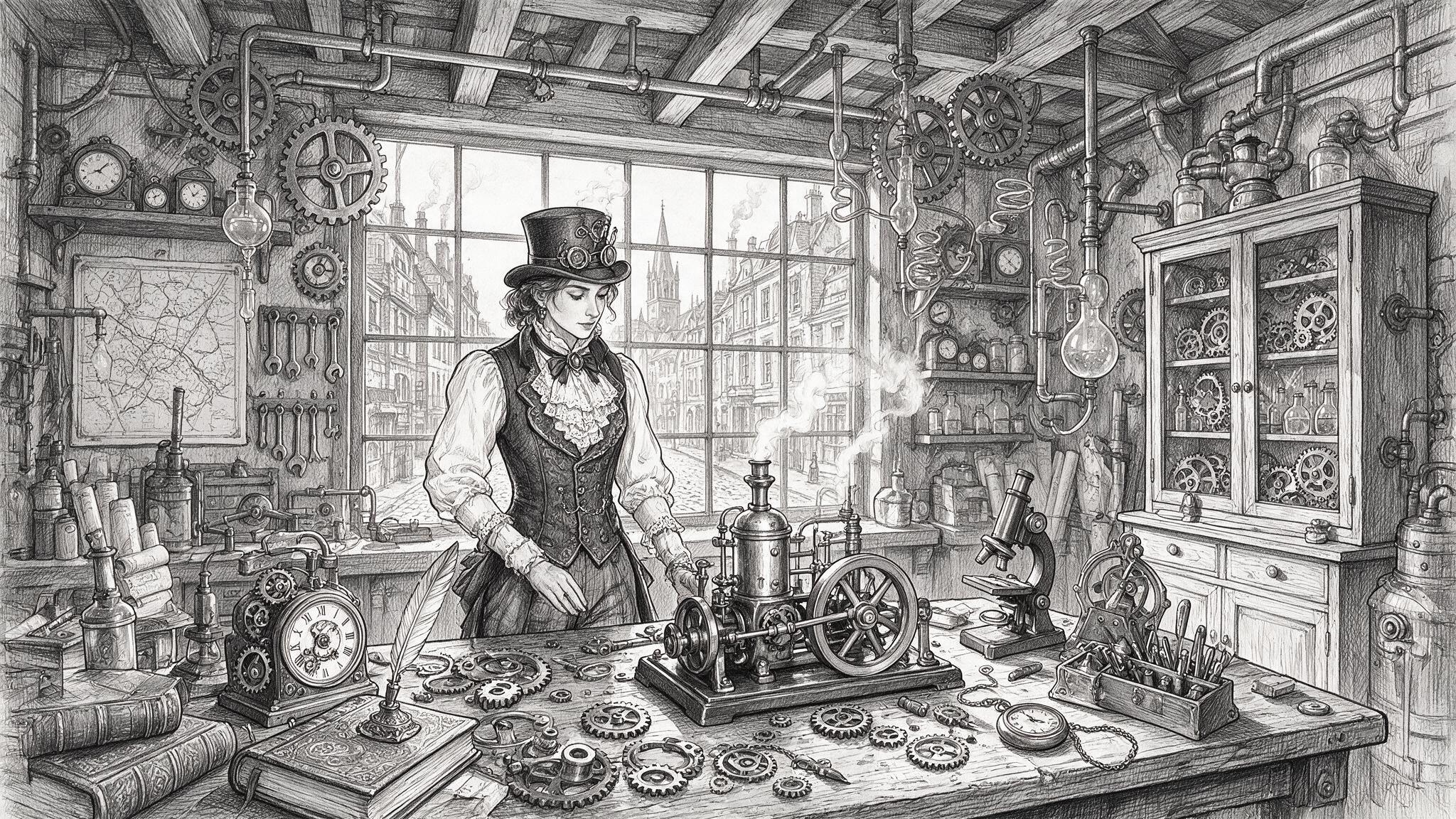
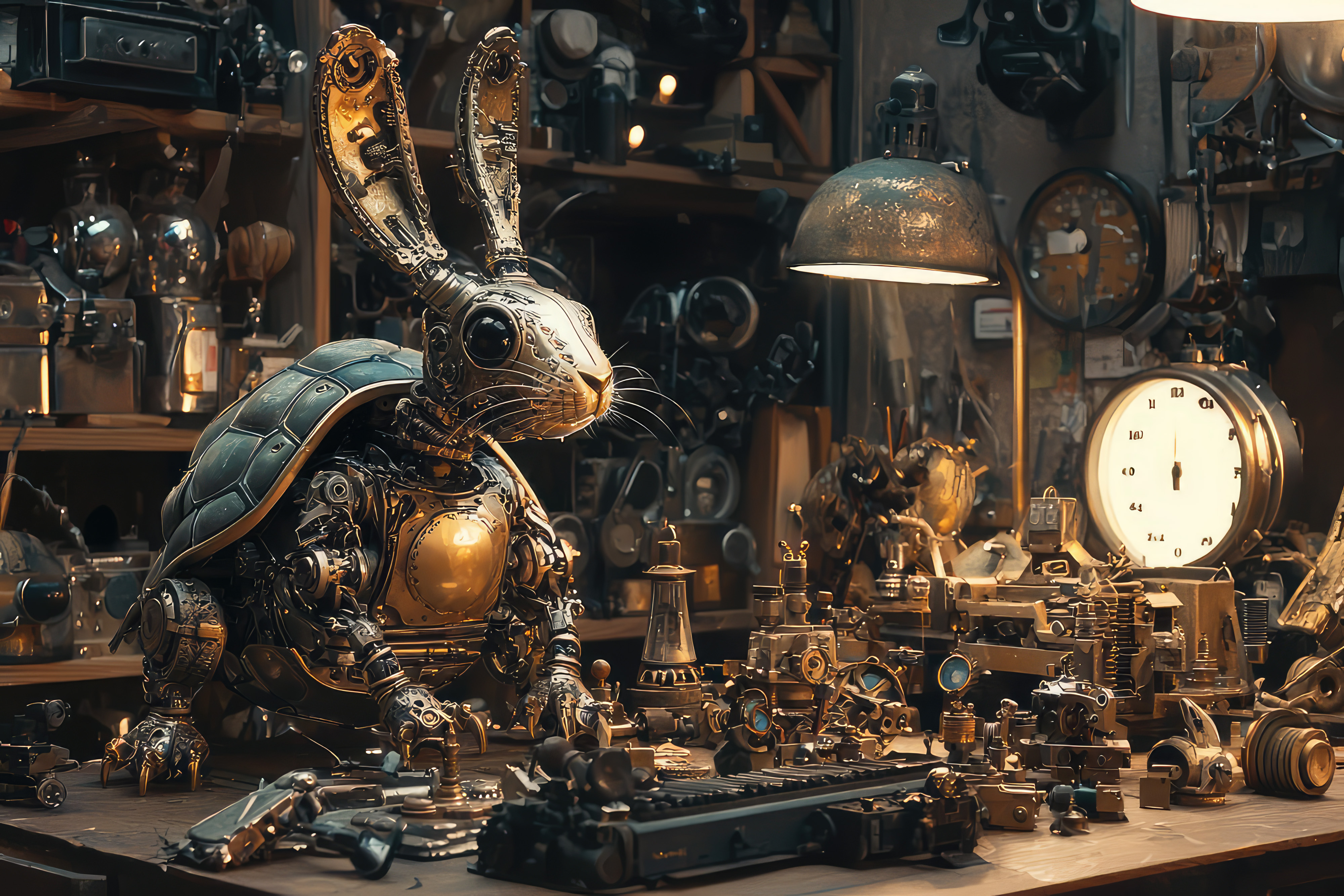
Steampunk is not only skyline spectacle. It is equally convincing when it shrinks into tables, gears, notebooks, microscopes, cabinet drawers, and rooms where invention looks half domestic and half obsessive.

Steampunk workshop interior with maps, pipes, and a clockwork desk

Workbench intimacy

Maps, tools, books, desk clocks, and tabletop mechanisms bring steampunk down from empire-scale fantasy into the room-scale labor of making.

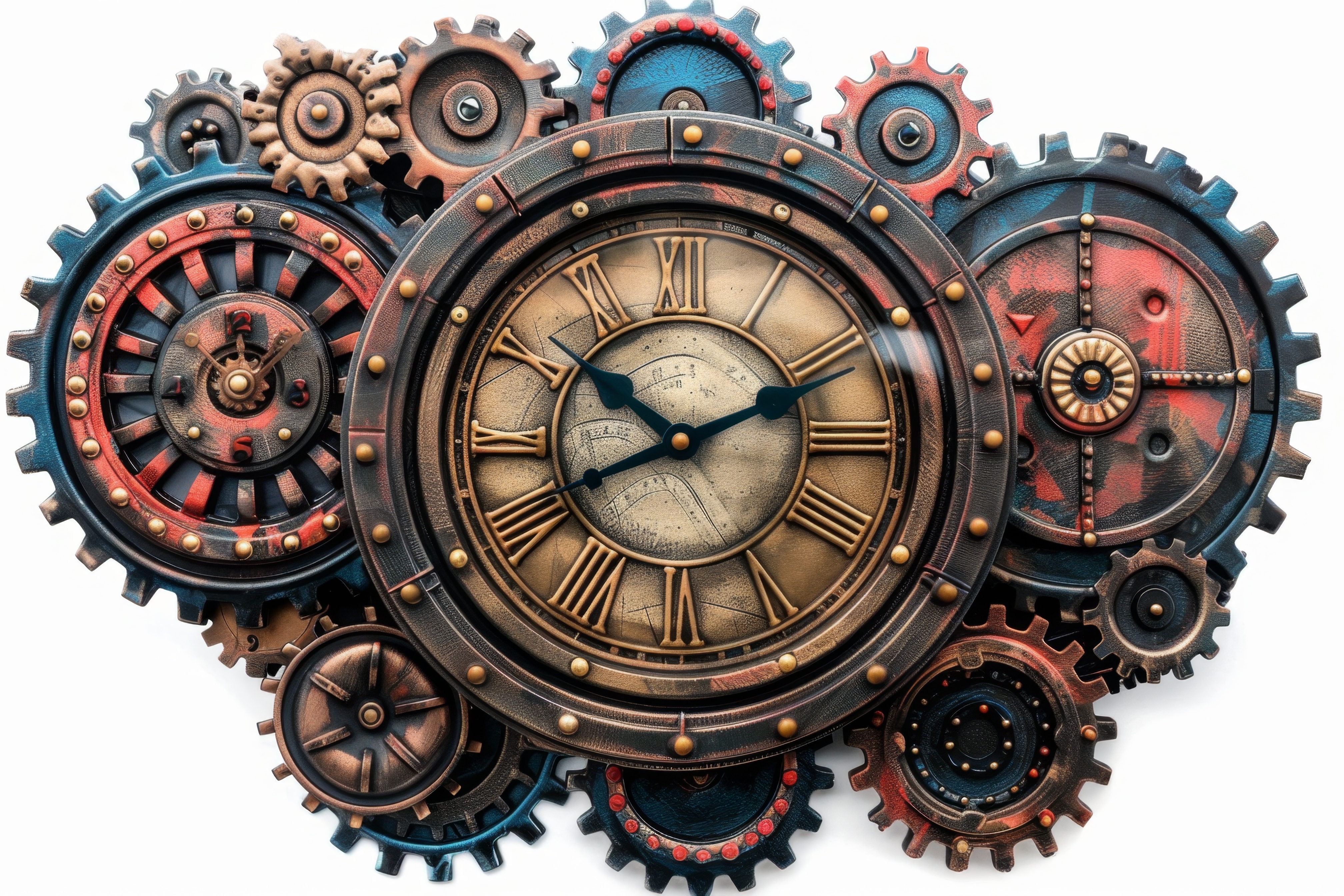
Steampunk clockwork city with giant clock and airship traffic

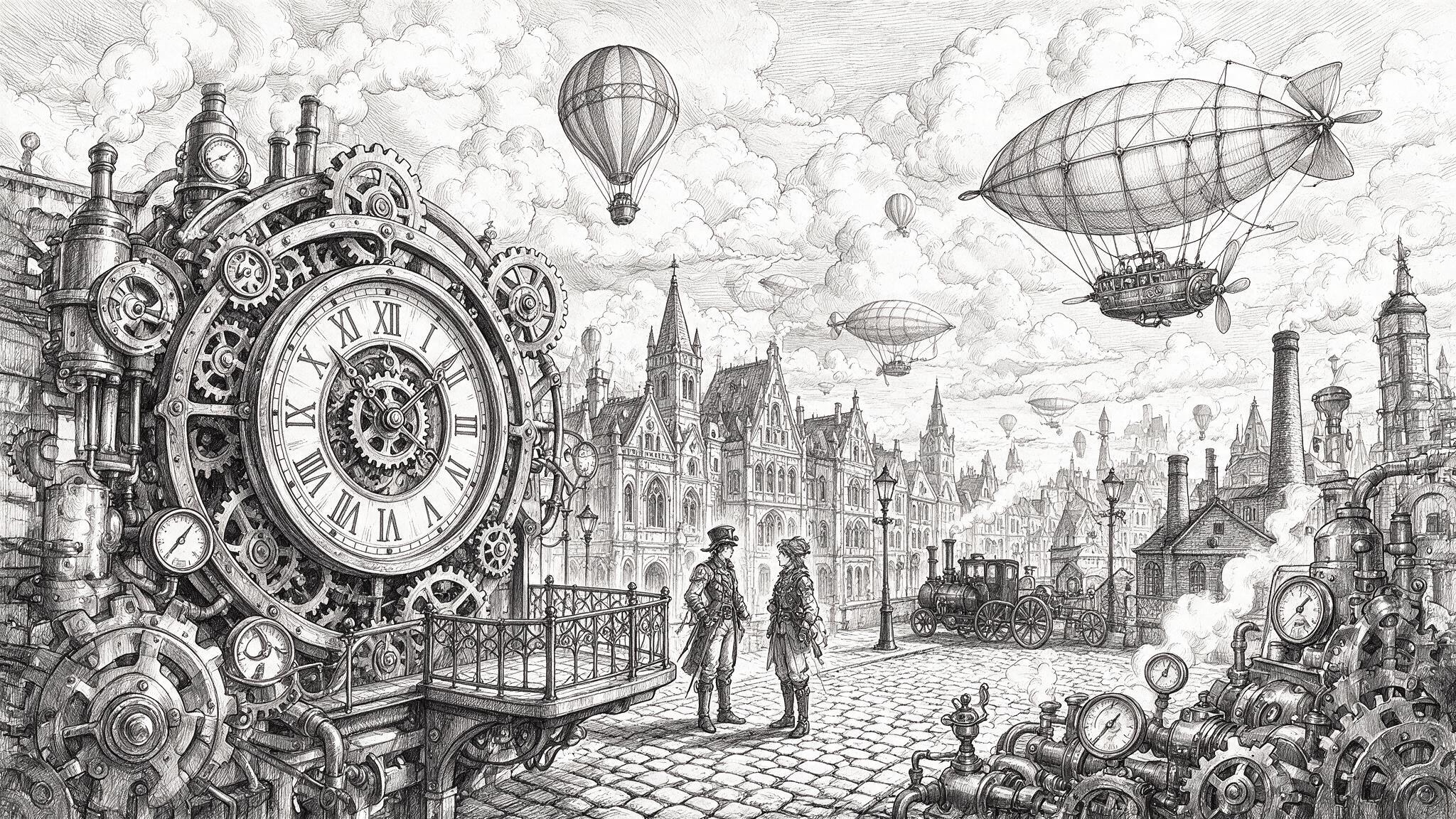
Clock-square urbanism

The monumental clock turns timekeeping into civic architecture. In steampunk, clocks are never neutral instruments; they are status objects, public symbols, and engines of atmosphere.

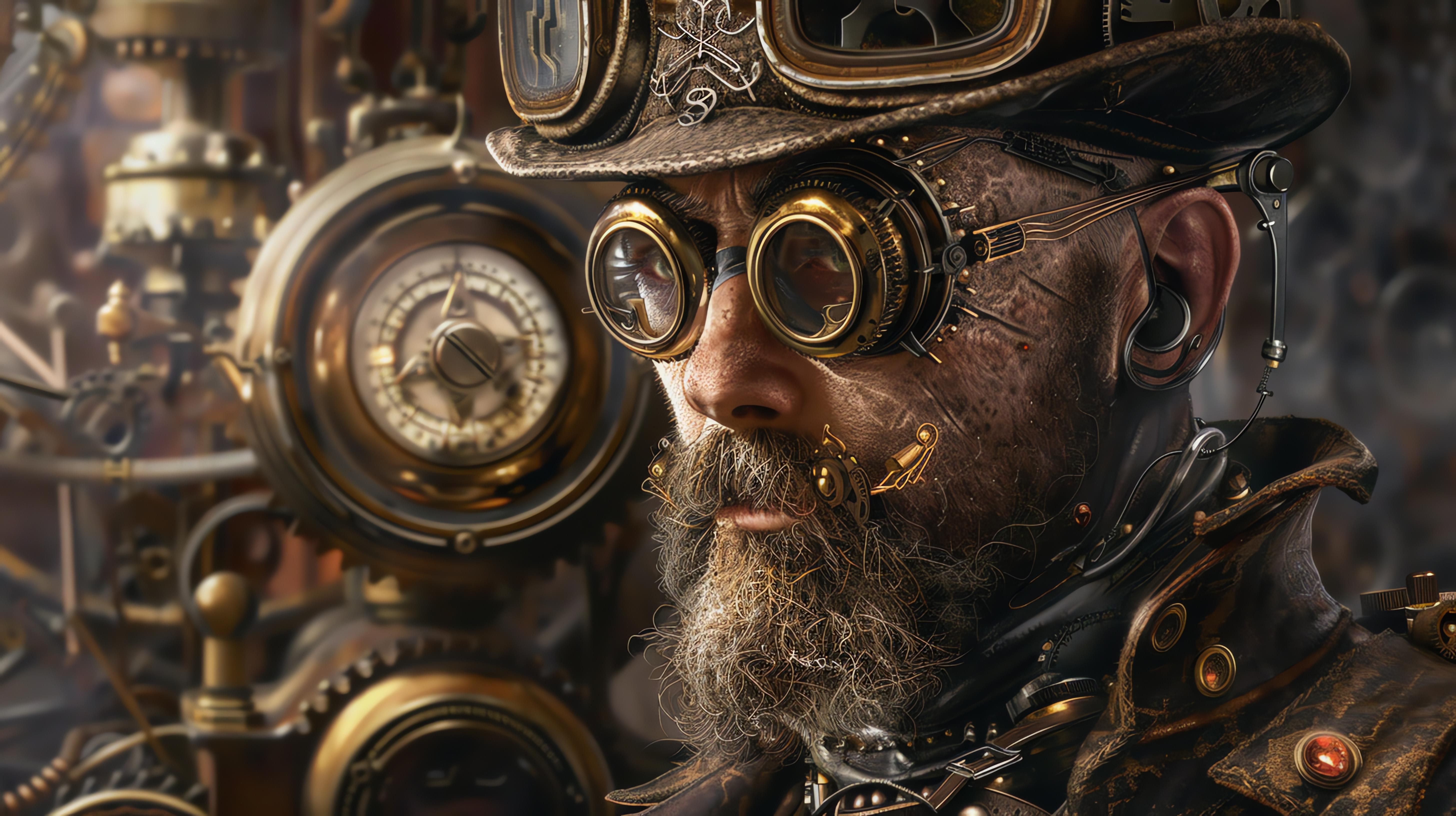
Bearded steampunk character in front of a clockwork machine

Inventor portrait

An inventor framed against a giant mechanism turns steampunk into biography: expertise, obsession, workshop labor, and a private cosmology built from tools, smoke, and repetition.

Scene Types and Machines

Beyond the iconic skyline, steampunk also thrives in expedition scenes, laboratory objects, design sheets, and machine families. These smaller studies show how the genre builds coherence from repeated materials and recurring inventions.

Explorer entering a detailed steampunk world

Exploration fantasy

Maps, observatories, luggage, and expedition mood make steampunk feel navigable rather than static.

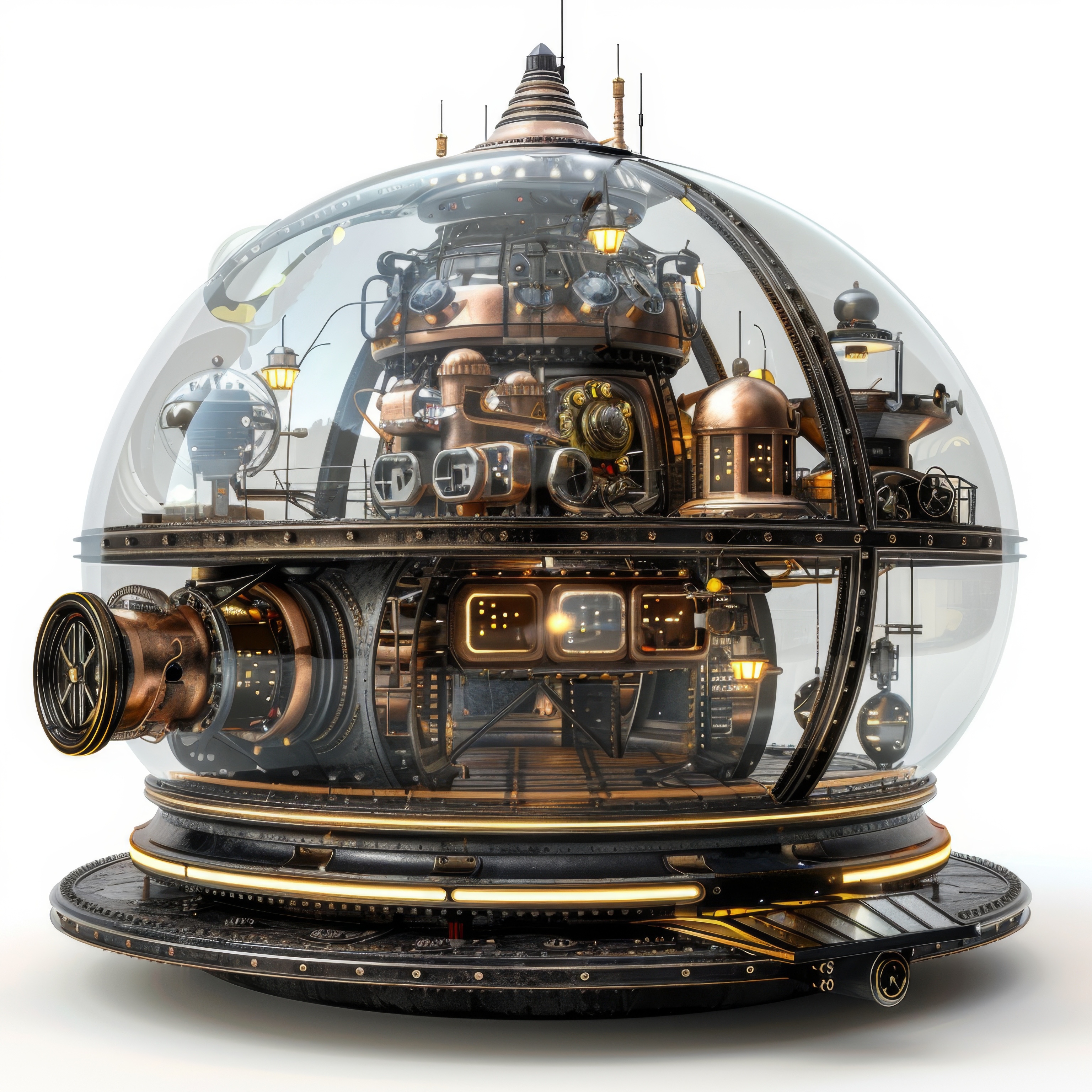
Steampunk time machine illustration

Speculative engineering

Levers, chambers, and dials make invention legible even when the machine itself is impossible.

Alternate steampunk time machine with layered machinery

Machine variant

Multiple versions make steampunk feel like a family of devices instead of one iconic prop.

Steampunk temporal machine with theatrical lighting

Stagecraft and illumination

Amber lighting turns machinery into ritual theater and adds cinematic depth.

Steampunk time machine design sheet

Design sheet logic

Concept-sheet views expose the engineering fantasy directly, as if each machine were waiting to be prototyped.

Character Objects and Creature Studies

Steampunk often becomes most vivid when it concentrates on intimate artifacts and engineered companions. Hats, animals, and miniature devices reveal the genre's tactile side more clearly than giant skylines do.

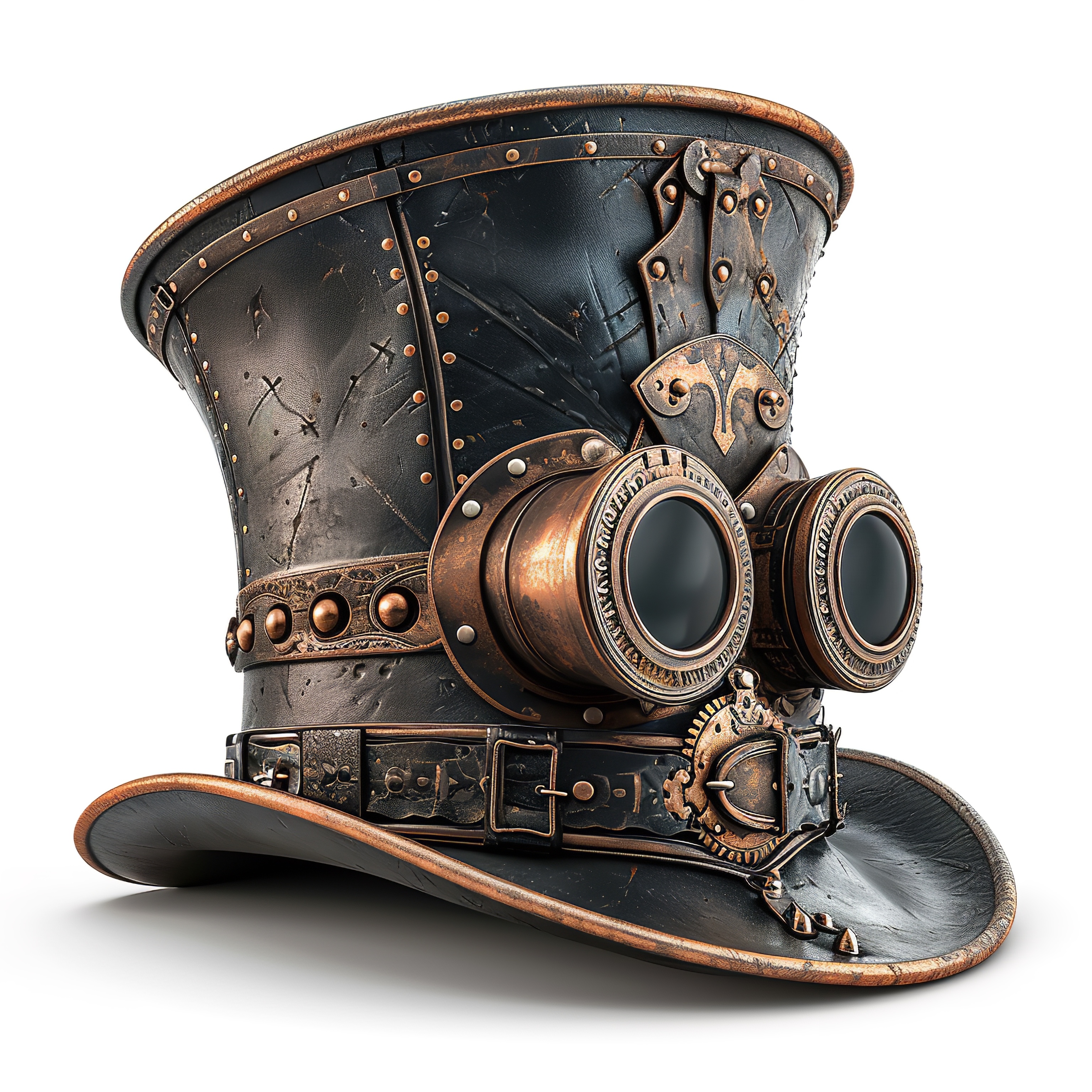
Steampunk top hat with detailed accessories

Accessory as worldbuilding

A single hat can already imply class code, costume logic, and the genre's love of modified utility objects.

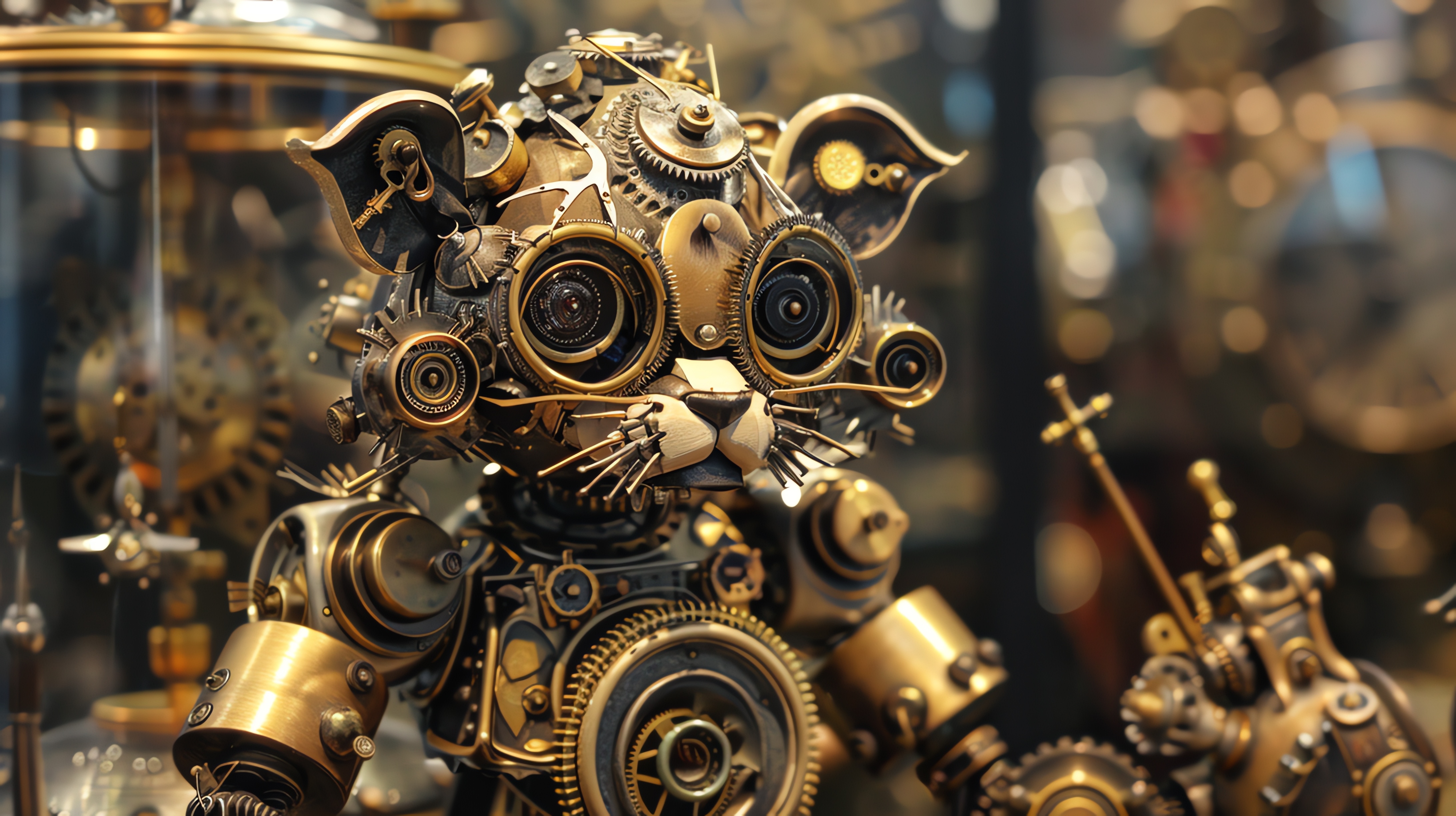
Clockwork cat made of gears and cogs

Clockwork companion

Mechanical animal studies make the style intimate. They show how steampunk can shrink from empire-scale spectacle into handcrafted personality.

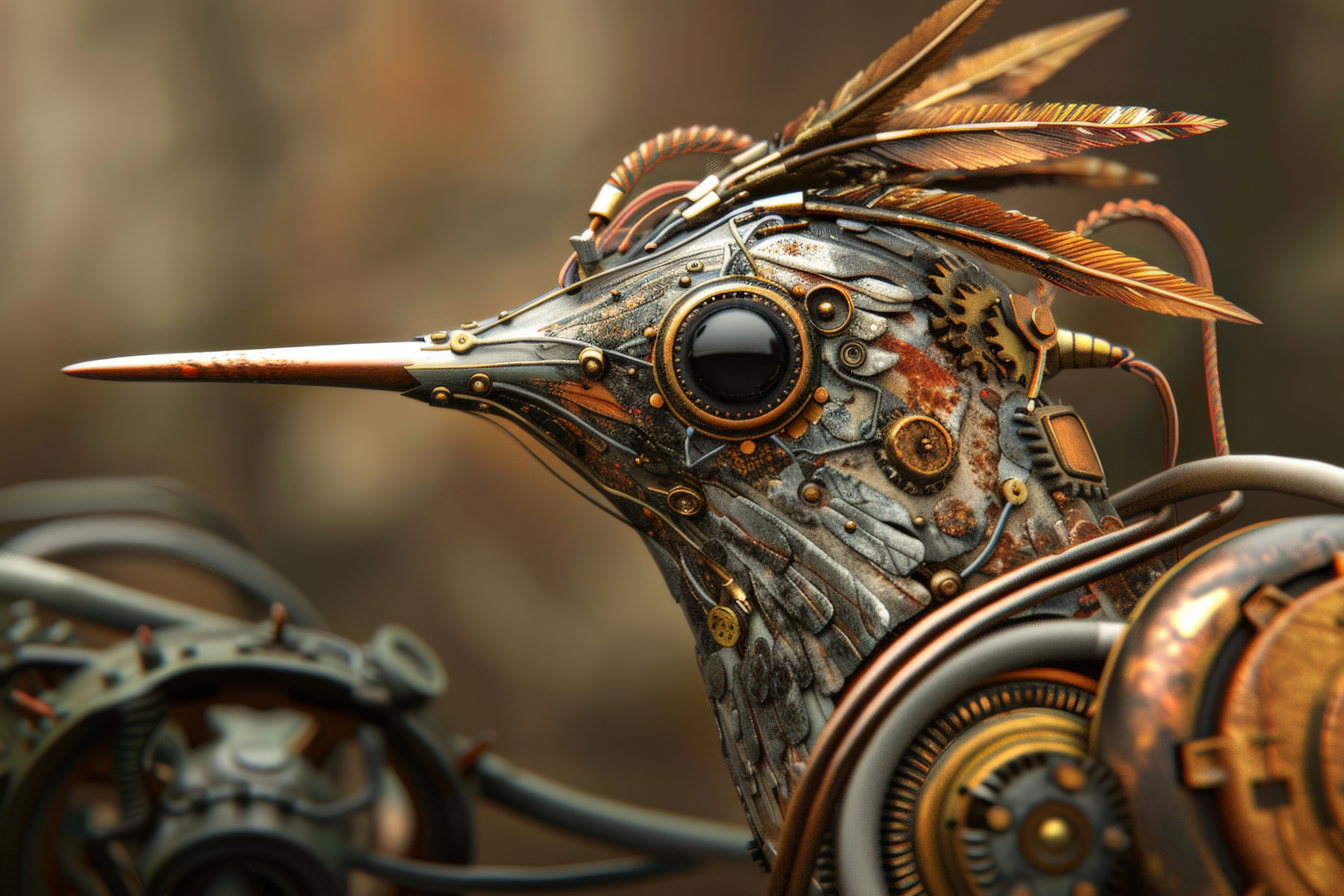
Steampunk robotic hummingbird

Miniature engineering

Bird-sized machines bring precision and delicacy into a genre often dominated by smoke and heavy metal.

Related Styles

Victorian Gothic

Shared love of ornate interiors, shadow, mourning elegance, and historical drama. Gothic pushes toward haunted emotion; steampunk pushes toward engineered wonder.

Art Nouveau

Curving lines, floral ornament, and total-design ambition often enrich steampunk when artists want less industrial severity and more decorative flow.

Clockpunk

A close cousin focused on Renaissance and early-modern mechanics rather than Victorian steam. It often feels more astronomical, automata-driven, and pre-industrial.

Dieselpunk

Darker, more militarized, and more twentieth-century. Where steampunk loves boilers and lace, dieselpunk tends toward engines, propaganda, aviation metal, and interwar grit.

Industrial archaeology

Real factories, rail museums, observatories, and scientific instruments often supply the raw textures that make steampunk environments convincing.

Fantasy maker craft

Leatherwork, miniature building, prop fabrication, clock restoration, and custom electronics all intersect with steampunk's love of visible construction.

Micro-Motifs and Decorative Branches

At its smallest scale, steampunk turns into ornament, collectible detail, natural-history fantasy, and printed ephemera. These motifs keep the style from becoming only smoke, engines, and monumental machinery.

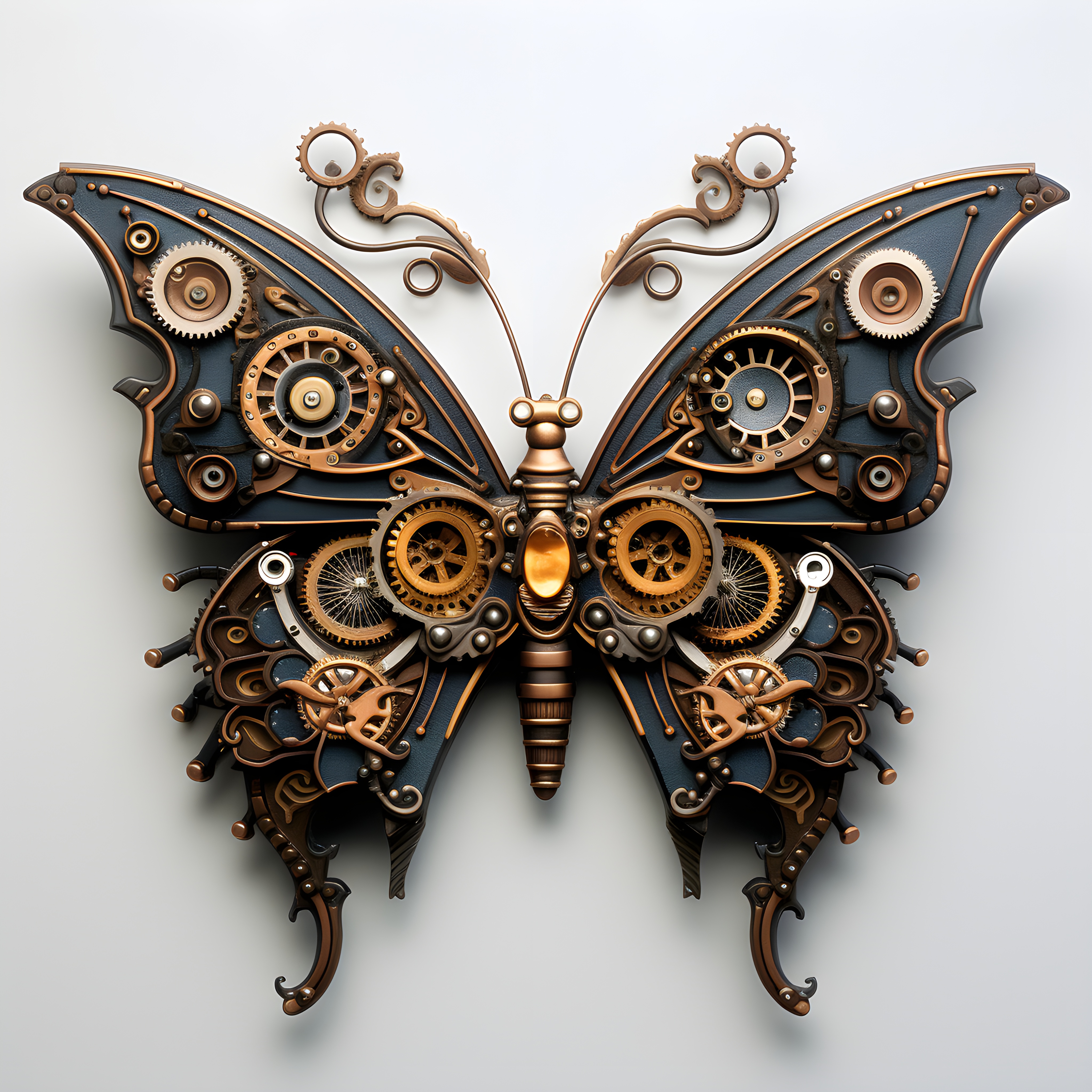
Steampunk butterfly with ornate wings

Ornamental nature

Butterflies, beetles, and botanical forms soften the genre, connecting machinery with jewelry-like delicacy.

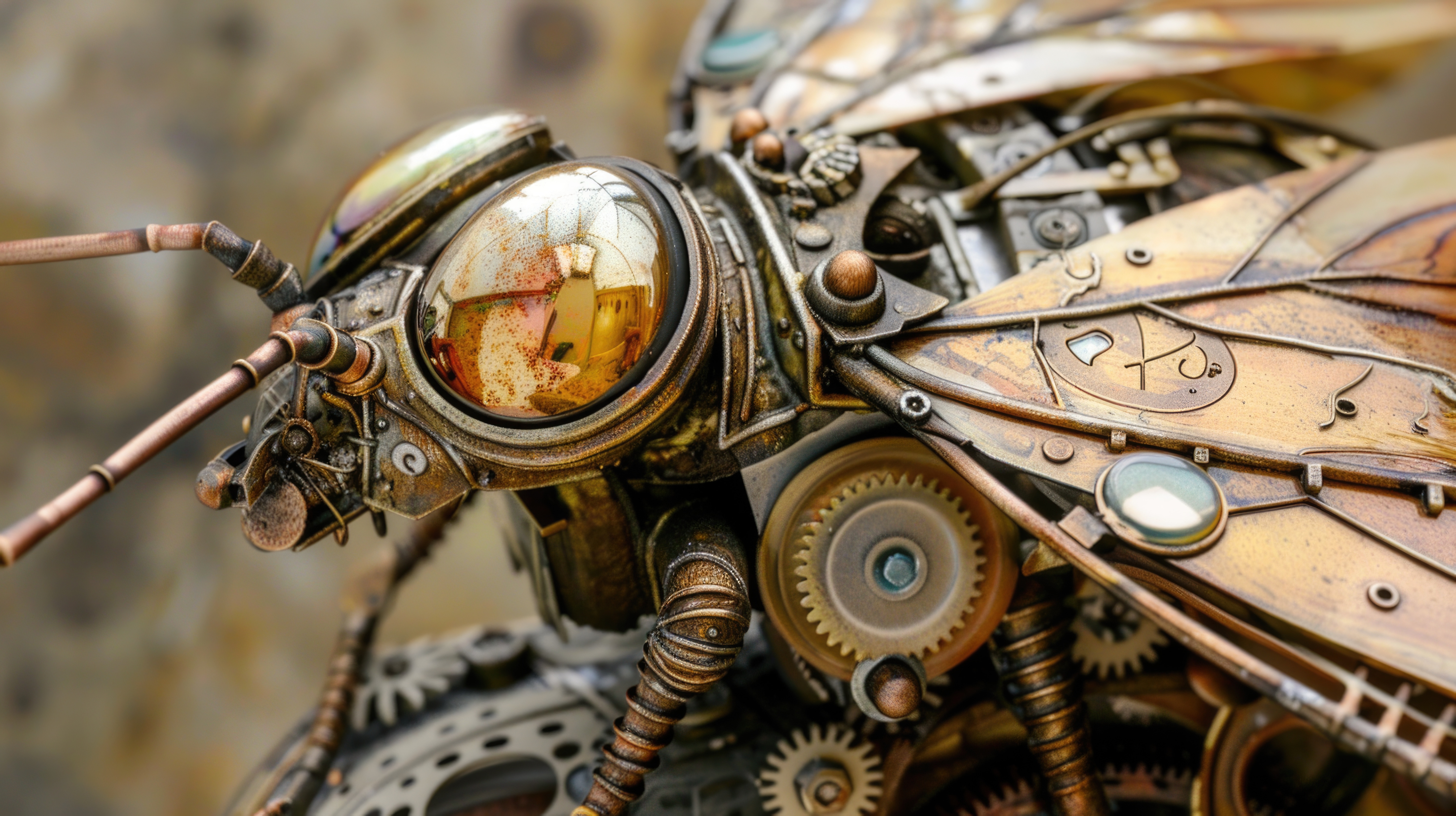
Steampunk flea miniature concept

Miniature specimens

Specimen-scale inventions borrow from cabinets of curiosity and natural-history illustration.

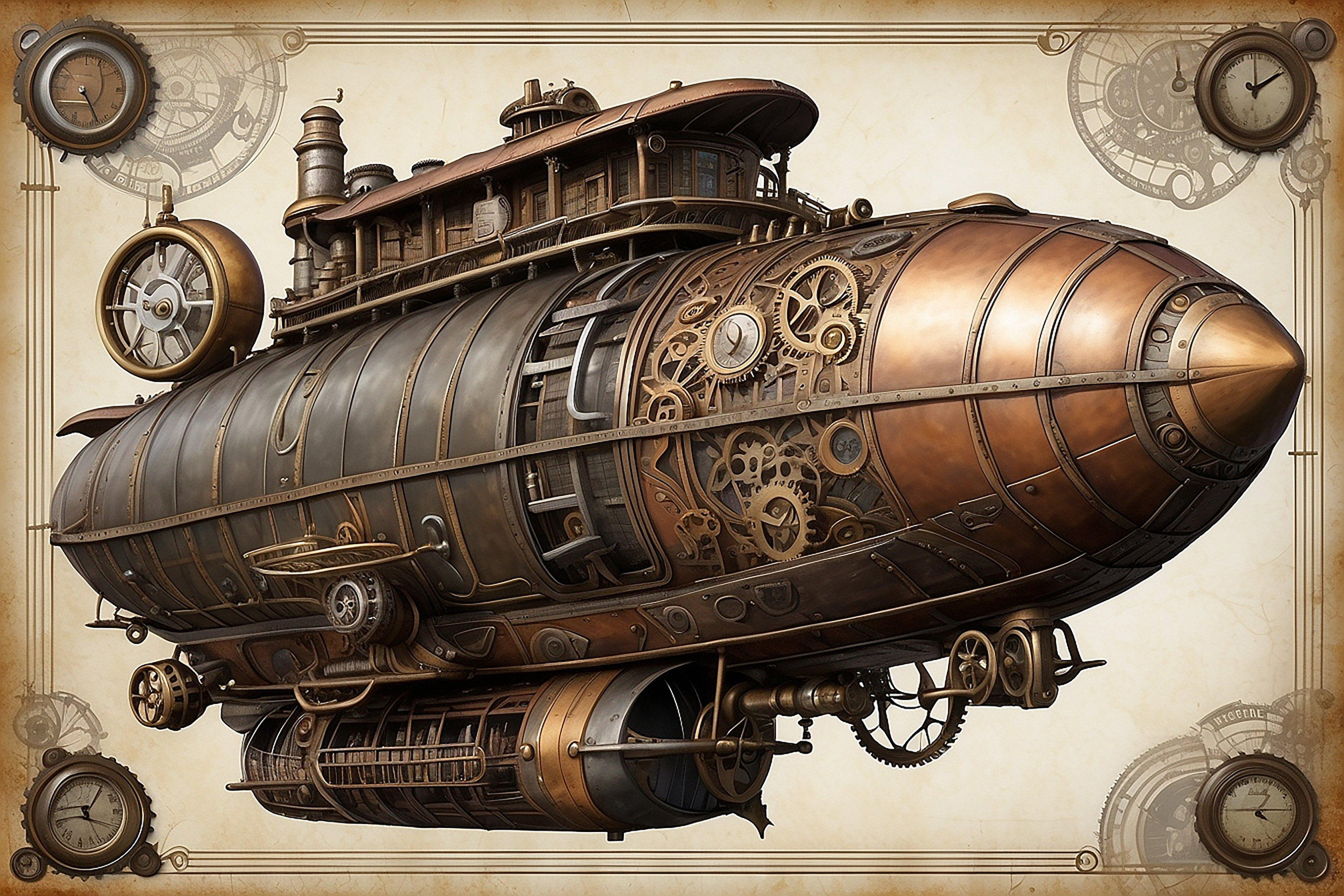
Steampunk airship illustrated as a decorative card

Printed ephemera

Greeting cards, posters, invitations, and decorative prints show how steampunk also lives as surface design, not only as scene building.

Representative Works and Gateways

Literature

  • Jules Verne: Twenty Thousand Leagues Under the Sea, The Mysterious Island
  • H. G. Wells: The Time Machine, The War of the Worlds
  • K. W. Jeter, Tim Powers, James P. Blaylock: key figures in naming and shaping modern steampunk fiction
  • China Mieville and Cherie Priest: later expansions with darker urban and alternate-history directions

Film and Animation

  • Howl's Moving Castle: mobile architecture, patchwork machinery, romantic fantasy
  • Castle in the Sky: airships, industrial ruins, adventure atmosphere
  • The League of Extraordinary Gentlemen: pulp-Victorian spectacle
  • Wild Wild West: oversized contraptions and theatrical frontier machinery

Games and Interactive Media

  • Bioshock Infinite: sky-city spectacle and ideological retrofuturism
  • Dishonored: whale-oil technology, plague-era atmosphere, grim industrial elegance
  • Machinarium: hand-built mechanical charm
  • Syberia: clockwork melancholy, travel, and automata

Art and Image Culture

  • Concept art for airships, observatories, and impossible laboratories
  • Cosplay photography and handcrafted prop communities
  • Industrial fantasy illustration on ArtStation and DeviantArt
  • Interior styling, cafe design, and themed exhibition sets

What Steampunk Adds Beyond Style

Steampunk is easy to reduce to costume and ornament, but its deeper value lies in the questions it asks about technology.

Theme What steampunk emphasizes Why it still matters
Visibility of mechanism Tools, engines, and interfaces look understandable even when fictional. Contemporary digital products often hide too much. Steampunk reminds designers that visible structure can create trust and delight.
Material memory Objects carry scratches, weight, repair marks, and craft labor. It pushes against disposable smoothness and reconnects imagination with making.
Hybrid authorship Writers, illustrators, prop builders, photographers, and cosplayers all co-produce the style. The genre works as a transmedia ecosystem, not only a shelf of novels.
Ambivalence about progress Steampunk admires invention while also staging empire, class hierarchy, extraction, and smoke. That tension makes it a useful lens for discussing technology ethics instead of blind optimism.
Participatory identity People wear the aesthetic, modify devices, and role-play the world. It turns spectatorship into performance and community craft.
A strong steampunk artwork usually does three things at once: it convinces you that the world has rules, it seduces you with material detail, and it lets you feel both wonder and historical unease.