Tal Ben-Shahar and the Happiness Course泰勒·本-沙哈尔与幸福课
Harvard course / applied habits哈佛课程 / 习惯训练Positive Psychology / Happier / TrainingFlourishing / resilience / gratitude丰盛感 / 韧性 / 感恩
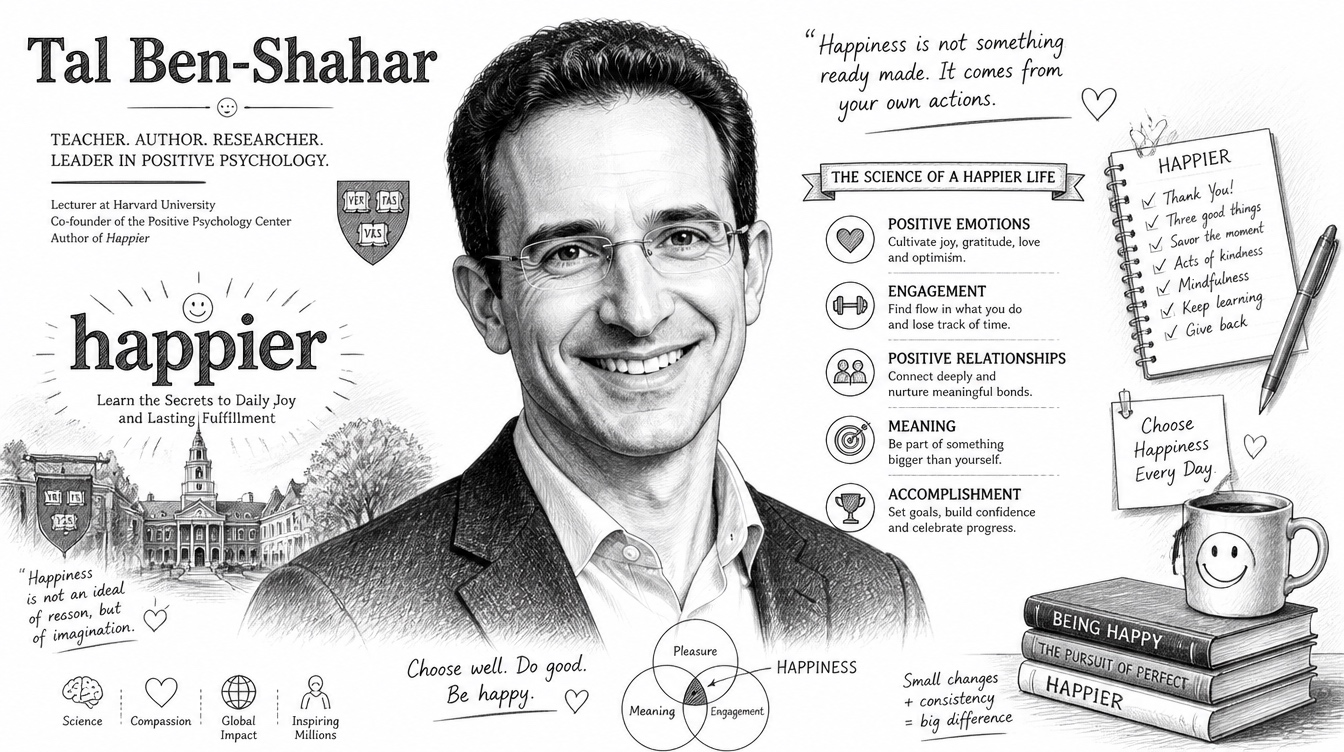
Tal Ben-Shahar is an Israeli-American teacher, writer, and positive psychology lecturer best known for bringing the academic study of happiness into a clear, practical classroom language. He earned his doctorate in organizational behavior from Harvard University and taught popular Harvard courses on positive psychology and the psychology of leadership. His public profile grew because those courses combined research, personal experiment, philosophy, and emotionally honest teaching rather than treating happiness as a slogan.
Ben-Shahar rejects the idea that happiness means constant cheerfulness. He treats it as a practice: accepting painful emotions, finding meaning, enjoying present experience, caring for relationships, and building routines that support well-being over time.
Permission to be human: painful emotion is normal, and denial often makes suffering heavier.
Academic research is translated into exercises, weekly practice, questions, and habits.
Healthy happiness balances future benefit and present benefit, rather than sacrificing one for the other.
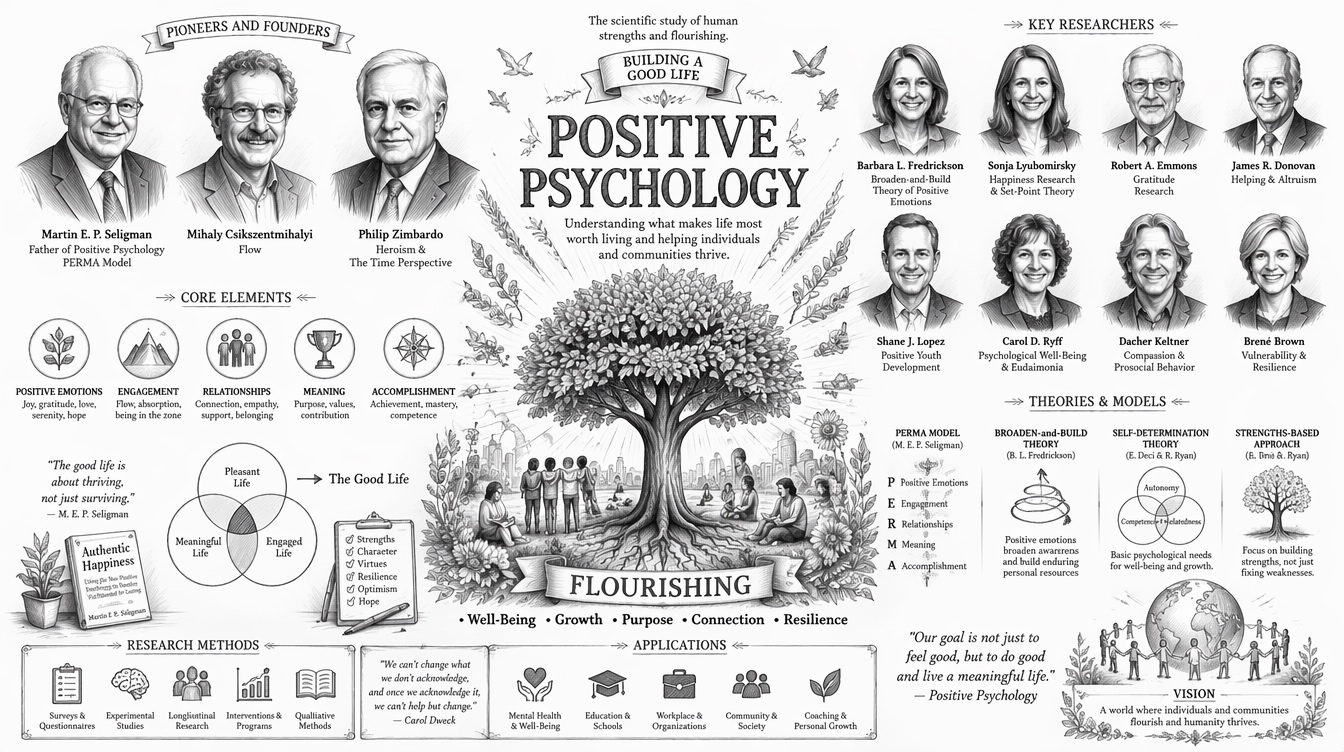
Positive psychology emerged as a research movement around the late 1990s, associated especially with Martin Seligman, Mihaly Csikszentmihalyi, Christopher Peterson, Ed Diener, Barbara Fredrickson, Sonja Lyubomirsky, Carol Ryff, and other scholars. It did not replace clinical psychology; it broadened psychology's agenda from illness, dysfunction, and repair to also include strengths, flourishing, meaning, resilience, virtue, positive emotion, and high-quality relationships.
Academically, the field studies subjective well-being, psychological well-being, character strengths, flow, hope, gratitude, optimism, self-determination, compassion, post-traumatic growth, resilience, and institutions that enable flourishing. It also faces serious debates: measurement validity, cultural bias, individualism, commercialization, replication quality, and the risk of turning social problems into private attitude work.
| School / Model | Main idea | Representative names | Typical content |
|---|---|---|---|
| Subjective well-being | Happiness as life satisfaction plus frequent positive affect and lower negative affect. | Ed Diener, Sonja Lyubomirsky | Life satisfaction scales, affect balance, intentional activity, adaptation. |
| Eudaimonic well-being | Well-being as meaning, self-realization, virtue, growth, autonomy, and purpose. | Carol Ryff, Aristotle-inspired work | Purpose, mastery, personal growth, self-acceptance, authentic living. |
| Flow and optimal experience | Deep engagement arises when challenge and skill are well matched. | Mihaly Csikszentmihalyi | Attention, intrinsic motivation, challenge-skill balance, absorption. |
| PERMA | Flourishing includes Positive emotion, Engagement, Relationships, Meaning, and Accomplishment. | Martin Seligman | Multi-dimensional well-being, strengths, institutions, flourishing metrics. |
| Character strengths | Human strengths and virtues can be named, practiced, and applied. | Christopher Peterson, Seligman | VIA strengths, gratitude, kindness, courage, curiosity, love of learning. |
| Broaden-and-build | Positive emotions broaden cognition and build durable personal resources. | Barbara Fredrickson | Joy, interest, love, upward spirals, social and cognitive resources. |
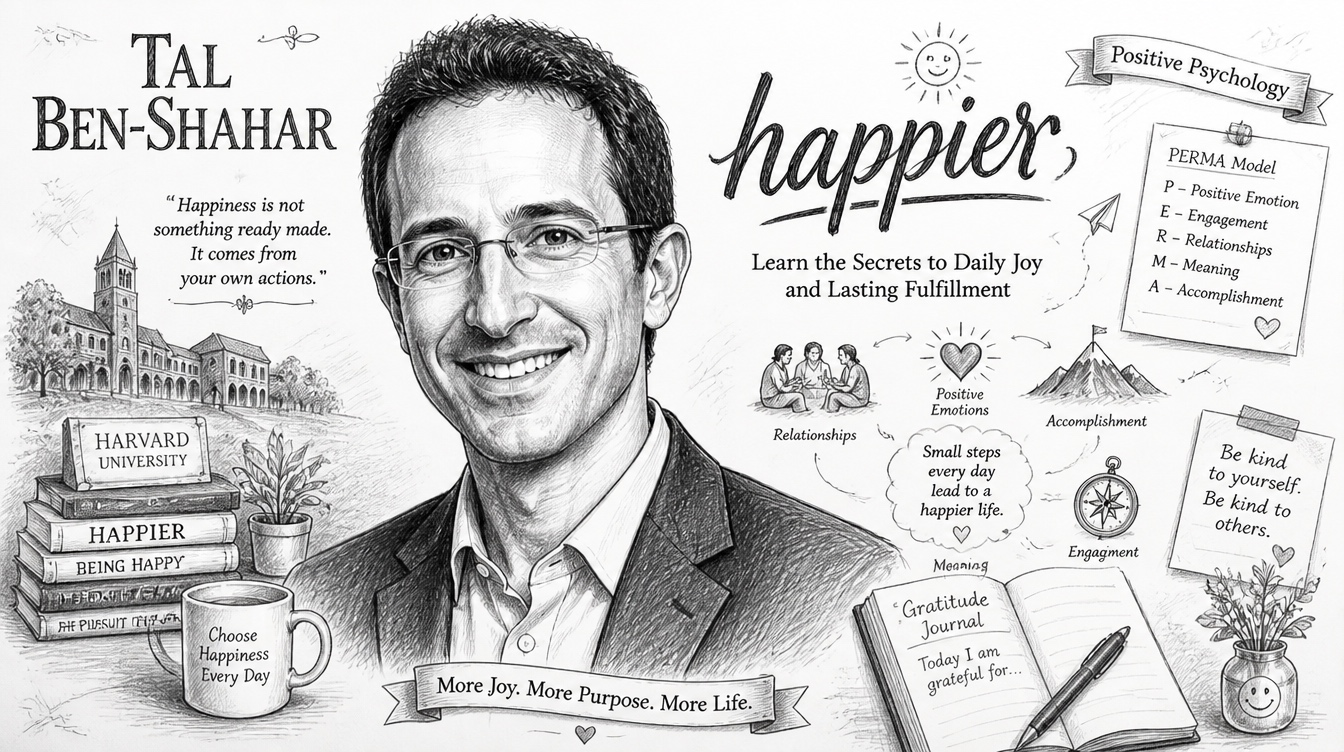
The Tal image anchors the pedagogical scene rather than only the person. Ben-Shahar became influential because he turned the classroom itself into a psychological instrument: a place where students were invited to test ideas through journals, conversation, emotional honesty, and repeated weekly practice.
That matters because his work was never simply “motivational speaking.” Its format resembled a seminar in lived philosophy, where reflection, self-observation, and behavioral design were treated as serious parts of education.
The positive psychology image anchors the academic side: well-being is studied through measurement, interventions, longitudinal research, and philosophical critique. Here, happiness becomes a research object with models, scales, competing definitions, and real methodological disputes.
Seen this way, the course sits at an intersection: it borrows legitimacy from scholarship, but its lasting appeal comes from translating that scholarship into forms people can actually live with.
Happier: Learn the Secrets to Daily Joy and Lasting Fulfillment presents Ben-Shahar's classroom ideas in accessible book form. It contrasts several life archetypes: the rat racer who sacrifices the present for the future, the hedonist who sacrifices the future for the present, the nihilist who feels neither present nor future benefit, and the happier person who seeks both meaning and pleasure.
The typology works because it gives readers a compact diagnosis of modern ambition. Many high-performing people know how to postpone, optimize, and achieve, but have never been taught how to metabolize disappointment, design restorative routines, or notice whether success still feels inhabited from the inside. Ben-Shahar's framework names that gap directly.
The Harvard happiness course became famous because it made happiness intellectually respectable without making it cold. Students encountered research, journal exercises, gratitude practice, goal design, relationship work, and a repeated invitation to test ideas in ordinary life. The course's appeal came from the gap it named: achievement does not automatically produce well-being, and smart people can be very untrained in the art of living.
What made the course culturally resonant was the permission structure it offered as well as the topic. It told ambitious students that emotional struggle was not evidence of failure, and that flourishing required training in attention, recovery, friendship, and value alignment just as much as training in performance.
Happiness is the overall experience of pleasure and meaning: present enjoyment joined with future-oriented purpose.
Learning matters only if it changes practice. Intellectual insight should become ritual, habit, and environment design.
People do not need constant positivity. They need emotional permission, recovery, and values-consistent action.
Rejecting sadness, anxiety, envy, or anger often intensifies them. Accepting emotion makes wise action easier, because it restores flexibility instead of forcing the mind into defensive performance.
Lasting happiness asks for both: meaningful goals and genuinely enjoyable present experience. A life made only of purpose becomes austere; a life made only of pleasure becomes directionless.
Change is more reliable when values become scheduled rituals instead of occasional motivation. In Ben-Shahar's framework, structure is not the enemy of freedom; it is what protects fragile intentions from daily entropy.
Close relationships are among the strongest predictors of well-being; love is maintained through time and attention. Happiness is therefore partly interpersonal architecture, not just private mood management.
People flourish when they recognize strengths and use them in service of meaningful goals. Strength here does not mean ego inflation, but discovering where energy, competence, and value can reinforce each other.
Stress is not the only problem. Lack of recovery is often the deeper problem, because high performance without renewal eventually collapses into depletion, irritability, and emotional narrowing.
Ben-Shahar's work repeatedly turns theory into exercise. The methods below are intentionally ordinary: their power comes from repetition, not drama. These methods cultivate habits that stabilize attention, deepen relationships, and make emotional life more livable.
Write three to five concrete things you appreciate. Specificity prevents the practice from becoming mechanical and helps train perception toward the actually lived texture of life rather than abstract positivity.
Describe a future in which you live close to your values, then identify one next action. The method matters because it links aspiration to behavior instead of leaving the future at the level of fantasy.
List activities by meaning and pleasure. Add one activity high in both, and redesign one activity low in both. This encourages environmental redesign rather than endless self-blame.
Choose a small behavior, attach it to time/place, and protect it until it becomes easier than deciding again. Rituals reduce friction and give values a physical place in the week.
When someone shares good news, respond with interest, questions, and celebration rather than shifting attention away. This practice turns relationship into a site of deliberate well-being rather than passive coexistence.
Schedule sleep, movement, quiet, play, or friendship as seriously as work. Recovery is part of performance because depleted people eventually lose judgment, patience, creativity, and relational generosity.
泰勒·本-沙哈尔是以色列裔美国教师、作家,也是积极心理学领域最具传播影响力的讲者之一。他最知名的贡献,在于把“幸福”这一原本容易被说成口号的话题,重新翻译成清晰、诚实且可练习的课堂语言。他在哈佛大学获得组织行为学博士学位,并开设过积极心理学与领导心理学相关课程。真正让他被广泛认识的,是他把研究、个人实验、哲学反思与真实的情绪经验结合在一起,使这门课既有学术分量,又保留生活温度,并非单纯谈幸福本身。
本-沙哈尔不认同“幸福就是始终快乐”。在他的课程里,幸福是一套可以练习的生活方式:接纳痛苦情绪、寻找意义、体验当下、经营关系,并建立能够长期支持身心状态的日常惯例。
允许自己作为人而存在:痛苦情绪本来就是正常经验,越是否认,往往越会加重它的力量。
他更重视把学术研究转化为练习、周计划、问题意识与生活习惯,而不是停留在概念说明上。
更健康的幸福,是在两者之间建立可持续的平衡,并非只追逐未来收益,也不是只追逐当下愉悦。
积极心理学大约在 20 世纪 90 年代末作为一股明确的研究潮流兴起,常与 Martin Seligman、Mihaly Csikszentmihalyi、Christopher Peterson、Ed Diener、Barbara Fredrickson、Sonja Lyubomirsky、Carol Ryff 等学者联系在一起。它是试图把心理学的研究议程,从疾病、功能失调与修复,进一步扩展到优势、繁荣、意义、韧性、美德、积极情绪与高质量关系等主题上,并非为了取代临床心理学。
从学术内容看,积极心理学关注主观幸福感、心理幸福感、人格优势、心流、希望、感恩、乐观、自我决定、慈悲、创伤后成长、韧性,以及能够支持个体繁荣的制度环境。与此同时,它也始终伴随着严肃争议,例如测量效度、文化偏差、个人主义倾向、商业化滥用、重复性质量,以及把本来具有社会结构性质的问题过度转化为个人心态问题的风险。
| 流派 / 模型 | 核心观点 | 代表人物 | 典型内容 |
|---|---|---|---|
| 主观幸福感 | 幸福由生活满意度、较多积极情绪和较少消极情绪构成。 | Ed Diener、Sonja Lyubomirsky | 生活满意度量表、情绪平衡、意向性活动、适应机制。 |
| 实现论幸福 | 幸福是意义、自我实现、美德、成长、自主和目的。 | Carol Ryff、亚里士多德传统 | 人生目的、掌控感、个人成长、自我接纳、真实生活。 |
| 心流与最优体验 | 当挑战与能力匹配时,人会进入高度投入状态。 | Mihaly Csikszentmihalyi | 注意力、内在动机、挑战-技能平衡、沉浸体验。 |
| PERMA | 繁荣包括积极情绪、投入、关系、意义和成就。 | Martin Seligman | 多维幸福、优势、制度、繁荣测量。 |
| 品格优势 | 人的优势和美德可以被命名、练习和运用。 | Christopher Peterson、Seligman | VIA 优势、感恩、仁慈、勇气、好奇心、热爱学习。 |
| 拓展-建构理论 | 积极情绪会拓展认知并建构长期个人资源。 | Barbara Fredrickson | 喜悦、兴趣、爱、上升螺旋、社会和认知资源。 |
这张图片对应的并不只是本-沙哈尔这个人,而是他所代表的课堂形式:幸福不只是一个抽象概念,也是一门课、一种每周节奏,以及学生可以反复练习、反复检验的语言系统。
他真正有影响力的地方,在于把课堂变成一种心理训练空间,让反思、书写、对话与习惯设计成为教育的一部分,而不只是附属的励志姿态。
积极心理学图片对应学术部分:幸福感是通过测量、干预、纵向研究与哲学批判持续被研究的对象,并非模糊口号。
这也解释了为什么幸福课既带有亲切的生活感,又始终试图维持研究框架。它并不满足于“让人感觉好一点”,而是试图说明:哪些机制、关系和生活制度,能让人更稳定地繁荣。
Happier: Learn the Secrets to Daily Joy and Lasting Fulfillment 把本-沙哈尔在课堂中的核心思想整理成一本更易进入的书。书中区分了几种典型生活原型:为了未来不断牺牲当下的“奔忙者”,为了当下持续透支未来的“享乐者”,既感受不到当下收益、也看不到未来意义的“虚无者”,以及努力同时追求意义与快乐的“更幸福者”。
这套划分之所以有传播力,在于它精准说中了现代高成就文化的盲区:很多人擅长延迟满足、擅长竞争、擅长向前规划,却并不擅长处理失望、安排恢复、维持亲密关系,甚至不知道怎样判断自己是否真正活在一份可居住的生活里。
哈佛幸福课之所以能广泛出圈,是因为它让幸福这一主题既保有学术尊严,又不至于冷硬抽象,并非因为它把幸福讲得轻松。学生在课程中接触研究、日志练习、感恩训练、目标设计与关系练习,并被反复邀请把这些观念放回日常生活中检验。它之所以打动人,是因为它明确指出:成就并不会自动转化为幸福,而高智识、高能力的人,也可能在“如何生活”这件事上缺乏基本训练。
更重要的是,这门课提供了一种新的许可结构:它告诉高度竞争环境中的学生,情绪挣扎并不自动意味着失败;真正成熟的生活训练,既包括追求成就,也包括学习恢复、学习建立关系、学习让价值观落到现实节奏里。
幸福是一种由快乐与意义共同构成的整体体验:既需要真实可感的当下愉悦,也需要面向未来的目的感。
只有当学习进入实践,改变才算真正发生。洞见必须进一步变成仪式、习惯与环境设计。
人并不需要永远积极,而是需要情绪许可、恢复能力,以及与自身价值保持一致的行动。
一味拒绝悲伤、焦虑、嫉妒或愤怒,往往只会让这些情绪更强。更成熟的做法,是允许情绪存在,再在此基础上行动,因为这会把人从防御姿态重新带回可选择状态。
持久幸福并不来自单一维度,而需要同时拥有有意义的目标,以及真实可感的当下体验。只有意义没有愉悦,生活会变得过于苦修;只有愉悦没有意义,又会显得漂浮而空心。
当价值观被转化成固定仪式,而不只是偶尔依靠热情推动时,改变通常会更稳定、更可持续。结构在这里是保护脆弱意图不被日常熵耗尽,并非压迫。
亲密关系始终是幸福感最强的预测因素之一;爱并不会自动维持,它需要时间、注意力与持续投入。换句话说,幸福从来不只是私人心情管理,也是一种关系结构问题。
当一个人更清楚自己的优势,并把这些优势投入有意义的目标中时,更容易进入繁荣状态。这里的“优势”是让能力、能量与价值感真正汇合,并非膨胀自我。
压力当然是问题,但很多时候,真正更深的一层问题,其实是缺乏恢复能力与恢复空间。长期高表现若没有复原机制,最终往往会演变成耗竭、易怒和判断力变窄。
本-沙哈尔的工作反复在做同一件事:把理论转化为可执行的练习。下面这些方法看起来都很日常,但它们真正的力量来自长期重复,而不是瞬间的戏剧性效果。它们的意义也不在狭义的自我优化,而在于逐步建立一套更能承载情绪、关系与日常注意力的生活结构。
写下三到五件具体值得感谢的事。越具体,这个练习越不容易滑向机械打卡,也越能把注意力从抽象口号重新带回生活的真实纹理。
描述一个更接近自身价值、也更贴近理想生活状态的未来版本,然后写出下一步可执行行动。它的重要性在于把愿景和行为重新接上,而不是让未来停留在想象里。
按照“意义”和“快乐”两个维度给活动分类,主动增加一件两者都高的活动,并重新设计一件两者都低的活动。这种做法强调环境与节奏重构,而不只是继续责备自己不够努力。
选择一个足够小的行为,把它绑定到固定时间与地点,并持续保护,直到它比“重新做决定”更容易执行。仪式的价值,在于给价值观安排一个真实可重复的位置。
当别人分享好消息时,用兴趣、追问和庆祝来回应,而不是立刻把注意力转移到别处。这会把关系从被动共处,转变为有意识的幸福实践。
像安排工作一样认真安排睡眠、运动、安静、玩耍或友谊,因为恢复本身就是表现的一部分。长期缺乏恢复的人,最后往往失去的是判断力、创造力和情绪宽度,并非时间。